Tiny house Kanuka opens up living with dual entrances
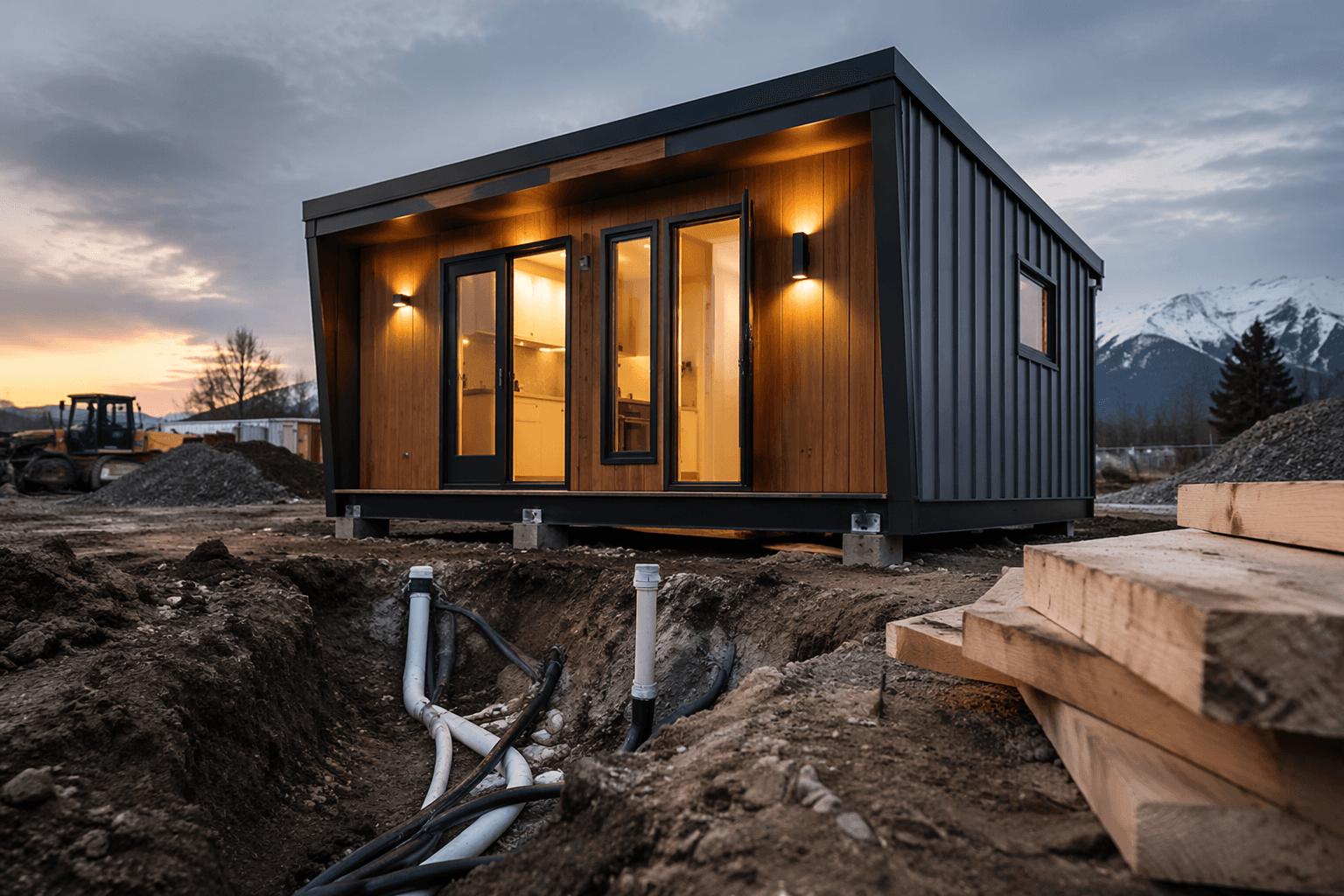
Kanuka’s two glass-door entries do more than brighten the place: they make 26.5 feet feel flexible enough for real daily living, especially with a deck or porch outside.

The Kanuka takes a familiar tiny-house problem and attacks it head-on: how do you keep 26.5 feet from feeling like a corridor? Tiny Timber Homes answers with two close-set double-glass-door entrances, generous glazing, and an open plan that pushes light and movement through the whole build instead of trapping it at one end.
That matters because the Kanuka is not chasing novelty for its own sake. It is trying to make a small footprint feel genuinely usable, with indoor-outdoor flow, smart storage, and a layout that can work for vacations or full-time living.
Two entrances, one bigger everyday footprint
The most important design move here is the dual-entry setup. Instead of the usual single door and a choke point of walls, the Kanuka uses two double-glass-door entrances positioned close together, which immediately changes how the house is experienced from inside and out. Daylight gets in from both sides, the entry zone feels less compressed, and the house reads as a connected living space rather than a sealed box.
That is where the indoor-outdoor question becomes practical, not just stylistic. If an owner adds a porch or deck outside those entrances, the usable living area can spill outward in a real way. Even before any outdoor furniture is added, the openings create the impression that the home extends beyond its trailer, which is exactly the kind of psychological expansion tiny-house design needs.
What the shell says before you even step inside
The exterior supports that idea instead of fighting it. The Kanuka sits on a triple-axle trailer and measures 8.1 meters long, so it is compact even by tiny-house standards. Tiny Timber Homes softens that compactness with metal cladding, timber accents, and a metal roof, giving the home a sturdy look without making it feel severe.
That balance matters because tiny homes can look cramped from the curb before anyone steps through the door. Here, the mix of materials keeps the house visually light enough to match the open interior concept. The timber warms up the metal shell, while the roof and cladding keep the profile clean and practical, the kind of finish that looks ready for regular use rather than weekend-only novelty.
Inside, the layout does the heavy lifting
Once inside, the Kanuka keeps the palette bright with white walls and warm timber detailing. That combination is a standard move in compact homes, but it works here because the design does not waste the brightness on chopped-up rooms. The living room sits under a high ceiling, which is one of the fastest ways to make a tiny house stop feeling like a tiny box, and it is furnished with a large sofa and a wood-burning stove.
There is also room for a dining table if the buyer wants one, which is a small detail with a big effect. In a home this size, every piece of furniture has to earn its place, and the fact that the layout can accommodate a table without collapsing the circulation says more about livability than any rendering ever could. The open plan lets the living area behave like a real room, not just a pass-through.
The same practical thinking shows up in the kitchen. It is modest, but it is not stripped down: sink, oven, propane four-burner stove, and fridge/freezer are all there. That is enough to make the house usable without feeling overstuffed, and it keeps the cooking zone aligned with the broader design goal of function first, clutter second.

Smart storage keeps the openness from feeling empty
The Kanuka avoids the trap that hits a lot of open tiny houses: beautiful emptiness with nowhere to put your stuff. Here, the staircase doubles as storage and brings drawers, cupboards, and a pull-out pantry into the plan. That is the kind of detail that makes a compact house live larger over time, because storage is what lets the rest of the interior stay visually calm.
The bathroom continues that efficient approach behind a barn-style sliding wood door. It includes a vanity sink, toilet, and glass shower, all packaged without breaking the house into too many separate boxes. That restraint matters. Too many partitions would choke off the very openness the Kanuka is built around, while the sliding door preserves usable floor space and keeps the circulation feeling loose.
Upstairs, the loft bedroom keeps the program simple with a double bed and extra storage. It is not trying to become a second suite or a theatrical retreat. It is a sleeping space that does its job and stays in the background, which helps the main floor remain the star of the show.
Does it create real extra space or just the feeling of it?
The honest answer is that it does both, but in different ways. The two entrances and generous glazing do not add square footage in the literal sense, yet they do create a wider daily range of use because the house can connect more naturally to an outdoor deck or porch. That is real value in a tiny house, where every square meter has to work harder than it would in a conventional build.
At the same time, the Kanuka is clearly designed to make a small footprint feel lighter even when the doors are closed. The high ceiling, open layout, bright interior, and smart storage prevent the house from turning into a series of cramped compartments. In practical terms, that means the Kanuka does not just look airy in photos. It has the kind of layout that can support actual living, from a quiet night by the wood-burning stove to a meal at a small dining table, without making the house feel overfilled.
Part of a bigger Tiny Timber Homes direction
The Kanuka also fits into a broader pattern for Tiny Timber Homes. New Atlas previously covered the Maple, a 26-foot model published on June 1, 2026, which also leaned on an open layout, double glass doors, timber detailing, and trifold windows. Put the two models side by side and the company’s direction becomes pretty clear: less boxy partitioning, more natural light, and more emphasis on making small homes feel adaptable rather than merely compact.
That is why the Kanuka stands out. It is not trying to win on gimmicks or oversized claims. It uses dual entrances, a restrained material palette, and a layout that respects circulation to make 8.1 meters feel like a place people can actually live in. The result is a tiny house that feels bigger where it counts most, in the rhythm of daily life.
This article was produced by Prism’s automated news system from verified source data, official records, and press releases, then run through automated quality and moderation checks before publishing. The system is built and supervised by the people who set the standards it runs under. Read our full AI policy.
Did this article answer your question?