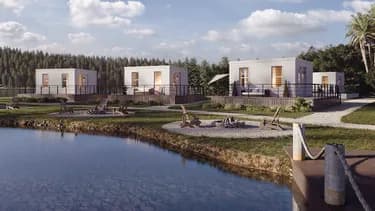
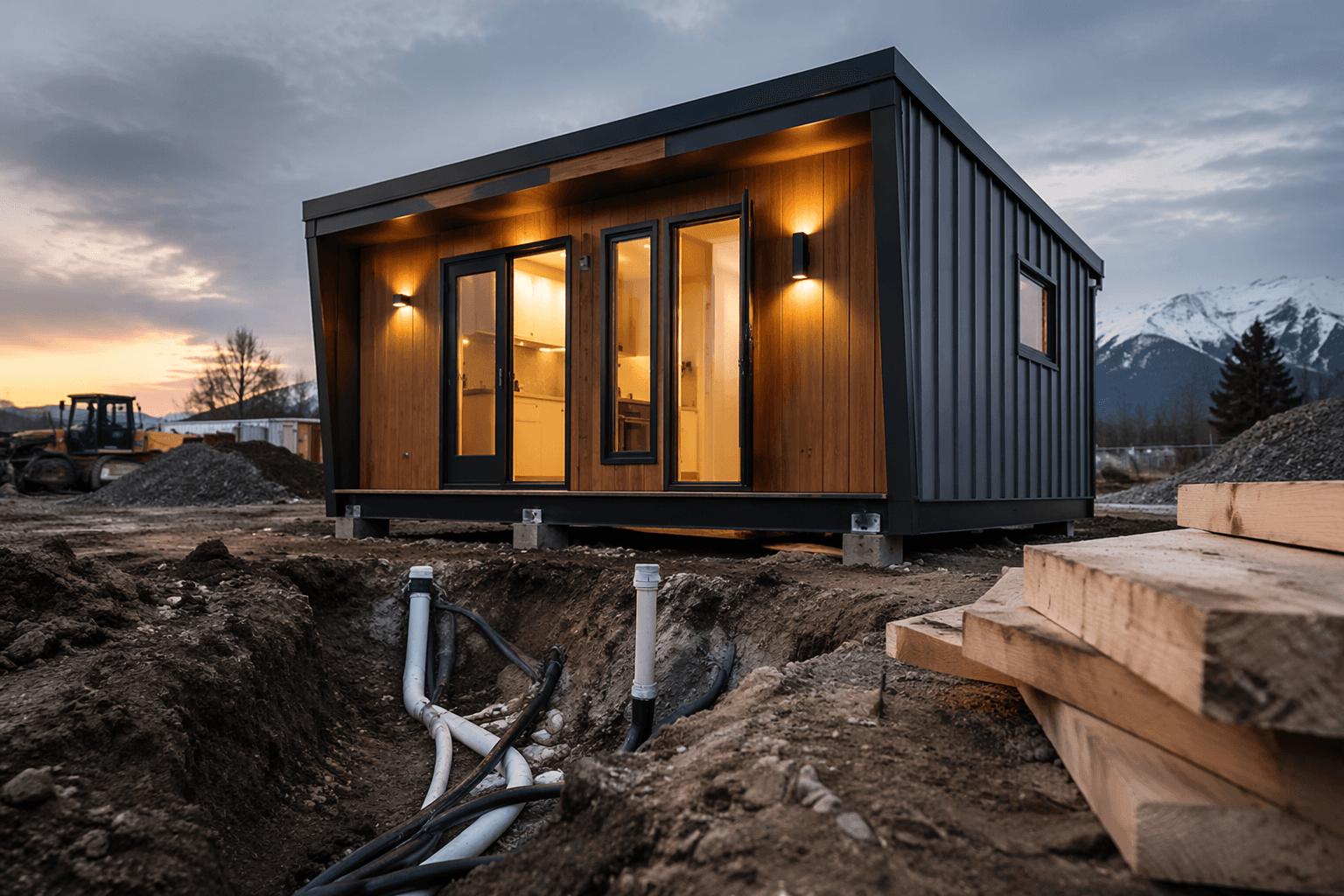
Vagabond Haven’s extra-wide River tiny house prioritizes family privacy
Vagabond Haven's River goes big on the one thing families miss most: privacy. The extra-wide 32-square-meter layout gives parents and kids real separation, but mobility takes a back seat.
Privacy is the real luxury in the River
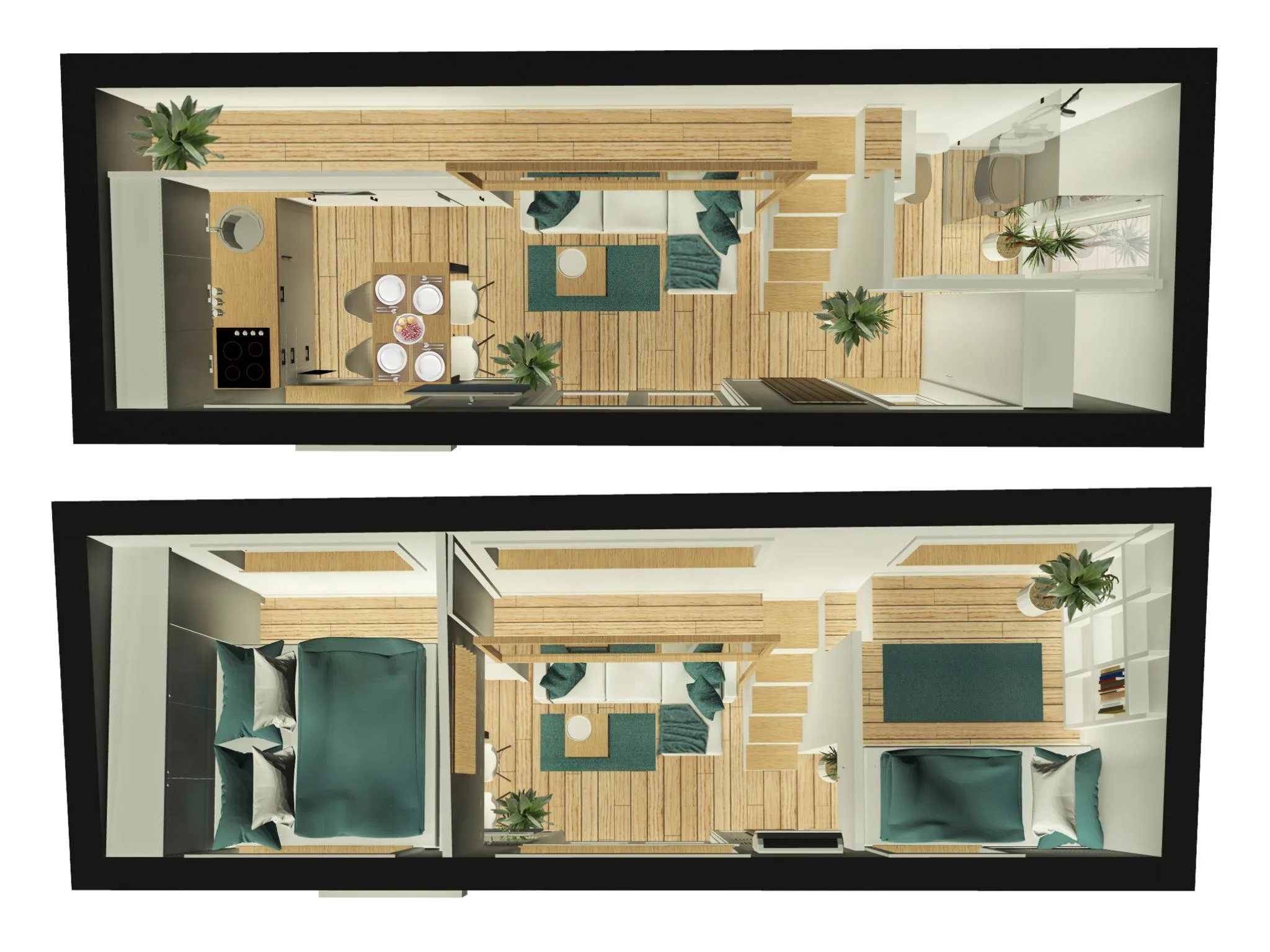
Vagabond Haven’s River tiny house makes a sharp argument for family living in small spaces: the real upgrade is not another gadget, it is privacy. At 32 square meters, with an 8.5-meter length and a 3-meter width, River is noticeably wider than the standard tiny-home profile, and that extra elbow room is doing the heavy lifting here. Instead of forcing a family to live shoulder to shoulder in one compressed box, the layout spreads out the bedrooms and uses the center of the house as the buffer.
That is the move that matters most if you have ever wondered where parents and kids are supposed to get any personal space in a tiny house. River answers that skepticism head-on. The two bedrooms sit on opposite sides of the home, and the living room sits between them, so the house works more like a compact apartment than a narrow trailer cabin. In tiny living, that kind of separation is not a nice-to-have. It is the difference between a place that feels shared and a place that feels crowded.
A wider footprint changes the whole feel
The River is built on a double-axle trailer, but Vagabond Haven is clear that this is not a model for constant travel. The wheels are rated only for small on-site movements, which means truck transport is the rule, not regular towing. That matters because it shifts the River out of the “take it everywhere” fantasy and into a more practical category: a family home that can be delivered to a compact site without giving up livability.
That extra width also helps the interior read as a full-time home instead of a corridor with furniture. Vagabond Haven says River belongs to its three-house “EXTRA LARGE” category, and the numbers back that up. Compared with many tiny homes that squeeze hard to stay road-friendly, River gives up some mobility to gain breathing room, better circulation, and a layout that is easier to live in every day.
The bedroom setup solves the privacy problem
The strongest design decision in River is the split-bedroom plan. One bedroom is not stacked next to the other, and neither is tucked into a corner with no buffer. Instead, the bedrooms are placed on opposite sides of the house, with the central living area between them, so noise, light, and daily movement are not all colliding in one tight zone.
The primary bedroom adds another practical touch: a lowered standing platform that makes dressing and moving around easier. Both bedrooms can fit a double bed, which tells you River is meant for real sleeping, not just occasional guest use or weekend stays. That is a meaningful distinction for families who want a tiny house that can function full-time without turning bedtime into a logistics problem.
The compromise is obvious, though. To get that separation, you are giving up the idea of a tiny house that can dart from one location to another with minimal fuss. River is aimed at people who do not require much mobility from their home. If your priority is cross-country towing, this is not your model. If your priority is keeping parents and kids from feeling stacked on top of each other, it makes a lot more sense.
A family room, not a hallway with a sofa
River’s center space is treated like a proper living room, and that is another reason the house feels more usable than its footprint might suggest. Vagabond Haven furnishes the core area with a large sofa, coffee table, and wall-mounted television, so the middle of the home reads as a place to gather rather than a pass-through zone. That choice matters in a family layout because the shared space has to earn its keep.
The kitchen pushes the same idea. It is fitted with an induction cooktop, fridge, sink, washer/dryer, dishwasher, and a dining table for four. That is a serious list for a compact house, and it tells you River is being pitched for daily domestic life, not stripped-down weekend living. The bathroom follows suit with a shower, sink, cabinetry, and a choice of flushing, composting, or incinerating toilet. In other words, the house is not trying to sell minimalism as deprivation. It is trying to make small-scale living work without turning every routine into a workaround.
Built for year-round use, not fair-weather tiny life
Vagabond Haven says it builds fully mobile tiny houses for year-round living in Scandinavian conditions, and River fits that brief. The company was founded in 2017 by Manuel Kohout, who set out to create a housing option that is better for nature, finances, and well-being, under the motto “build small, live big.” That outlook shows up here in the emphasis on durability and liveability over pure portability.
Exterior finishes include engineered wood and metal siding, while the interior can be finished in spruce or plywood with laminate flooring. Those are not decorative afterthoughts. They reinforce the sense that River is meant to be lived in through real seasons, real weather, and real family routines. For a tiny house in Europe or Scandinavia, that is the right standard to hold it to.
How River fits Vagabond Haven’s bigger direction
River is not a one-off experiment. It sits in a clear pattern across Vagabond Haven’s newer models, all of which push toward wider, more apartment-like layouts. The Smile model, also published in 2026, is extra-wide at 3 meters but shorter at 7.2 meters and aimed at two-person living. The Sky model goes even further, stretching to 11 meters long and 3.45 meters wide with a more apartment-like interior and a separate secondary bedroom that can double as a home office.
That wider trend says a lot about where the tiny-house market is heading. The old assumption was that small living meant accepting less privacy and more overlap. River takes the opposite position. It treats family privacy as the premium feature, even if that means truck delivery instead of easy towing, a bigger footprint than standard tiny homes, and a model designed for people who want comfort more than constant mobility.
That is the real story of River: it does not try to solve every tiny-house problem. It solves the one that keeps families skeptical, and it does so by widening the plan, splitting the bedrooms, and making the center of the house work like a buffer. In a market full of clever gimmicks, that kind of hard-edged practicality is the luxury buyers will actually notice.
This article was produced by Prism’s automated news system from verified source data, official records, and press releases, then run through automated quality and moderation checks before publishing. The system is built and supervised by the people who set the standards it runs under. Read our full AI policy.
Did this article answer your question?