Zinc Studio's Huntley tiny house favors calm, livable luxury
Huntley proves tiny-house luxury is about restraint: wider proportions, warm timber, and disciplined storage make the cabin feel open, not sparse.
Restraint is the luxury move
The Huntley tiny house works because it refuses the usual tiny-home urge to perform. Instead of packing every corner with a feature, Zinc Studio leans on calm proportions, warm materials, and just enough separation to make the cabin feel easy to live in. The result is a tiny house that reads as composed, not cramped, which is exactly the lesson most overdesigned builds miss.
A wider shell changes everything
Huntley is a CA-02 model measuring 3.5m x 7.2m, and that width is doing a lot of the heavy lifting. In a tiny house, extra width is not a vanity spec, it changes circulation, furniture placement, and how much of the floor you can actually use without bumping into yourself. Zinc Studio says its 3.5m-wide cabins can provide up to 50% more living space than similarly priced tiny homes and prefab cabins, and you can feel why that matters here.
That wider footprint also keeps the cabin from reading like a box stuffed to the edges. When the room has a little breathing room, the eye relaxes, the furniture sits more naturally, and the whole interior feels less like a trick and more like a place you could stay in for years. For anyone building a tiny house from scratch, this is a reminder that a few extra centimeters in width can do more for livability than another clever built-in ever will.
Materials do the emotional work
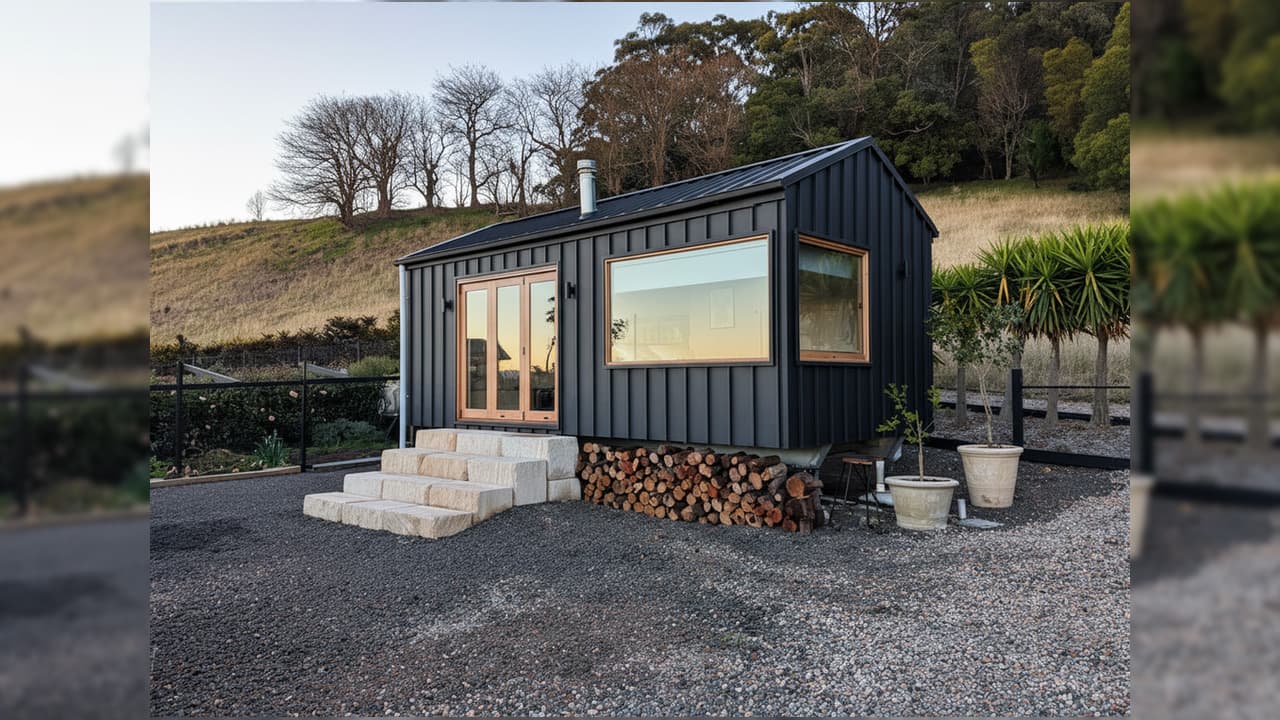
Homecrux describes Huntley as an architecturally designed prefab cabin with a rugged corrugated metal exterior and a warm birch plywood interior, and that contrast is a big part of the appeal. The outside has enough grit to keep it grounded in the landscape, while the inside stays soft and human. You do not get the clinical white-shell look that makes so many tiny homes feel more like display units than homes.
Zinc Studio’s listed modifications sharpen that effect: additional storage joinery, nailstrip cladding in Matte Monument, brass internal fittings, and a stone benchtop. None of those choices scream for attention, but together they give the cabin texture and weight. The brass adds a little visual warmth, the stone bench keeps the kitchen from feeling lightweight, and the timber keeps the interior from going flat.
That is the material lesson here. In a small space, honesty beats decoration. Raw timber, birch plywood, and restrained finishes let the cabin feel grounded, and they also make the light inside read softer because there are fewer harsh surfaces fighting for attention. If you want calm, stop chasing contrast for its own sake.
Storage discipline is what keeps it livable
The storage joinery matters because tiny-house calm disappears fast once the clutter starts sitting in plain sight. Huntley treats storage as part of the architecture, not as a set of random add-ons bolted in after the fact. That is the right instinct for small living, because every hidden drawer, enclosed shelf, and fitted joinery run buys back visual quiet.
The best part is that this kind of storage discipline does not make the house feel bare. It makes the surfaces cleaner, which lets the few visible materials do their job. You notice the timber grain, the brass fittings, and the stone bench more because they are not competing with a pile of storage hacks.
- build storage into the walls and benches instead of scattering standalone units around
- keep the visible surfaces limited to a few strong materials
- let empty space exist where the room needs it, because that space is part of the design
For your own build, the takeaway is simple:
Single-level planning makes the plan calmer
Homecrux points to Huntley’s single-level partitioning as part of what keeps the interior functional without feeling chopped up. That matters because tiny homes often overuse lofts and ladders when a simpler floor plan would make daily life easier. Subtle zone changes can separate sleep, cooking, and living without turning the cabin into a maze of bulkheads and tight corners.
This also lines up with accessibility-focused tiny-house guidance, which emphasizes single-level layouts, wider doorways, and open plans for aging in place. In plain terms, you want the home to work on an ordinary Tuesday, not just look clever in photos. A layout that is easier to move through, easier to clean, and easier to live in every day will always beat a dramatic plan that asks too much from your knees and your shoulders.
Huntley does not read as empty because the partitioning is doing quiet work in the background. It suggests zones without overbuilding them, and that is the kind of restraint that makes a tiny house feel mature instead of experimental.
This is what modern tiny-house luxury looks like
Zinc Studio says its CA cabins are inspired by traditional Australian shearers’ quarters, and that lineage helps explain the mood here. The company started in 2020 after the founders wanted a better farm-stay product than the “cheap tiny homes, clinical white walls, thoughtless layouts” they were seeing in the market. That origin story shows up in Huntley’s priorities: premium materials, natural textures, and functional layouts, not novelty for novelty’s sake.
The broader Australian context matters too. Research on tiny-house practices in Australia frames tiny housing as a long-held legitimate practice tied to housing norms and resistance to conventional housing models, while the Australian Tiny House Association operates as a non-profit run by members and volunteers that produces peer-reviewed guides. In other words, this is no longer just a fringe aesthetic. It is a serious part of the housing conversation, especially as affordability, sustainability, and simpler living keep pushing people toward smaller, better-planned spaces.
What to steal for your own build
If you are planning a tiny house and want it to feel calm instead of cramped, Huntley gives you a clear template. Start with proportion, then trim the material palette, then lock storage into the structure itself. After that, use the plan to create quiet separation, not visual noise.
- choose a width that improves circulation before you add decorative extras
- use one or two honest materials, then let them repeat cleanly
- build storage into the architecture so the room stays visually light
- prefer single-level or low-barrier planning when daily ease matters
- keep the interior warm enough to feel lived in, but spare enough to stay breathable
Zinc Studio says its cabins are built in Australia on a steel skid foundation, fully off-grid capable, and generally delivered turnkey in 8 to 12 weeks, with builds possible up to 5m wide and 12m long. Those specs matter, but Huntley’s bigger achievement is simpler than any spec sheet. It shows that a tiny house does not have to feel packed to feel complete, and that the calmest luxury in a small footprint is the kind you do not have to fight for every time you walk through the door.
This article was produced by Prism’s automated news system from verified source data, official records, and press releases, then run through automated quality and moderation checks before publishing. The system is built and supervised by the people who set the standards it runs under. Read our full AI policy.
Did this article answer your question?