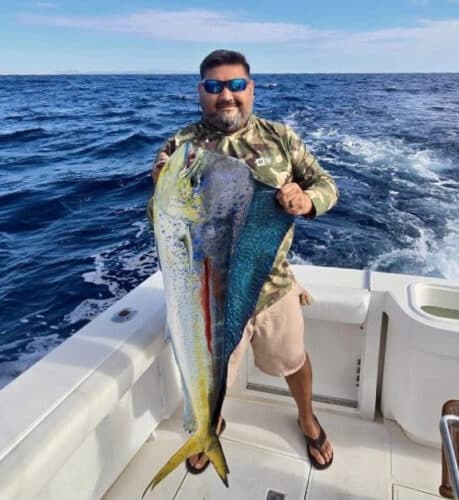
Blackfin tuna bite heats up off Southeast Florida beaches
Blackfin are stacked from Vero Beach to Boca Raton in 130 to 330 feet, and the live-bait kite bite is the run worth making now.

If you want blackfin tuna, not just a mixed offshore ride, the stretch from Wabasso Beach through Boca Raton is worth the fuel right now. The best water has been 130 to 330 feet, where current rips and moving bait are stacking fish, and the fastest producer has been kite work with live baits when trolling starts getting fouled by weeds. Mahi, sailfish and the occasional wahoo are still part of the picture, but the blackfin bite is strong enough to build a trip around if tuna is the goal.
Where the tuna bite is actually setting up
Capt. Jonathan Earhart’s Southeast Florida forecast covers Wabasso Beach, Vero Beach, Ft. Pierce, Stuart, West Palm Beach, Lake Worth and down to Boca Raton, and that broad stretch is exactly where the offshore action has been concentrated. The key detail is not just that fish are around, but that they are showing in a repeatable band of water, with the best action in about 130 to 330 feet. That puts the run in range for Treasure Coast boats that can slide out, find a clean color change and stay on the bait.
The pattern makes sense for blackfin. These fish feed where current compresses life, and the forecast points to current rips and moving bait as the trigger. If you are burning fuel looking for a lone mark in flat water, you are working harder than you need to. The smarter play is to find the rip, watch for bird life and bait concentration, and keep the boat moving until you land in the right edge of the offshore conveyor belt.
How to fish it when you want tuna first
The forecast is clear that thick sargassum has made trolling difficult, which changes the game for anyone trying to target blackfin cleanly. In this kind of water, kite fishing with frisky live baits has been the most effective approach for many boats, and that is the move if you want to fish around the weeds instead of fighting them. Once the morning bite fades, the report says to think deeper in the water column, which means your spread should not stay flat and lazy after sunrise.
That matters because the current bite is not a one-size-fits-all troll. If the weeds are bad, keep your baits clean and visible, and be ready to switch gears fast. Captains who can work current lines, stay on moving bait and put live baits where the fish are holding have the best shot at turning a general offshore day into a blackfin day.
Why the mixed bag still matters
Blackfin are not showing up alone. Offshore, the same water is holding mahi, sailfish and the occasional wahoo, and nearshore the forecast also points to big jacks, tarpon, permit and even goliath grouper around beaches, reef edges and wrecks. That is useful context for tuna anglers because it tells you the whole water mass is productive, not just one isolated pocket.
Still, if you are heading out specifically for tuna, do not let the mixed-bag action pull you off the plan too early. The presence of other pelagics usually means the bait is right, the water is alive and the current is doing the work for you. The boats that stay disciplined, keep their spread clean and use the mixed bite as confirmation instead of distraction are the ones most likely to put blackfin in the box.
How big these fish can get
Blackfin are a warm-water Atlantic species with a range that runs from North Carolina to Rio de Janeiro, Brazil, including the Caribbean Sea and Gulf of Mexico. That wide range explains why they fit naturally into South Florida’s summer offshore rhythm and why the Treasure Coast bite is not some oddball fluke. This is a fish that belongs in these waters, and when the conditions line up, it shows up fast.
The size ceiling is no joke either. The current all-tackle world record is 22.71 kilograms, or 50 pounds, 1 ounce, caught off South Miami on June 1, 2024 by Robert Kowalski. That fish ate a live bait off a kite and was boated after a 20-minute fight, which is a perfect reminder that blackfin here are not just school-size bycatch. In the right water, they are a serious target with serious pull.
The rules you need before you run offshore
Blackfin tuna are federally managed Highly Migratory Species, so federal HMS rules apply in both state and federal waters. If you are targeting them, you need a federal HMS Angling Permit, and that is not the kind of detail you want to sort out after the spread is already in the water. The recreational blackfin limit listed by Fish Rules is two fish per person or 10 fish per vessel, whichever is greater.
The NOAA HMS Permit Shop is the place used to buy Atlantic tuna and HMS permits, and it is also where recreational landings for bluefin tuna, billfish and swordfish are reported. That is the regulatory backdrop for a hot bite like this: the fish may be showing hard, but the paperwork and limits still matter before you leave the inlet.
The take-home for the Treasure Coast
This is a real blackfin shot, not just a vague offshore tease. If you want tuna rather than a random mixed-bag run, the money water is from Wabasso to Boca in 130 to 330 feet, early in the day, with current rips, moving bait and live-bait kite work doing the heavy lifting. Stay on the clean edge, keep your baits fresh, and treat the weeds as a clue rather than a nuisance, and the run starts to look a lot more like a tuna trip than a fuel burn.
This article was produced by Prism’s automated news system from verified source data, official records, and press releases, then run through automated quality and moderation checks before publishing. The system is built and supervised by the people who set the standards it runs under. Read our full AI policy.
Did this article answer your question?