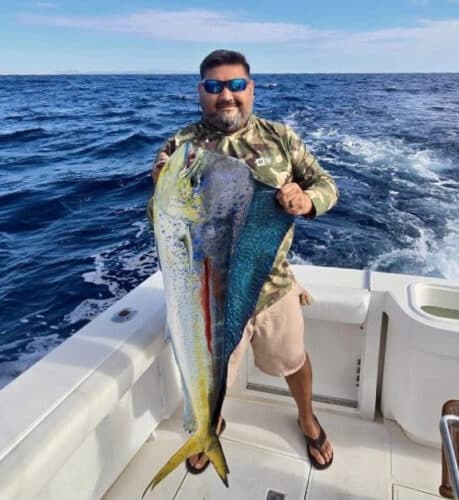
Cartagena Offshore Bite Heats Up, Yellowfin Tuna Lead Mixed Pelagic Action
Yellowfin were in the middle of Cartagena's offshore action as mahi, wahoo, king mackerel and barracuda rounded out a hot mixed-bag window worth chasing now.

Yellowfin tuna were the center of Cartagena’s offshore bite, but the bigger signal was the company they kept. Cartagena Charters’ May 3 report showed tuna schooling alongside mahi-mahi, wahoo, king mackerel, barracuda and rainbow runners, a spread that says the bluewater bite off Cartagena, Colombia, is running as a true mixed-pelagic window rather than a one-species fluke.
That matters because the fish are not being reported in isolation. Full-day and 3/4-day trips were producing the strongest action, which points to a real offshore push and not just a short nearshore blip. When yellowfin are showing in the middle of that kind of spread, the current and bait picture is usually doing the heavy lifting. Warmer Caribbean water and active bait can stack predators on the offshore grounds, and Cartagena looks to be in that productive stretch now. For traveling anglers, that is the kind of setup worth booking around fast, before the school fish slide or the bite window shifts with current.
The mix also gives the day some insurance. If the tuna school goes quiet, there are still fast movers and table fish in the water, and that is exactly why Pura Vida is selling the trip as a straightforward offshore hunt rather than a niche specialty run. FishingBooker says the captain has spent more than 40 years fishing these waters, a long local track record that matters when the bite is changing from one drift to the next. The practical play offshore right now looks like a trolling-and-bait combination, not a single-minded setup waiting on one pattern to dominate.
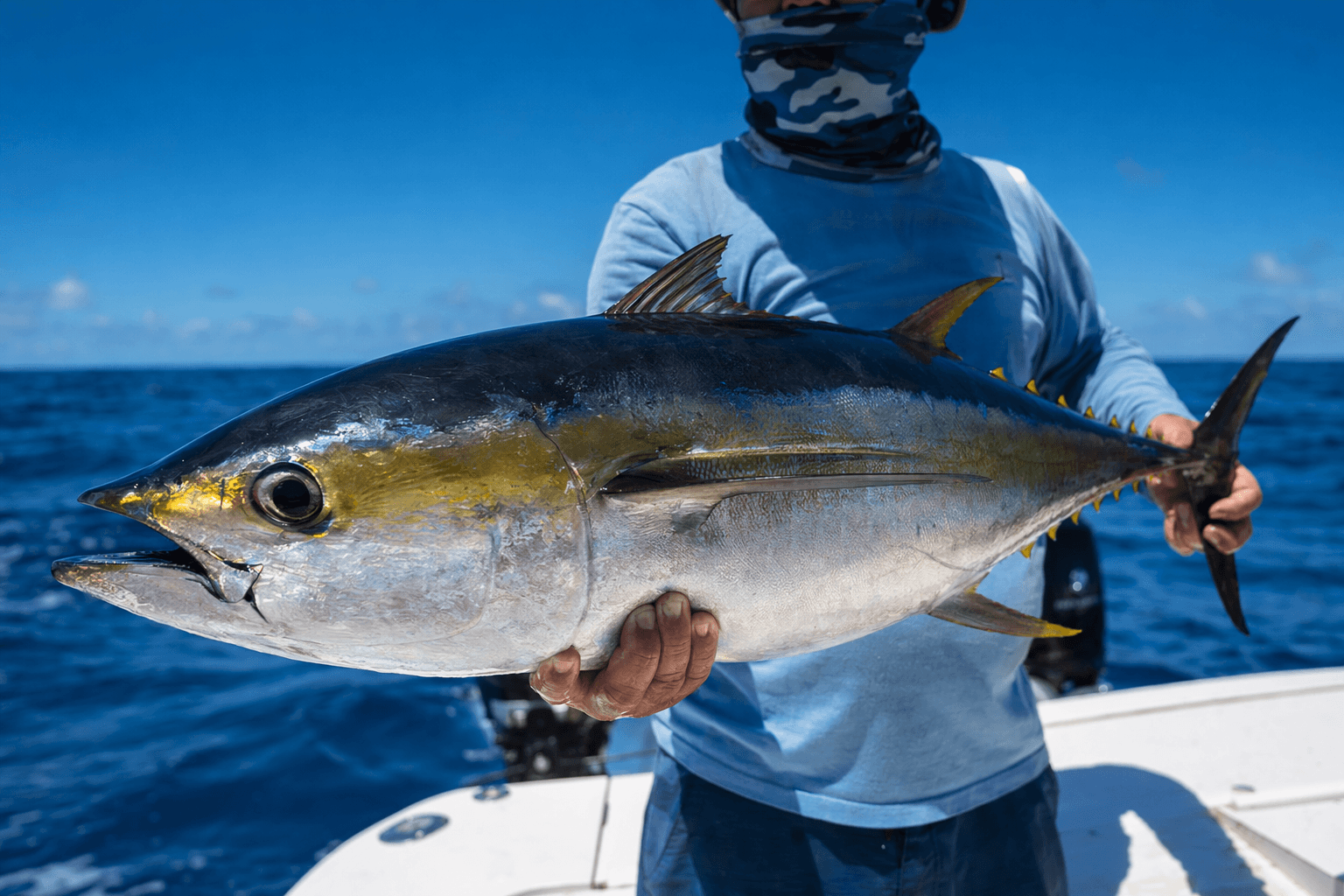
The timing lines up with what yellowfin do in this region. NOAA Fisheries says yellowfin tuna in the western Atlantic spawn from May to August in the Gulf of America and from July to November in the southeastern Caribbean, and most reach reproductive age at about 2 or 3 years old. NOAA also says females may spawn about once every three days during spawning season, which helps explain why the fish can school and cycle through an area quickly when conditions line up.
Cartagena’s broader fishery picture matches the report, too. The FAO lists tuna, snapper, grouper, shrimp and conch among Colombia’s main marine species, with much of the production exported. ICCAT, the Atlantic tuna management body, continues to track yellowfin closely with revised historical catches, size data, tagging data and abundance indices in its 2024 work. With the Gulf and Caribbean Fisheries Institute set to meet in Cartagena, Colombia, from October 27 to 31, 2025, the city is clearly on the regional tuna map. Right now, the bite suggests a traveling angler should treat Cartagena as a live window, not a maybe.
This article was produced by Prism’s automated news system from verified source data, official records, and press releases, then run through automated quality and moderation checks before publishing. The system is built and supervised by the people who set the standards it runs under. Read our full AI policy.
Did this article answer your question?