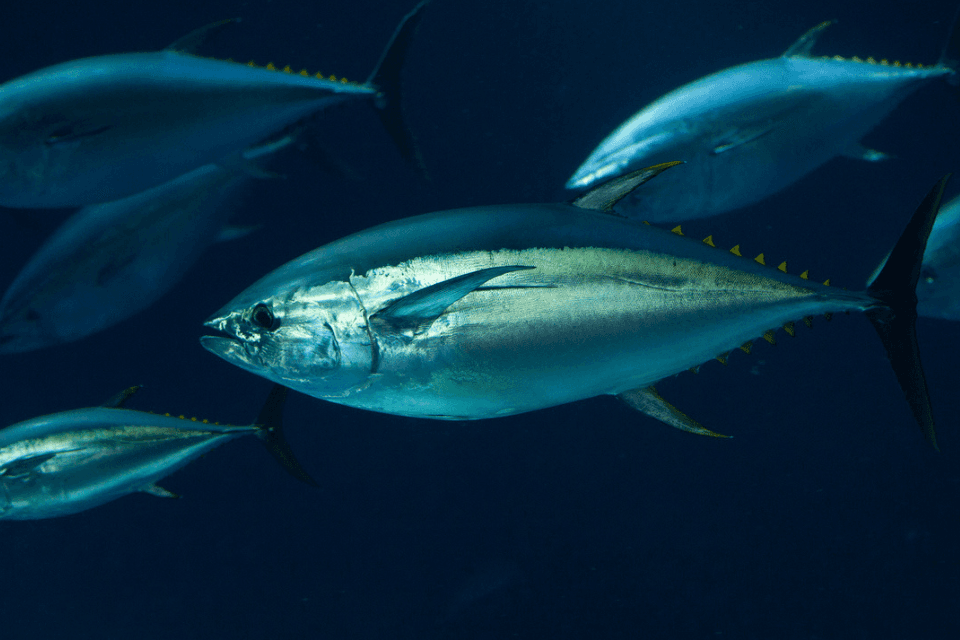
Study Reveals Bluefin Tuna Use Hydraulic Fins for Agile Hunting
Bluefin tuna steer their sickle fins with a built-in hydraulic system, a hidden edge that helps them hunt, turn, and dominate open water.
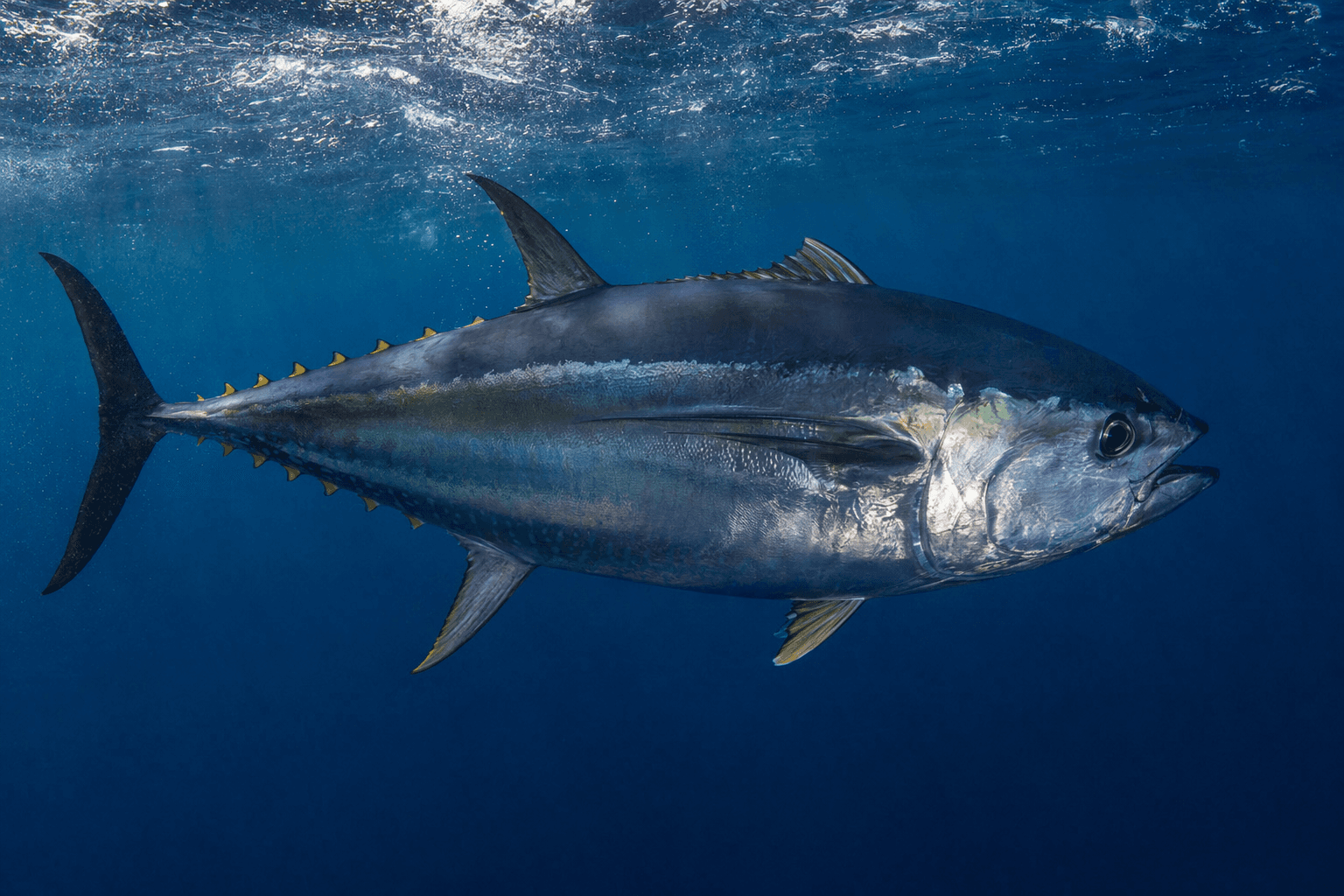
Bluefin tuna do not just muscle through the water, they fine-tune their bodies with a built-in hydraulic system that helps them hunt. Stanford University and Monterey Bay Aquarium researchers found that Pacific bluefin tuna and yellowfin tuna use a pressurized musculo-vascular complex, linking fin muscles, bones, and lymphatic vessels, to shape their dorsal and anal fins on the fly.
That matters because bluefin are built for speed, but not for easy bending. Their bodies have unusually limited flexibility, so they lean on tail and peduncle flexion, plus precise fin control, to make the sharp turns that define a successful strike. The lymphatic mechanism lets the fish expand or retract those large median fins, cutting drag when they want to move and adding control when they need to pivot on prey. For anglers who have watched a bluefin blow up on a bait and then vanish into a hard turn, the explanation is written into the fish itself.
The study, which landed in Science on July 21, 2017, also pointed to something bigger than tuna biology. Researchers said the same fin-control idea could inspire smart control surfaces for vessels and autonomous vehicles, a reminder that one of the ocean’s most powerful predators still offers lessons for engineers. Barbara Block’s circle of researchers, including Vadim Pavlov, Karter Harmon, and Alessandro Buzzi, has long treated bluefin as more than a trophy species, and this work showed why.
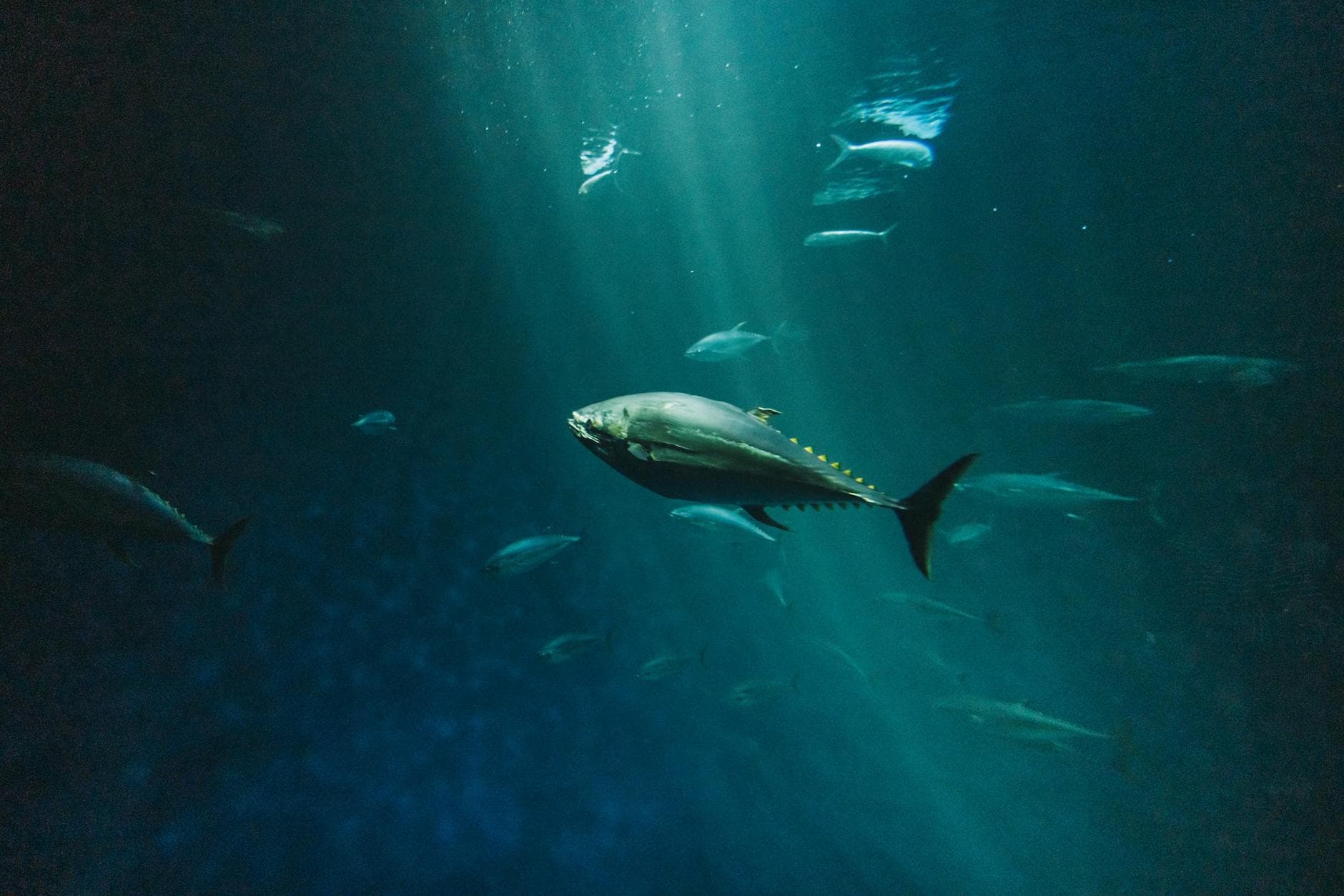
The timing lands cleanly with World Tuna Day, which the United Nations designated on May 2 in 2016. Tuna are among the planet’s most economically important fish, and the UN says they are highly migratory species that cross thousands of miles of ocean. The pressure on those stocks has eased in a major way. In 2017, only 75% of tuna catch came from healthy stocks free of overfishing; today, the UN estimates 99% of commercial tuna catches come from biologically sustainable stocks.
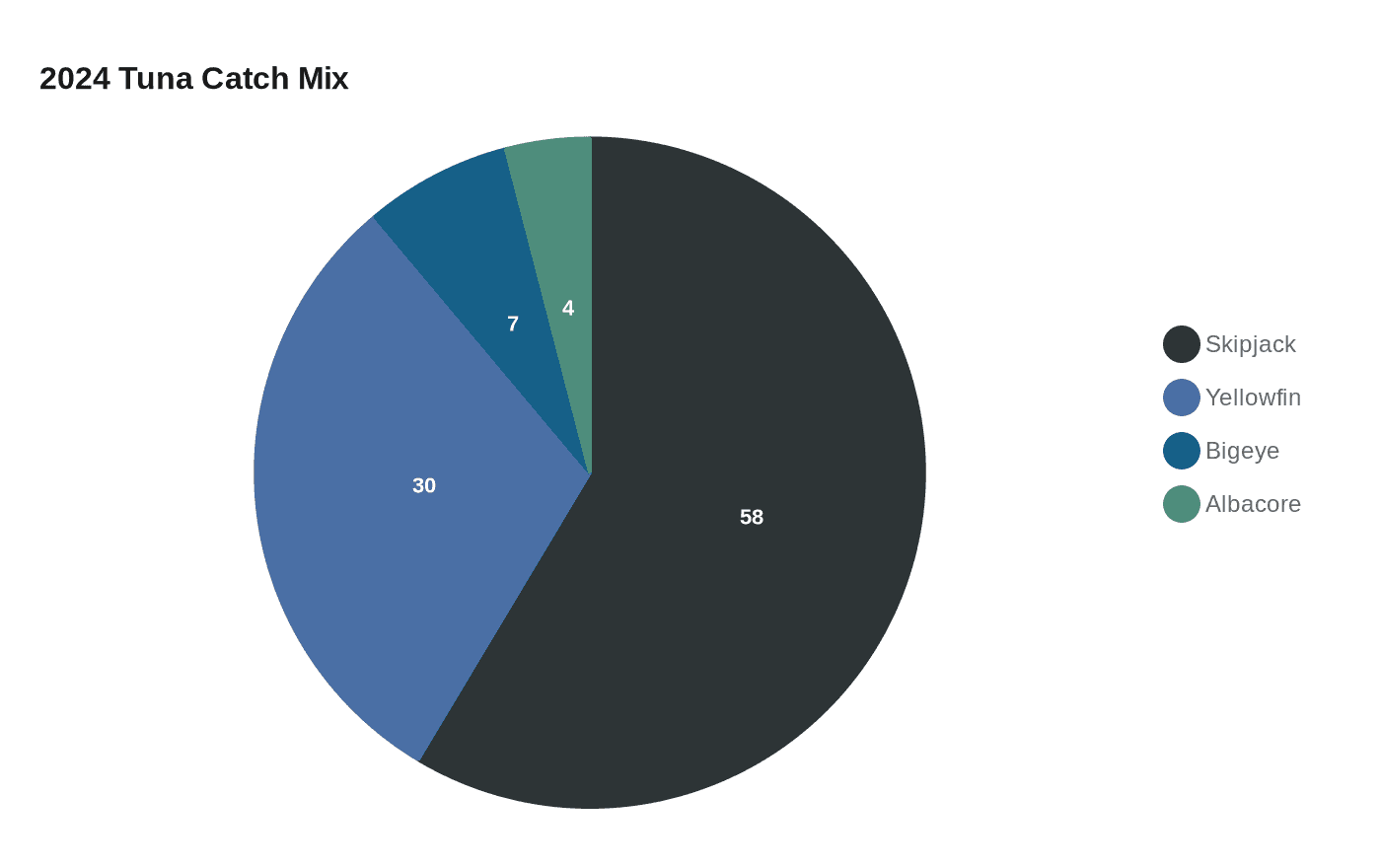
The numbers behind that turnaround are still huge. FAO and UN reporting put 2024 global catches of the main commercial tuna species at roughly 5.8 million tonnes, with skipjack at 58%, yellowfin at 30%, bigeye at 7%, and albacore at 4%. Pacific bluefin, meanwhile, are managed as one Pacific-wide stock because they spawn in the western North Pacific, juveniles feed in the eastern Pacific Ocean, and most return west to spawn. The 2024 assessment said the stock had rebuilt strongly after a historic low around 2010, reaching 23.2% of unfished biomass in 2022, about 144,483 metric tons, and topping its second rebuilding target in 2021.
That is why the latest quota fights still matter. NOAA Fisheries’ rule for 2025-2026 Pacific bluefin limits took effect June 5, 2025, and ICCAT later set 2026-2028 TACs at 3,081.6 tonnes for western Atlantic bluefin and 48,403 tonnes for eastern Atlantic bluefin, increases of 13% and 19.3%. Bluefin remain a biological marvel and a management test, and the fins that help them hunt are part of what makes them such a hard fish to catch and such a hard stock to govern.
Know something we missed? Have a correction or additional information?
Submit a Tip