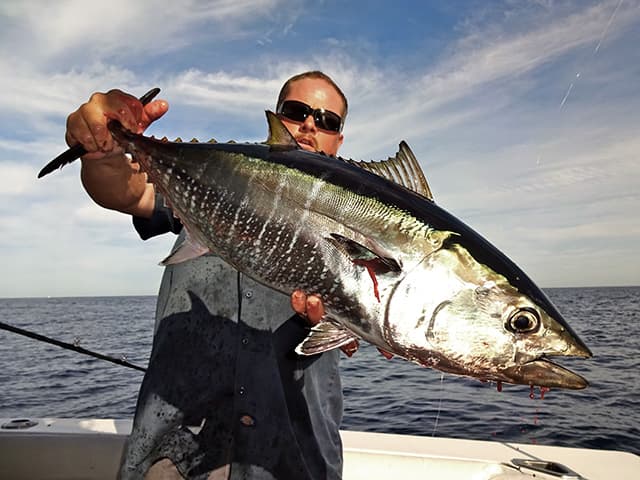
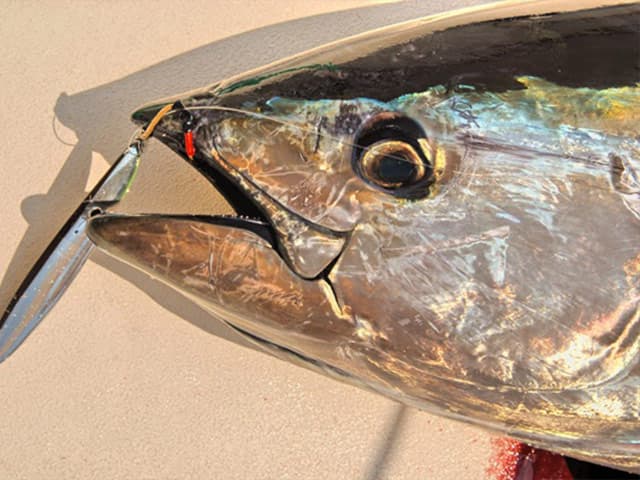
Circle hooks or J hooks, what works best for tuna fishing
In North Carolina dead-bait trolling, J hooks put more fish on the line, but circles still matter when release safety, billfish rules, or soft bites are the priority.
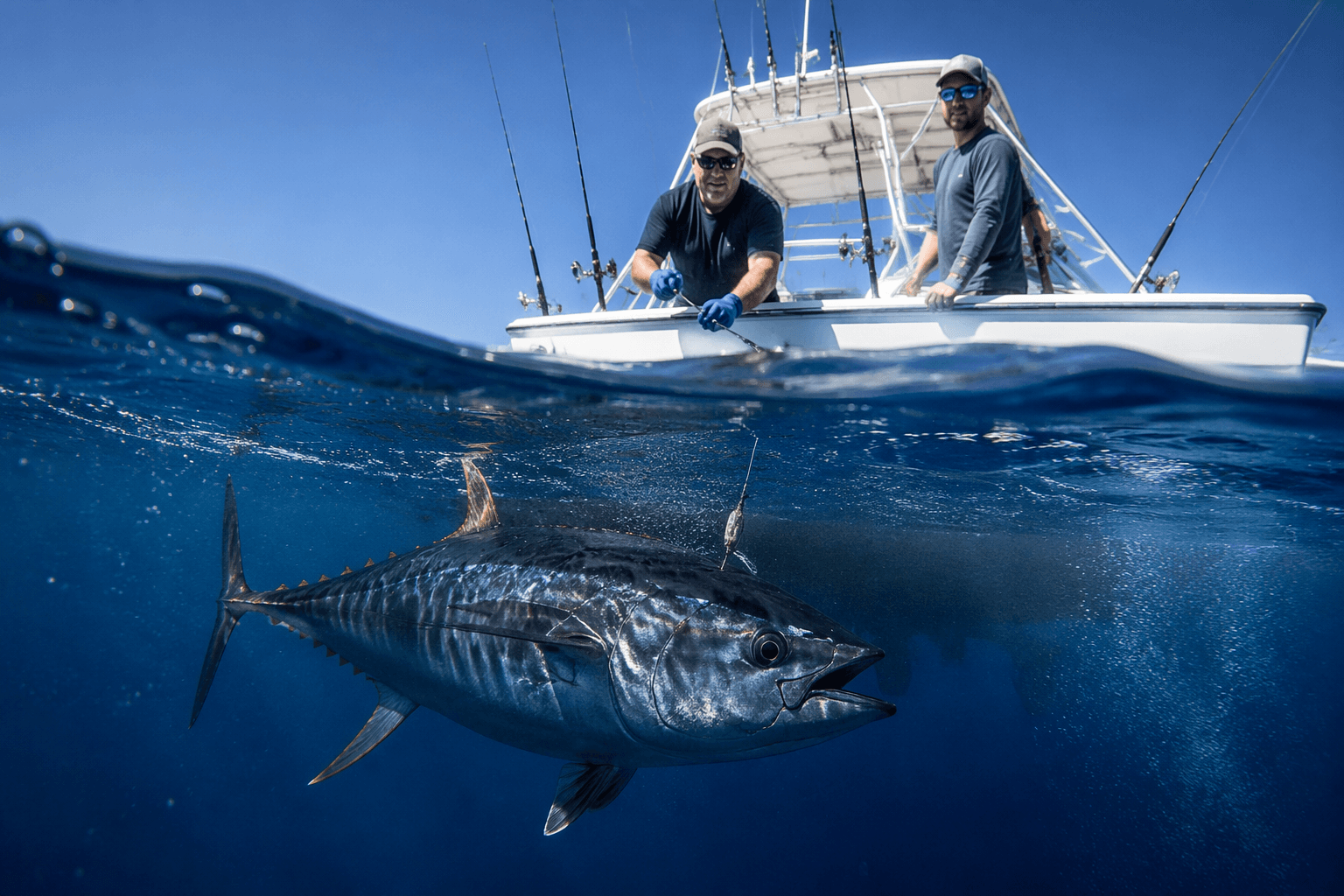
Off North Carolina, a dead-bait troll for yellowfin still favors the straight hook. In the offshore dead-bait troll fishery studied by Paul J. Rudershausen and his coauthors, J hooks outperformed circle hooks at the hookup stage. The winner changes fast once the trip shifts from filling boxes to handling fish cleanly.
What the North Carolina study actually showed
The study behind the debate, published in Fishery Bulletin 110:156–175 in 2012, covered the dolphinfish, yellowfin tuna, and wahoo troll fishery off the coast of North Carolina. The manuscript was submitted on May 24, 2011 and accepted on October 24, 2011, and NOAA later issued an errata to correct the title to “A comparison between circle hook and J hook performance in the dolphinfish, yellowfin tuna, and wahoo troll fishery off the coast of North Carolina.” It was a very specific look at the same offshore spread many North Carolina crews fish out of Morehead City and the surrounding coast.
North Carolina Sea Grant also covered the study in a post that ran in the Spring 2019 issue of Coastwatch magazine. That post put almost one-half of North Carolina’s 11 million pounds of marine recreational landings in 2017 in just three species. When the same dead-bait trolling program is feeding yellowfin, dolphin, and wahoo, a small change in hook style can move real fish into or out of the boat.
Where J hooks still earn their keep
If you are pulling ballyhoo and you care most about converting strikes into fish on deck, the North Carolina data favor J hooks. In NC State’s summary of the work, circle hooks were roughly 60 to 70 percent as effective at catching those three species as J hooks, which is a big enough gap to matter when the bite is measured in a handful of fish and not a full day of random action.
This is also where short-strike conditions expose the difference. When fish are slashing, pecking, or eating a bait poorly, a J hook gives you a better shot at immediate penetration in a troll setup that depends on the bait getting inhaled and the point finding meat fast.
Cedar plugs are a good example of where anglers overread the circle-hook trend. A cedar plug is an artificial, not a bait rig, so the North Carolina dead-bait result is not a clean match to that presentation.
Where circle hooks make more sense
Circle hooks start making more sense when the trip is release-minded. NOAA Fisheries’ Atlantic billfish tournament rule, implemented in 2008, requires non-offset circle hooks when anglers on Atlantic HMS-permitted vessels use natural bait or natural bait and artificial lure combinations, and the purpose is to reduce post-release mortality for all billfishes. The rule was not loved at first, but a 2017 NOAA advisory-panel document shows much of the billfish fishery had since adapted to it.
That same logic carries over to trips where the crew expects more fish to go back than come aboard. If you are running a spread that includes live bait, natural bait, or any setup where a clean release matters as much as a fast hookup, the circle hook earns its place even if it gives up some conversion. North Carolina’s 2020 memorandum to the Marine Fisheries Commission on recreational hook and line modifications reached beyond tournament fishing. State managers are still evaluating how circle hooks and barbless treble hooks affect dead discards in coastal waters.
Bluefin, yellowfin, and the kind of day you actually want
School yellowfin and school bluefin do not always demand the same decision, because the trip goal changes everything. If you are hunting yellowfin for the box on a dead-bait troll, J hooks still do the better job at the hook-up level. If the day is really about bluefin that will be released, the conservation side of the ledger gets heavier, and the circle hook’s lower deep-hooking risk starts to matter more than the raw bite count.
This article was produced by Prism’s automated news system from verified source data, official records, and press releases, then run through automated quality and moderation checks before publishing. The system is built and supervised by the people who set the standards it runs under. Read our full AI policy.
Did this article answer your question?