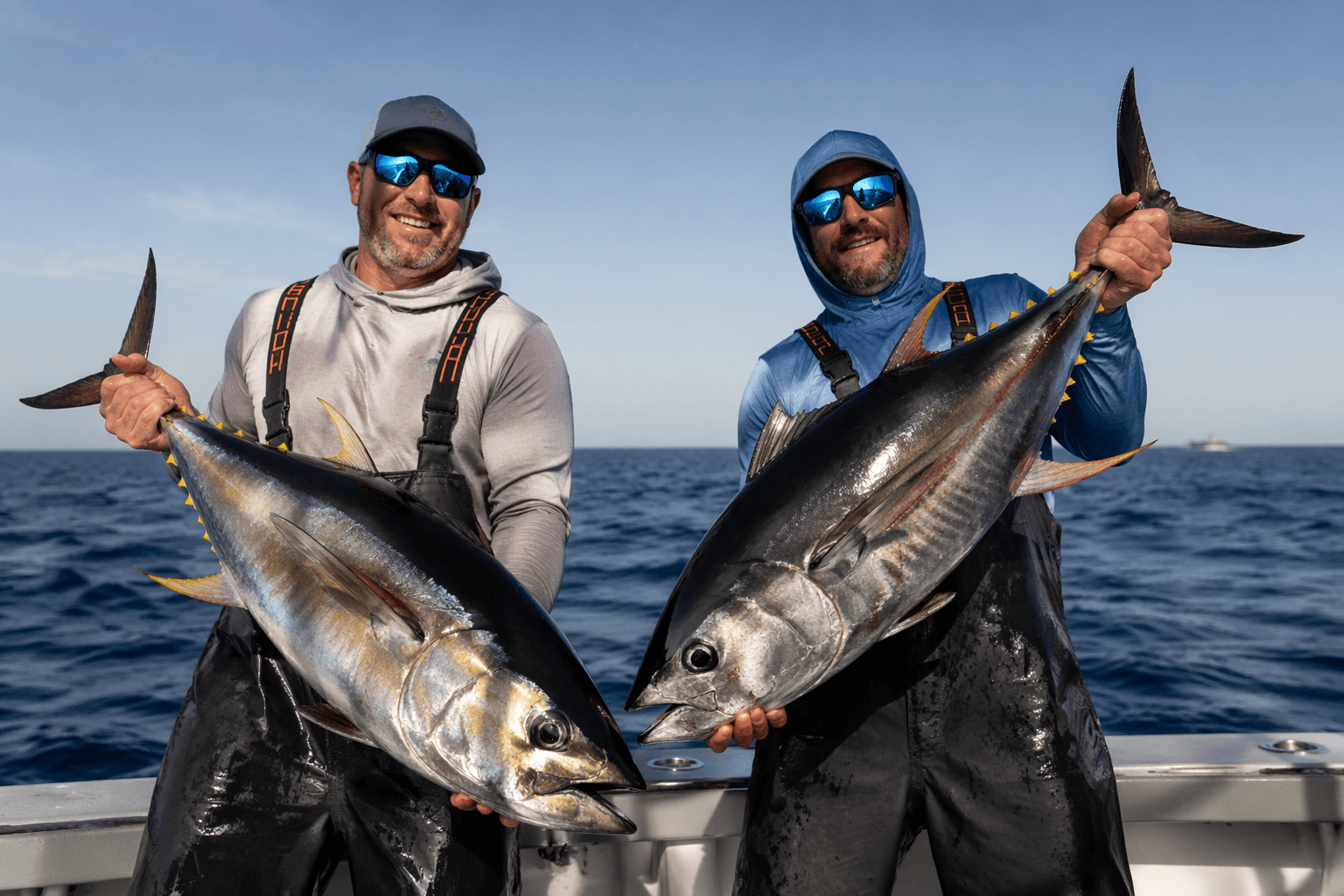
Florida yellowfin tuna bite turns on east side of Gulf Stream
Cape Canaveral yellowfin are a read-the-water game: find the east edge of the Gulf Stream, bird piles and bait before you ever troll a spread.
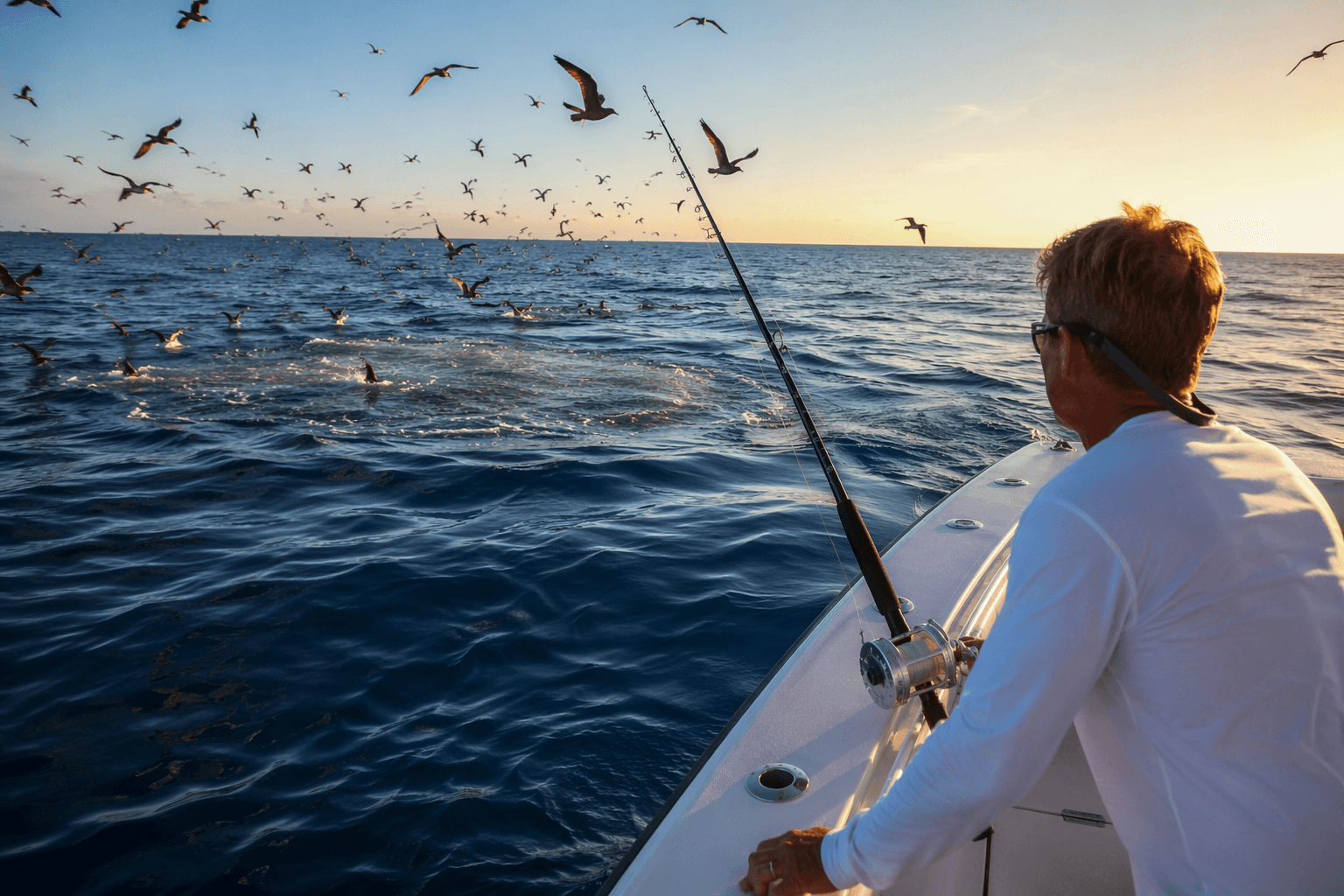
A crew aboard Capt. Adam Jeffrey’s 42-foot RazorHead catamaran Reel Dream looks for the right water, the right birds and the right current lines before a line ever splashes. Off Cape Canaveral, that discipline turns a long day offshore into a repeatable tuna plan.
Read the ocean before you run
Off central Florida, the fishery lives on the east side of the Gulf Stream, the stretch many local anglers call the Other Side. That matters because the bite is built around edges: temperature breaks, current seams and bait that stacks where those forces meet. He does not treat the run as a gamble; he treats it as a process of eliminating empty water until the pattern tightens.
The geography helps. NOAA’s Canaveral buoy 41009 sits 20 nautical miles east of Cape Canaveral, so there is a nearby reference point for marine conditions before the bigger offshore picture comes into focus. The central coast off Cape Canaveral is a crossover zone, where water temperatures can overlap with species such as wahoo and king mackerel.
Use the season to your advantage
The calendar matters as much as the screen. The bite starts building in March and April, when yellowfin may hold in warmer water on the east edge of the Stream, then often peaks in May and June when fish are commonly found in cooler water on the east side of the current. That seasonal shift changes how you work the water, because the best signs can show up before you ever reach the sharpest temperature break.
That is why it pays to start trolling early instead of waiting for a perfect waypoint. If you run all the way to the prettiest number on the chart and only then begin fishing, you can miss the zone where birds and bait were already lined up.
What to look for on the way out
Birds are the first real clue, and not just any birds. Terns working over bait are the classic sign, but the more useful picture is a group of birds together and lower on radar, not a few random singles scattered across open water. That difference matters because a tight cluster usually means a school or bait concentration that is holding under the surface, while isolated birds can be nothing more than a passing look at empty water.
Jeffrey’s setup uses a 10 kW bird radar, and the logic is practical: radar helps widen the search without turning the boat into a pinball machine. On a tuna run from Port Canaveral, Reel Dream typically works fish about 70 to 90 miles from land, which makes every early clue worth money in fuel and time. When birds, bait and current all line up, the crew can stay on the area and work it. When they do not, the search needs to move on.
A simple decision tree keeps the boat honest
The best Cape Canaveral yellowfin days are built on a few clear decisions. Stay when the water color looks right, the current line is clean, birds are grouped, radar is showing life and bait is present. Move when you are only seeing scattered birds, broken sign or a dead stretch that never develops into a real edge.
A practical offshore decision tree looks like this:
- Stay if terns are working bait and the radar paints a cluster rather than a lone mark.
- Stay if the temperature edge is building and the boat is already finding signs before the sharp break.
- Move if you have run through a section and only found random singles with no bait showing.
- Move if the current line is weak, the water never changes tone and the area fails to set up.
Know the fish, not just the spot
NOAA Fisheries manages Atlantic yellowfin tuna under U.S. regulations, and recreational retention limits can change, so the legal side of the trip belongs in the prep, not on the ride home. Yellowfin are top-of-food-chain predators that feed on fish, squid and crustaceans.
Yellowfin spawn in the western Atlantic from May to August in the Gulf of America and from July to November in the southeastern Caribbean.
A fishery with a short memory and a long history
The modern yellowfin plan off Cape Canaveral feels data-driven, but the offshore habit here is old. A Space Coast fishing history account places offshore charter boats at Cape Canaveral by 1910, which gives this pattern more than a century of local use.
This article was produced by Prism’s automated news system from verified source data, official records, and press releases, then run through automated quality and moderation checks before publishing. The system is built and supervised by the people who set the standards it runs under. Read our full AI policy.
Did this article answer your question?