Outer Banks tuna bite turns on with yellowfin and bigeye action
Yellowfin and bigeye are showing inside roughly 20 miles, turning the Outer Banks into a realistic weekend tuna play. Mixed fish mean a heavier, more flexible spread now matters.
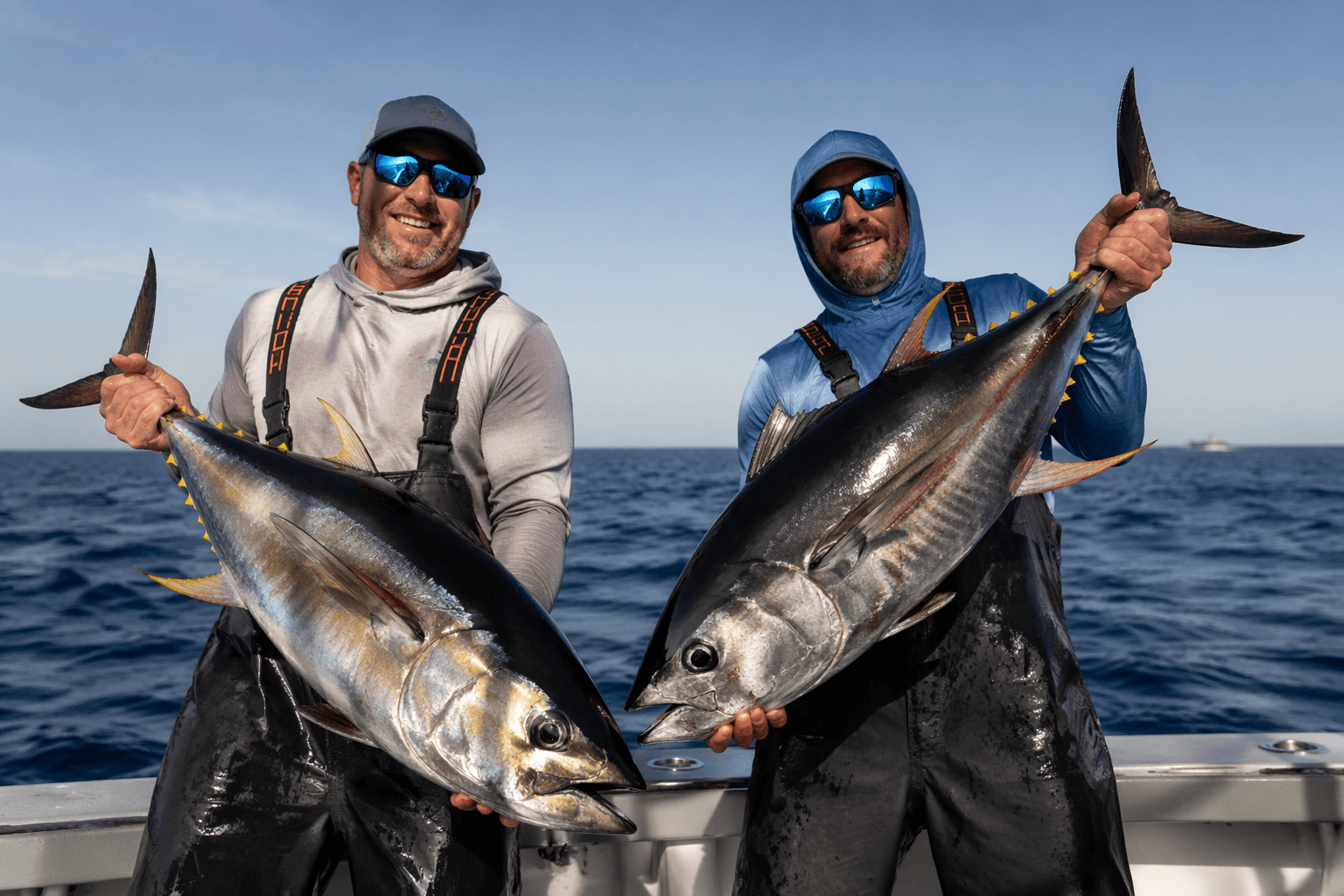
Yellowfin and bigeye tuna are mixing within 20 miles of the Outer Banks again. The bite has shifted from a pure yellowfin chase to a mixed yellowfin and bigeye opportunity, with enough movement to make a weekend run worth the fuel. That mix changes the dockside decision fast: the best crews will leave with a spread that can handle both a clean yellowfin bite and a heavier fish that does not flinch when the rigger clips in.
A mixed bite changes the go-no-go call
John of Drumbeat Charters, which runs out of Oregon Inlet Boat Ramp in Nags Head, is finding mahi moving through under grass mats mostly in the 20-mile range, while the tuna side of the picture now includes both yellowfins and bigeyes. McKayla of Oregon Inlet Fishing Center says the tuna bite finally showed up, with good-sized yellowfin tuna plus large bigeye tuna to 198 pounds. That combination matters because the fish are close enough to be realistic for a weekend crew, but not so locked in that one exact school or one exact structure should be expected to hold all day.
If your plan only works when the boat finds a stacked yellowfin bite, this is still a scout-and-adjust trip. If you can move with the water, the weeds and the bait, the window is worth using. The action sits close enough to the inlet to stay practical, yet mixed enough to reward crews that are willing to keep fishing until the right edge presents itself.
Build the spread for two different tuna
Yellowfin and bigeye do not always want the same presentation, and when the fish are not locked into one species or one exact structure, the boat needs options that can be tightened or widened without slowing the run. That means carrying a cleaner, more natural-looking side for fish that are feeding up top, plus enough backbone in the rest of the spread to handle a bigeye that may eat deeper and pull harder.
For a crew making the run from Oregon Inlet, the safest approach is a spread built around flexibility rather than a single pattern. Keep a few offerings that can cover water and a few that can be dropped back when bait shows. When the bite is mixed, the boat that can switch from searching mode to feeding mode without resetting the whole deck usually gets the better of the window.
- Run a spread that can cover both searching and feeding, instead of committing to one style too early.
- Keep your bait work clean enough for yellowfin, but stout enough that a bigeye does not expose a weak link.
- Be ready to adjust the distance of baits and lures when fish show around grass mats or bait concentrations.
Watch the water, not just the chartplotter
The broader summer pattern is a classic warm-water shuffle. Warm water is pushing fish around, amberjacks are showing on the nearshore wrecks, triggerfish are closer still, and offshore crews are seeing a mix of pelagics rather than one dominant bite. For tuna anglers, that points at the ingredients that usually matter most in July: temperature changes, floating grass and bait concentrations.
Mahi under grass mats in the 20-mile range is a useful clue, even for crews focused on tuna. Grass can mark the same edges that hold bait, and bait is what turns a scattered summer ocean into a fishable lane. When the weed lines are alive and the bait is stacked, the tuna bite often feels less random and more like a decision you can actually make before the first line goes out.
The inshore action supports that read. Bluefish are plentiful throughout the inlet and inshore waters, spanish mackerel have kicked off on incoming tides, and pier anglers are sight-casting Gotcha plugs and metal jigs to spanish mackerel and bluefish. Surf anglers are still picking up spot, croakers, mullet and puppy drum. None of that is tuna fishing, but it shows an active food chain before an offshore run.
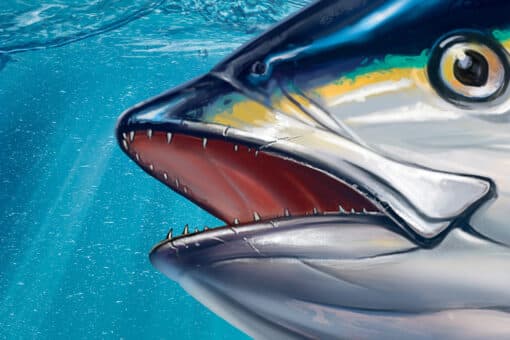
Know the rules before the fish hit the deck
Bigeye and yellowfin are both highly migratory species under federal HMS regulations, so the paperwork and retention side of the trip is not optional. Under NOAA’s recreational Atlantic tuna guidance, bigeye, albacore, yellowfin and skipjack rules vary by species, and retention limits are updated as the regulations change. For a crew planning a mixed bite, that means the species ID has to happen cleanly and quickly when the fish comes over the rail.
The North Carolina Division of Marine Fisheries builds its regional recreational fishing reports from interviews with more than 500 anglers each week. The July tuna update sits inside a broader report tracking the inlet, nearshore wrecks and surf.
July keeps repeating this pattern
Oregon Inlet Fishing Center’s 2025 July reports also featured yellowfin tuna, blackfin tuna, mahi mahi, wahoo and citation bigeye tuna. Bigeye fishing out of Oregon Inlet can be especially strong in July when water conditions line up.
This article was produced by Prism’s automated news system from verified source data, official records, and press releases, then run through automated quality and moderation checks before publishing. The system is built and supervised by the people who set the standards it runs under. Read our full AI policy.
Did this article answer your question?