Italy Recalls Sea Master Yellowfin Tuna Over Dangerous Histamine Levels
Lab tests found histamine above legal limits in Sea Master yellowfin tuna lot 20261018625. No amount of heat will neutralize it.
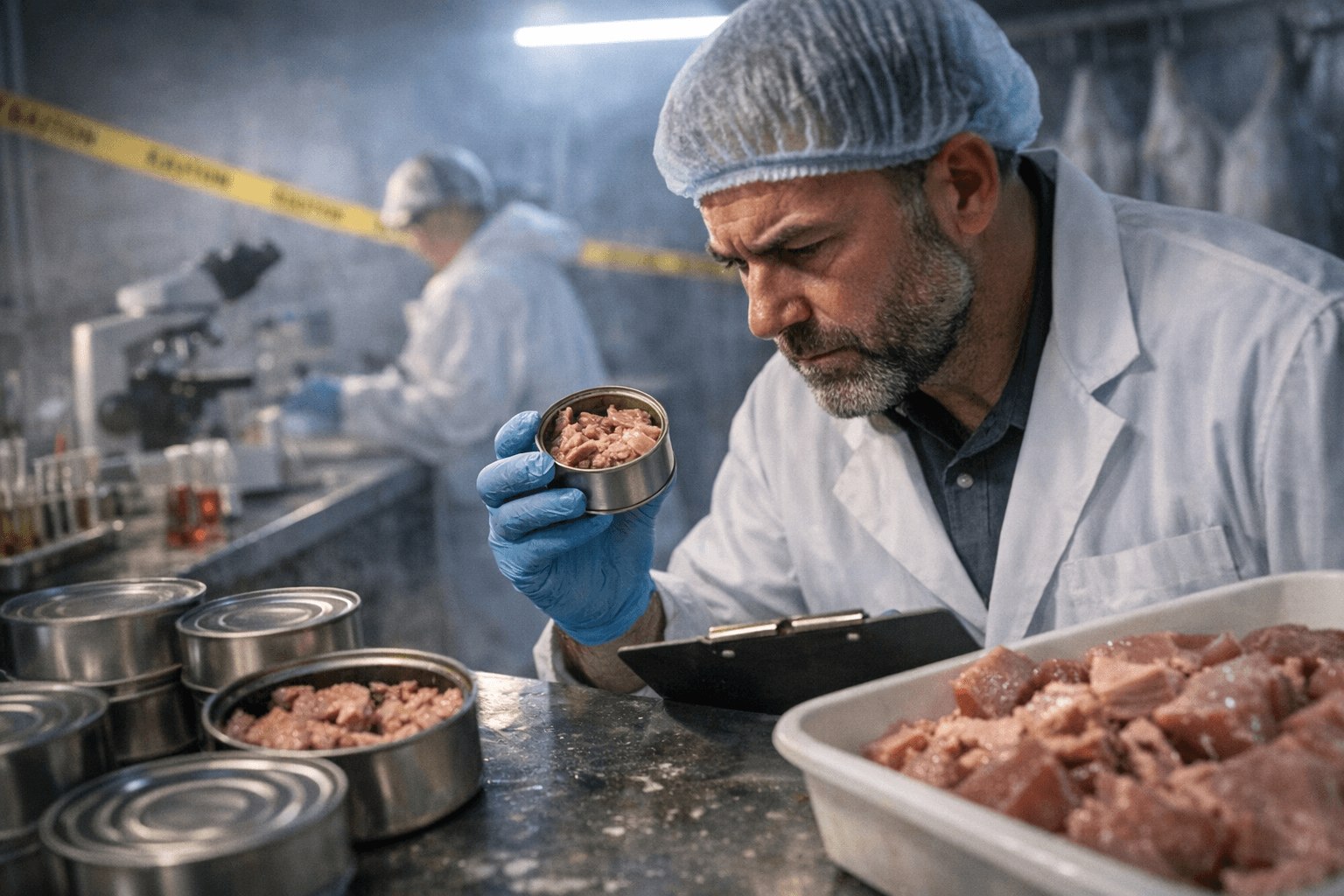
When post-sale laboratory tests came back positive for histamine concentrations above legal limits, Mar Grande Srl didn't wait for regulators to act. The Pulsano-based processor, operating out of Taranto province in southern Italy, self-initiated a market withdrawal of its Sea Master marinated yellowfin tuna, and Italy's Ministry of Health published the official recall notice on March 26, 2026.
The implicated product is lot 20261018625, produced under EU establishment ID ITU2K3S, with a stated expiry date of March 27, 2026. It was distributed in 2 to 3 kg vacuum-packed slices and frequently sold loose at fish counters without individual consumer labels, which makes positive identification difficult for anyone who bought it without keeping paperwork. If you purchased marinated yellowfin tuna from a counter in the past week and can match the lot number, don't eat it.
The hazard here isn't one you can cook your way out of. Histamine is heat-stable: it forms when tuna and other scombroid-family fish sit outside proper refrigeration long enough for naturally occurring bacteria to convert the amino acid histidine into histamine. Once it's in the flesh, no amount of frying, grilling, or marinating will neutralize it. The resulting illness, scombroid poisoning, hits fast. Symptoms typically appear within minutes to a few hours and include facial flushing, hives, nausea, abdominal cramps, and in serious cases respiratory distress that requires medical attention.
That speed matters on the water. If someone aboard eats a piece of fish and starts flushing red within 30 minutes, scombroid is the first thing to rule out regardless of how well the fish was handled that day. The poison was already built in before you touched it.
The recall points directly at cold-chain failure as the mechanism. Histamine accumulates whenever temperature control lapses during processing or transport, and tuna's high histidine content makes it especially vulnerable compared to other seafood. The problem recurs in commercial supply chains because the breakdowns are often brief and invisible: a pallet sitting at ambient temperature during a transfer, a refrigeration unit that cycled off overnight. The fish can look, smell, and feel perfectly normal and still contain dangerous concentrations.
For anyone running tuna offshore, the lesson translates directly to the cooler. Bleed and ice fish immediately after the gaff, keep your catch below 40°F throughout the trip, and don't let it ride in a warm trunk or van bed for hours on the way home. Marinated or pre-processed tuna from a fish counter deserves the same scrutiny as any perishable: ask for lot documentation, keep it refrigerated, and understand that if it wasn't labeled when you bought it, tracing it back in a recall scenario is nearly impossible. The Mar Grande situation is a reminder that the cold chain doesn't get a day off between the boat and the plate.
Know something we missed? Have a correction or additional information?
Submit a Tip