Modern spinning gear helps anglers target big tuna effectively
Modern spinning gear can handle bluefin, yellowfin and bigeye, but only if you fish for control. Drag, line management and timing decide the outcome.
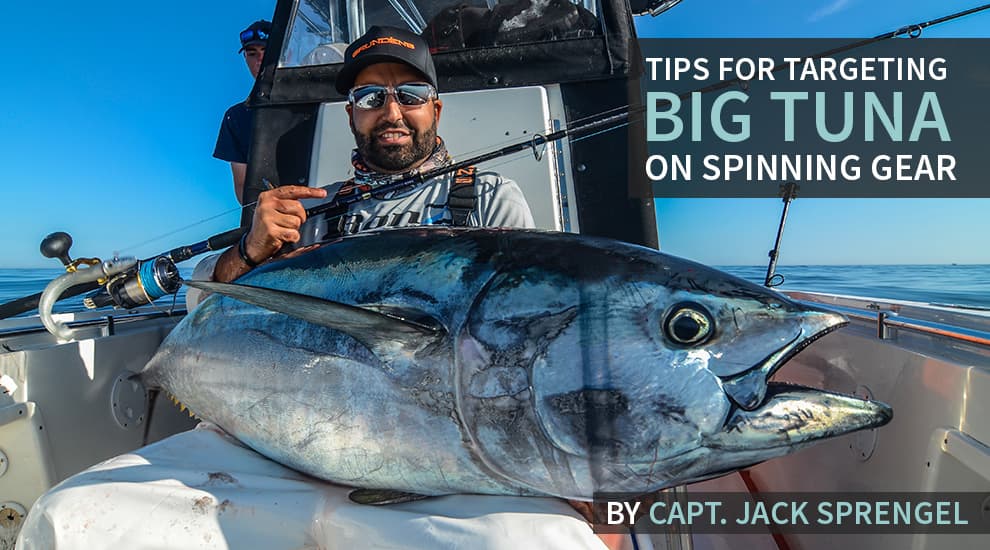
Modern spinning gear has crossed the line from clever alternative to real tuna weapon, and that shift matters most when the fish are fast, powerful and close enough to reach with a cast. Shimano’s offshore spinning engineering now talks openly about bluefin-level heat and speed, while FishTrack’s tuna guidance makes the same point from the water: if you want to land big tuna on spin, you need to fight them with control, not optimism.
Why spin works on serious tuna now
The case for spinning gear is built on three upgrades working together: stronger superlines, better rod construction and the rise of jig-and-pop fishing as a serious offshore method. FishTrack frames spinning as a tool that can handle bluefin, yellowfin and bigeye because modern gear is strong enough, precise enough and line-efficient enough to be effective on larger pelagics. That does not make it easy. It makes it usable in a way older spinning setups simply were not.
The important part is that spin gives you casting freedom and a different fight, but it only pays off if you are an active angler. FishTrack is explicit about that. You need to be comfortable jigging, topwater fishing, accurate casting and several rigging methods, or a tuna will punish the mistake fast. This is not a wait-and-hope approach. It is a presentation game first and a fight-management game second.
The tackle choices that preserve leverage
If you are stepping up to big tuna on spin, the first mistake is underbuilding the rod and reel pairing. You want an offshore-class spinning outfit that can throw jigs and poppers accurately, then stay composed once a tuna turns and runs. The rod has to help you keep pressure on the fish without turning the whole system into a broomstick that kills your casting and leaves you fighting the gear as much as the tuna.
The reel matters just as much. Shimano’s STELLA SW D line is built around X-Tough Drag, with drag technology aimed at the violent speed of bluefin tuna, and larger sizes use Heatsink Drag to reduce spool surface temperature by up to 30 percent. That is not marketing fluff for this style of fishing. It is exactly the sort of engineering that keeps drag output smoother when a bluefin surges hard and long, which is when spinning gear either holds together or gets overmatched.
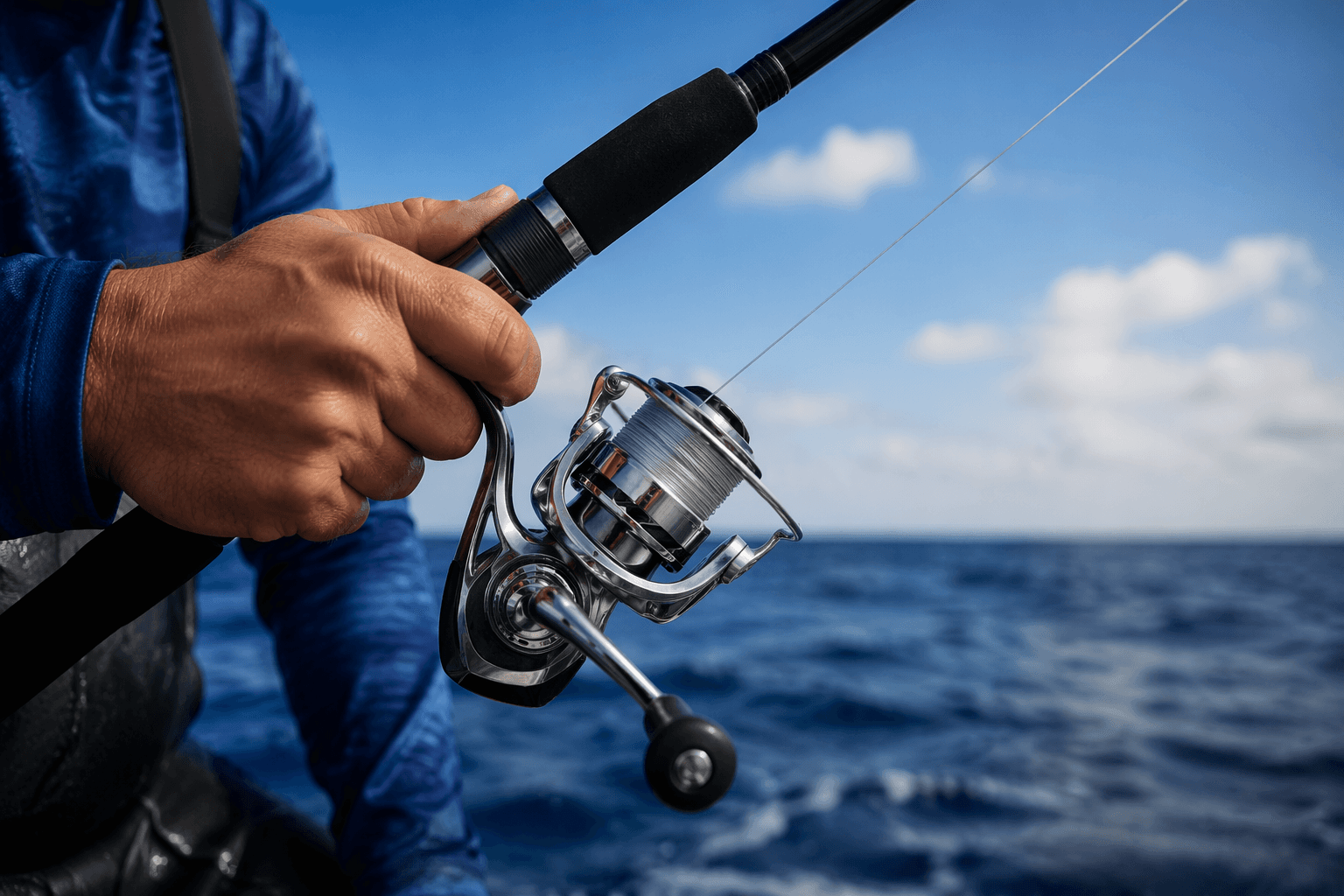
Line choice is part of the same equation. FishTrack points to superlines as one of the reasons spinning gear has become so effective for tuna, and that tracks with how these fights actually unfold. You need line that casts cleanly, digs less under pressure and gives the reel a chance to work as a system rather than as a panic brake. If you are shorting the spool or cheating on line quality, you are giving up the very advantage spin is supposed to provide.
How to fish it when tuna are reachable
Spinning gear shines when the fish are doing something visible and exploitable. FishTrack calls out popping, jigging and “jig and pop” as the right lane, and it is especially useful for shore-side anglers and small-boat crews who can reach tuna busting bait or pushing a surface feed. Offshore crews can treat it as a secondary setup that comes alive when the spread is not the answer and the fish would rather eat a cast presentation.
That means boat positioning becomes part of the setup, not an afterthought. If the school is up, moving and reacting to surface bait, you want the boat placed so you can put the lure where the tuna are headed, not where they already were. Spin rewards a clean first shot. Miss that window and the edge fades quickly, because big tuna do not usually keep circling politely while you sort out a poor angle.
The best spinning tuna anglers are also the cleanest riggers. FishTrack’s guidance makes that plain: proper casting, careful rigging and familiarity with multiple rigging methods are not bonus skills, they are the baseline. A good lure on a bad rig wastes the bite. A good rig on a sloppy cast wastes the fish.
When spinning gear stops being the advantage
Spin is powerful, but it is not magic. The moment you are no longer dealing with fish that will come up, show themselves or respond to a cast, the case for spinning weakens fast. If the tuna are deeper, the action is scattered or your own casting is not accurate enough to place a lure where it needs to go, conventional gear starts looking more efficient.
The same is true when brute force and sustained line control matter more than presentation. Spinning gear can absolutely dominate a fight when everything is matched well, but it is not the best answer for every tuna scenario. The trick is knowing when the fish are giving you a casting problem versus a pulling problem. Spin solves the first one best.
The management backdrop you cannot ignore
This is also happening in a tightly managed fishery, which is part of why every good shot matters. NOAA Fisheries says the recreational retention limit for bluefin over 73 inches curved fork length is per vessel per year. For 27- to under-73-inch fish, NOAA said the default limit remained 1 fish per vessel per day or trip through December 31, 2025 unless modified, and then adjusted recreational Atlantic bluefin limits took effect June 1, 2026 through December 31, 2026.
The larger bluefin picture is just as strict. NOAA’s 2024 catch summary says landings and dead discards exceeded the adjusted quota for 2024, and it notes that those landing reports are preliminary and not meant for real-time catch monitoring. ICCAT, meanwhile, adopted a management procedure for Atlantic bluefin tuna in November 2022 and keeps eastern and western Atlantic management areas separate. In a fishery like that, a spinning setup is not a novelty purchase. It is a way to make the most of a limited chance without getting bullied off the bite.
That is the real change here: spinning gear is no longer the soft option for tuna, but it only works when you fish it like a control system. When the bluefin, yellowfin or bigeye finally eats, the gear has to hold, the drag has to stay smooth and the angler has to stay ahead of the fish.
This article was produced by Prism’s automated news system from verified source data, official records, and press releases, then run through automated quality and moderation checks before publishing. The system is built and supervised by the people who set the standards it runs under. Read our full AI policy.
Did this article answer your question?