MSC Reports 24% Jump in Certified Tuna as Yearbook Highlights Sector Progress
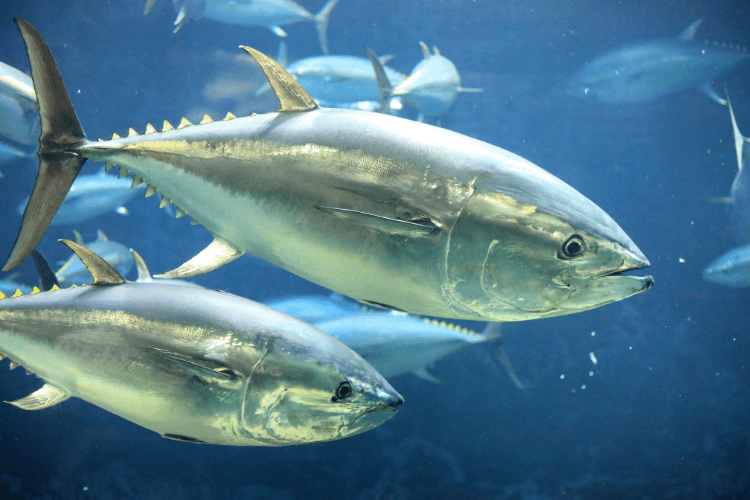
MSC-labelled tuna jumped 24% year-on-year to roughly 300,000 metric tonnes in 2024/25, while about half the world's entire annual tuna catch now comes from certified fisheries.

MSC-labelled tuna volume surged 24% year-on-year to around 300,000 metric tonnes in 2024/25, the Marine Stewardship Council reported in its Sustainable Tuna Yearbook 2025, released alongside updated downloadable fisheries data in March 2026. The figure, drawn from data correct as of 31 March 2025, marks one of the more striking single-year gains the certification body has recorded for the category.
"With sustainability increasingly a priority issue for retailers, brands and consumers, the market continues to deliver on sustainable tuna," the MSC stated in the Yearbook's promotional text. "The latest figures reflect an impressive growth in MSC labelled tuna up 24% year-on-year to around 300,000 metric tonnes in 2024/25. For consumers, this translates to a wide increase in sustainable tuna options at retail — with new developments in food-to-go, foodservice and pet food."
The broader picture behind that number is substantial. About half of the world's annual tuna catch, approximately 2.8 million tonnes, now comes from MSC-certified fisheries, according to a quarterly-updated table of certified and in-assessment fisheries that was last refreshed on March 5, 2026. That same data set, which links each entry to the MSC's own Track a Fishery pages, shows certified operations spread across every major tuna ocean basin: from the Tri Marine Atlantic Albacore longline fishery working the Atlantic to the Hawaii longline swordfish, bigeye and yellowfin tuna fishery in the Pacific, and the Dongwon Indian Ocean tuna purse seine fishery operating across FAO areas 51 and 57 including the EEZs of Seychelles, Mauritius, Madagascar and Tanzania. The JC Mackintosh Greenstick, handline and fishing rod bluefin tuna fishery holds a certified status specific to the Strait of Gibraltar, one of the more geographically pinpoint certifications on the list. A cluster of Western and Central Pacific Ocean purse seine fisheries, including the Nauru Skipjack, Yellowfin, and Bigeye Tuna Purse Seine Fishery and the SI WCPO skipjack and yellowfin tuna purse seine fishery, both carry certifications running to July 2027.
Not everything is inside the MSC system. The Yearbook notes that 29% of global tuna catch is neither MSC certified, in assessment, nor in a Fishery Improvement Project. Suspended tuna catch, the Yearbook adds, is negligible.

The Yearbook carries an important methodological caveat that any angler or buyer tracking these numbers should keep in mind: fisheries catch data on the MSC's pages is correct as of 31 December 2024, and "due to a 1–3 year reporting delay, recent catch figures are continually updated." That lag is standard across ocean-capture reporting and means the 24% growth figure reflects the most current available data, not necessarily a real-time 2026 snapshot.
"The MSC Sustainable Tuna Yearbook 2025 provides a comprehensive view of the current state of the tuna sector and highlights success stories," the organization wrote. "We hope it will inform and inspire you to join us on this remarkable journey towards a more resilient and sustainable tuna industry."
The Yearbook was produced by a team that includes writer and production manager Caitlin Ingram, writer and lead data analyst John McLeod, writers Nick Wyke and technical support from Laura Rodriguez and Bill Holden, with creative direction by Tomaso Capuano and graphics by Paul Ashby. The full publication and updated fisheries data are accessible at msc.org/tuna.
Know something we missed? Have a correction or additional information?
Submit a Tip