NOAA flags 2026 Atlantic bluefin tuna landings as preliminary update
NOAA’s latest Atlantic bluefin tally shows 1,394 fish and 203.4 mt through April 30, but the agency says the numbers are still preliminary.

NOAA’s latest Atlantic bluefin tuna landings page is useful for one thing first: it tells anglers how the fishery is trending, not what is happening at the rail today. The agency says the figures are preliminary, include only landings reported to NOAA Fisheries to date, and should not be used for real-time catch monitoring, which is exactly why the update matters to anyone trying to read quota pressure without overplaying the numbers.
The clearest read is in the General category. From January 1 through April 30, 2026, General category landings reached 435 fish at an average weight of 362.6 pounds, for 71.6 metric tons. That is well below the same stretch in 2025, when the General category stood at 553 fish and 123.9 metric tons. For anglers, that points to a slower General-category pace than last year, which lowers the impulse to assume an immediate seasonal squeeze from this one report alone.

Longline tells a different story. NOAA’s 2026 update shows 959 fish and 131.8 metric tons from January 1 through April 30, and the total across all categories reached 1,394 fish and 203.4 metric tons. That total is still below the 1,058 fish and 220.9 metric tons logged across the same period in 2025, but the category mix matters: General is running lighter, while Longline is ahead of its 2025 pace by both count and weight. Those differences can shape how managers view pressure later in the year.
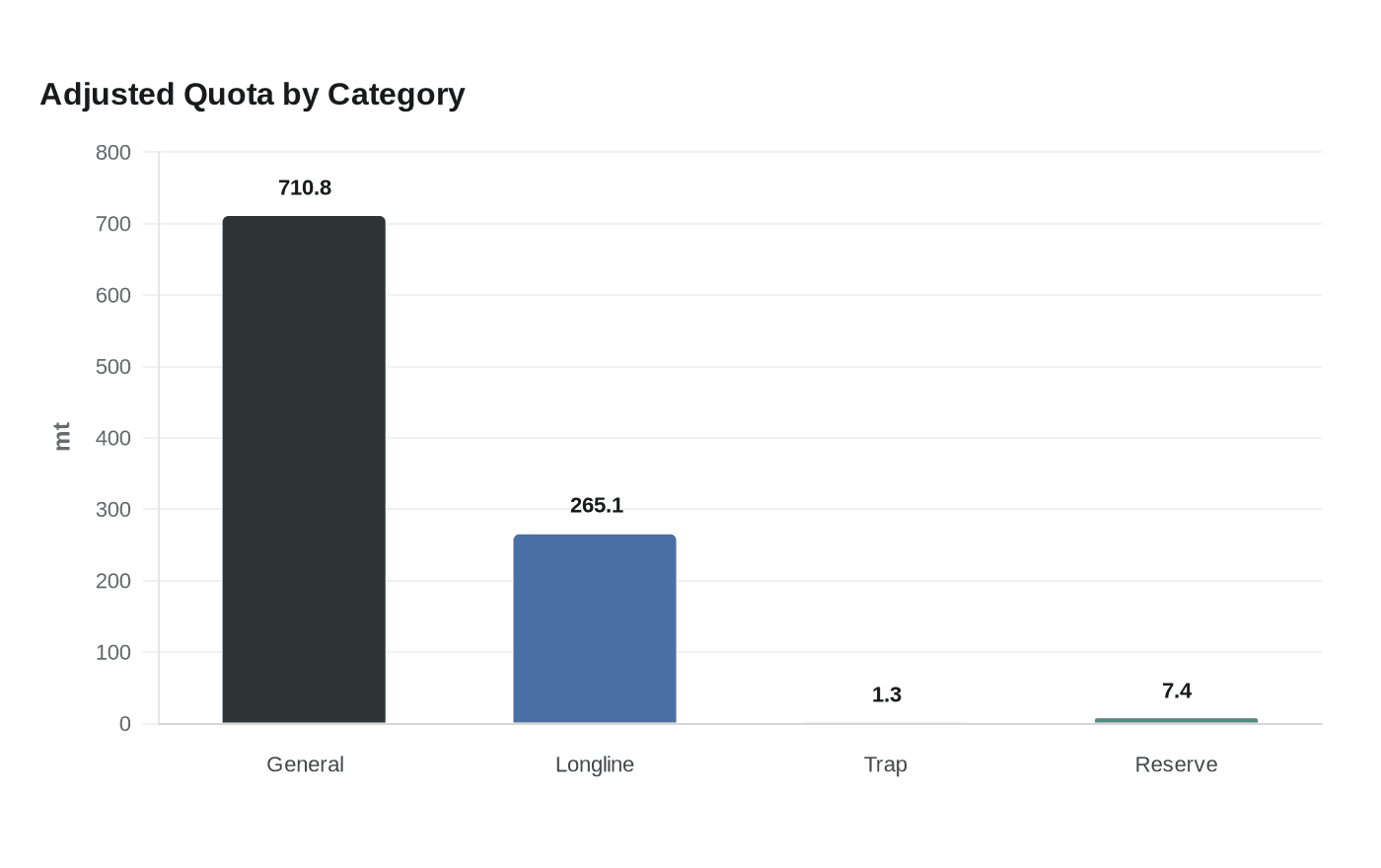
The quota structure on the page shows why the update is more than a tally sheet. NOAA lists an adjusted General category quota of 710.8 mt, Longline at 265.1 mt, Trap at 1.3 mt, Reserve at 7.4 mt, and a total adjusted quota of 1,043.8 mt. The inseason-transfer table also shows quota moving early in the year, including 26 mt shifted on January 8 from the General category December time period to the General category January through March time period, and 30.8 mt shifted on February 9 from Reserve to Longline. Those are the kinds of moves that keep a season flexible, and they are the real signal to watch alongside the landings total.
That is why anglers and dealers track these pages closely, especially now that new recreational Atlantic bluefin retention limits took effect June 1 and run through December 31 unless changed again. NOAA’s recreational status page showed the Gulf of America trophy area closed on May 21, while the Gulf of Maine and Southern New England trophy areas remained open as of June 10. The 2025 closing of the recreational angling category on August 12 is the reminder that bluefin rules can tighten fast once landings start stacking up.
For now, the best read is simple: NOAA is watching the fishery closely, the quota board is still moving, and the June 6 update is a signal of pace, not a live bite alarm. Brad McHale at NOAA Fisheries’ Office of Sustainable Fisheries is listed for landings questions at 978-281-9260.
This article was produced by Prism’s automated news system from verified source data, official records, and press releases, then run through automated quality and moderation checks before publishing. The system is built and supervised by the people who set the standards it runs under. Read our full AI policy.
Know something we missed? Have a correction or additional information?
Submit a Tip