NOAA updates Atlantic tuna landings, early 2026 catches remain preliminary
Northern albacore reached just 5.9 metric tons through March 31, a slow start that sat far behind 2025 and left bigeye and yellowfin trailing too.

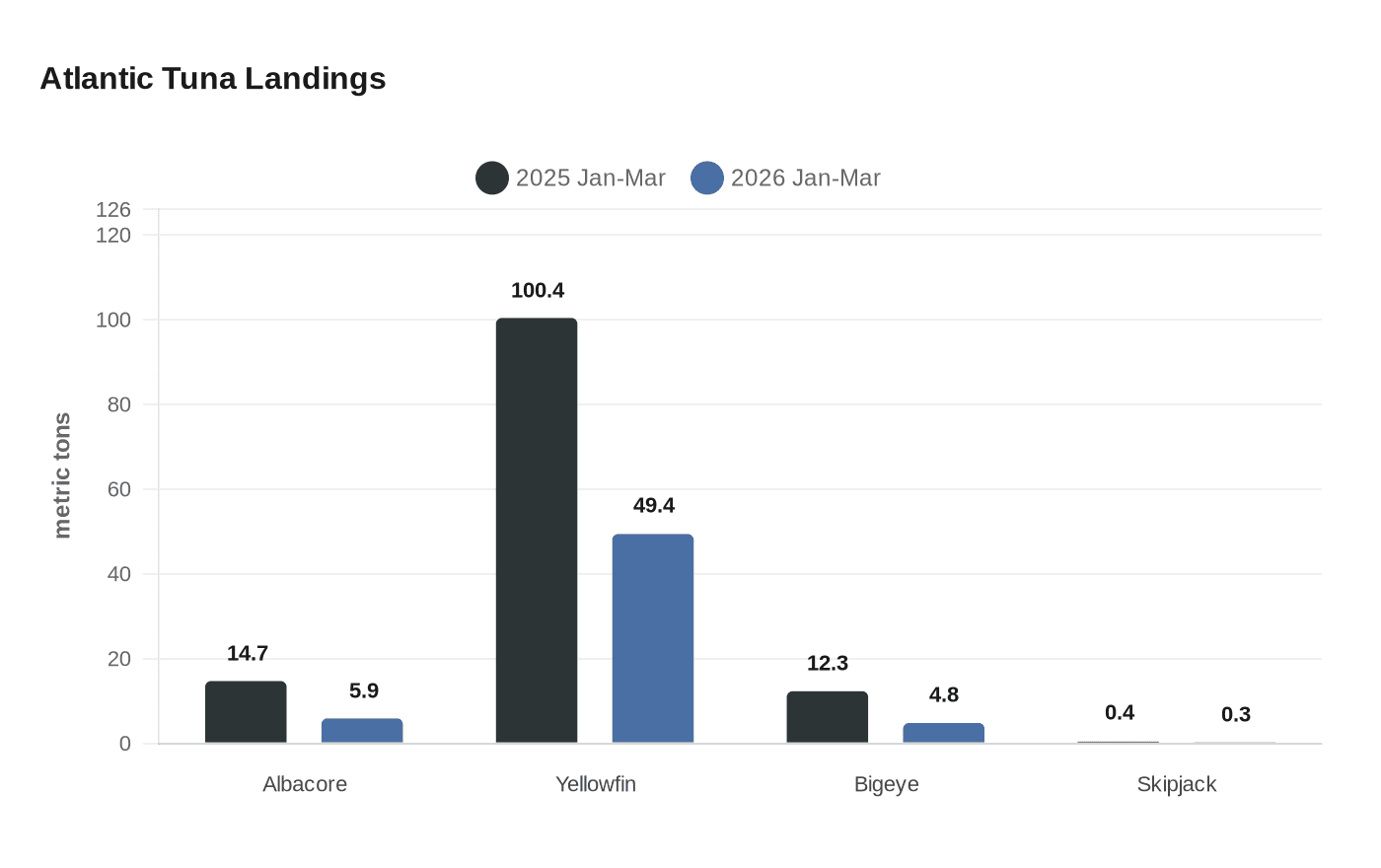
Northern albacore barely got out of the gate, landing at 5.9 metric tons through March 31, just about 1 percent of the 889.4 metric ton quota. That early tally, alongside 49.4 metric tons of yellowfin, 4.8 metric tons of bigeye, and 0.3 metric tons of skipjack, gave the Atlantic tuna fishery a quiet first-quarter readout and an unmistakable contrast with last spring’s pace.
NOAA Fisheries posted the preliminary 2026 commercial Atlantic bigeye, northern albacore, skipjack, and yellowfin landings update on April 15, covering January 1 through March 31 for the Atlantic region, including the Caribbean. The agency said the estimates were built from dealer reports and other landing sources, are subject to late reporting, and do not include discards. That makes the page a management snapshot, not a final count, but it still carries weight from New England to the Mid-Atlantic and down through the Southeast United States, where commercial pressure and market supply ripple into the season’s expectations.
The year-over-year comparison is what makes the page worth watching. Through the same January-March stretch in 2025, NOAA had estimated 14.7 metric tons of northern albacore, 100.4 metric tons of yellowfin, 12.3 metric tons of bigeye, and 0.4 metric tons of skipjack. The 2026 numbers ran lower across the board, especially for yellowfin and bigeye. For recreational tuna fishers, that does not translate into a bite forecast. It does suggest the commercial fleet started the year at a slower clip, which can matter later if the season builds into heavier pressure, tighter supplies, or quota chatter by summer.
That quota piece is especially important for northern albacore. NOAA lists the 2026 quota at 889.4 metric tons, and says annual quota updates typically take effect in summer. The stock itself is not overfished and not subject to overfishing, according to NOAA’s latest assessment, and ICCAT adopted a comprehensive management procedure for northern albacore in 2021. Last year’s benchmark shows how much the number can move: the 2025 quota finished at 1,111.8 metric tons after 222.4 metric tons of 2024 underharvest were carried forward, while 2024 closed at 1,067.3 metric tons after 177.9 metric tons of 2023 underharvest was added in. The spring tally is only the opening signal, but it is the kind that tells you whether the rest of the year may run hot, cool, or somewhere in between.
This article was produced by Prism’s automated news system from verified source data, official records, and press releases, then run through automated quality and moderation checks before publishing. The system is built and supervised by the people who set the standards it runs under. Read our full AI policy.
Did this article answer your question?