Oregon Inlet tuna bite peaks as calm water, bait align
Calm water, bait, and The Point lined up to light up Oregon Inlet, with yellowfin and bigeye already feeding the run. The next window depends on the same setup.
Calm water and bait set the table at Oregon Inlet
The Oregon Inlet tuna bite turned on because the ocean finally gave anglers a clean read. When the wind laid down, the bluewater off The Point stopped looking chaotic and started looking fishable, and that is when yellowfin and bigeye became much easier to find. If you want the practical version, it is simple: watch for calm water, watch for bait, and get to The Point before the fleet has worked the area over too hard.
Jim Rickman took the Outer Limits south toward The Point with yellowfin in mind, and that was the right call because the setup was already pointing offshore. This is not a place where you just run until fuel runs low and hope for a miracle. Oregon Inlet rewards timing, current, bait concentration, and enough surface calm to let the fish show themselves. When those pieces fall into place, the bite can go from vague to obvious fast.
What the ocean was showing before the lines went in
The strongest clue came from the day before. Several nice yellowfins had already come over the rail, and two bigeye tuna joined the mix, including one fish estimated at 200 pounds. That matters because it tells you the area was not producing a single random bite. It was holding real tuna, and quality tuna at that.
Once Rickman’s crew got offshore, they were not alone. Several boats were already working the same water, and some were hooked up. That kind of scene is worth paying attention to because it usually means the fleet is seeing the same thing at the same time: birds, bait, movement, or fish showing on top. Around Oregon Inlet, that is often the difference between a long day of blind trolling and a day that gets exciting as soon as you clear the inlet.

The article’s most useful cue was the surface behavior. Feeding tuna schools were cutting across the water and jumping after baitfish. That is the look you want, and it is the look that tells you the fish are not just present, they are actively chasing. If you are running that stretch, surface activity like that should move to the top of your decision tree immediately.
Why the bite worked when it did
The yellowfin did not just appear out of nowhere. The bite sequence showed how picky and how fast this game can be. Mate Charles Brown rigged ballyhoo so the crew could rebait quickly, and that detail is not minor. On a day when tuna are slashing at baits, the boat that can reset the spread faster usually stays in the game longer.
The first few shots did not land cleanly. Hooks pulled on a couple of early strikes, and a bait got crushed and pulled off. That is the kind of frustration every offshore angler knows, but it also tells you the fish were there and engaged. The school was close enough and hot enough to eat, but not so locked in that a sloppy bait or a slow reaction would cash the check.
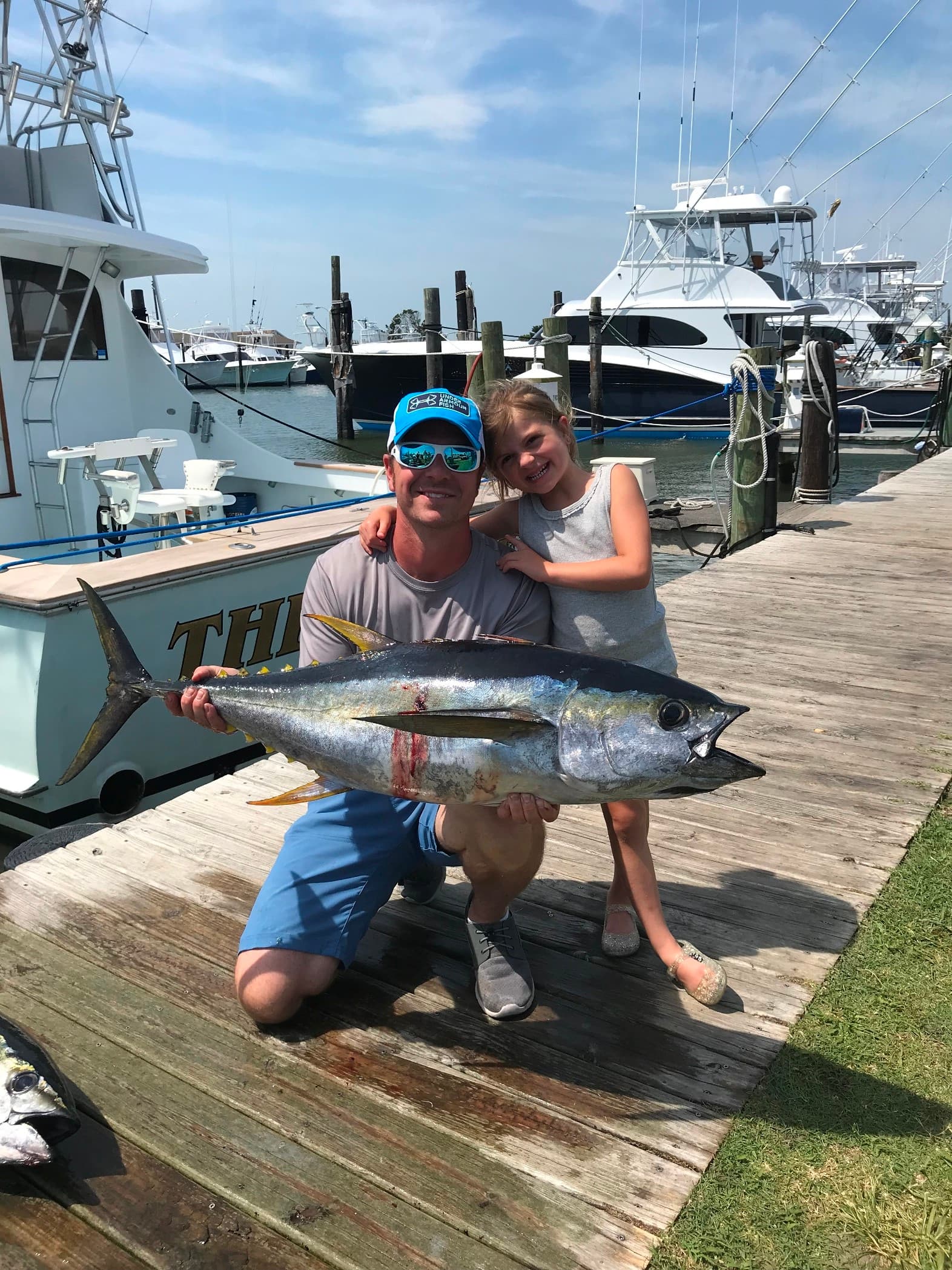
Then the bite finally stuck. A starboard short-rigger rod loaded up for real, and Lawson settled into the fight while Brown worked the deck. Brown identified the fish as a yellowfin tuna and gaffed it alongside the boat. That sequence is the lesson hidden inside the catch: in active tuna water, the bite window can be narrow, and if you are not ready to rebuild the spread, you miss the one that counts.

What to watch for on your next run
If you are planning to run offshore from Oregon Inlet, this is the pattern to key on:
- Calm wind or at least a laid-out ocean that lets you read the water.
- Bait concentration, especially when baitfish are showing on top.
- Tuna moving across the surface, not just marks you hope are there.
- Other boats already hooked up in the same area.
- A crew ready to rebait fast with ballyhoo and respond to short strikes.
The bigger point is that Oregon Inlet does not hand out tuna on scenery alone. The fish were there because the current, bait, and surface conditions lined up just enough to make them visible and reachable. When the ocean smooths out and the bait stacks up, The Point can turn from a place name into a serious tuna spot in a hurry.
That is why this bite matters beyond one good day. It shows that when Oregon Inlet settles down, yellowfin and bigeye are not a rumor, they are a real offshore target. The next time the wind backs off and bait starts flashing at The Point, the boats that move quickly, keep the spread tight, and stay ready for short strikes will be the ones with tuna on ice.
This article was produced by Prism’s automated news system from verified source data, official records, and press releases, then run through automated quality and moderation checks before publishing. The system is built and supervised by the people who set the standards it runs under. Read our full AI policy.
Did this article answer your question?