Pacific tuna stocks lose millions to illegal fishing, FFA says
Illegal fishing still cut US$43 million from Pacific tuna in 2021, even as tighter enforcement helped shrink losses and keep all four major stocks healthy.
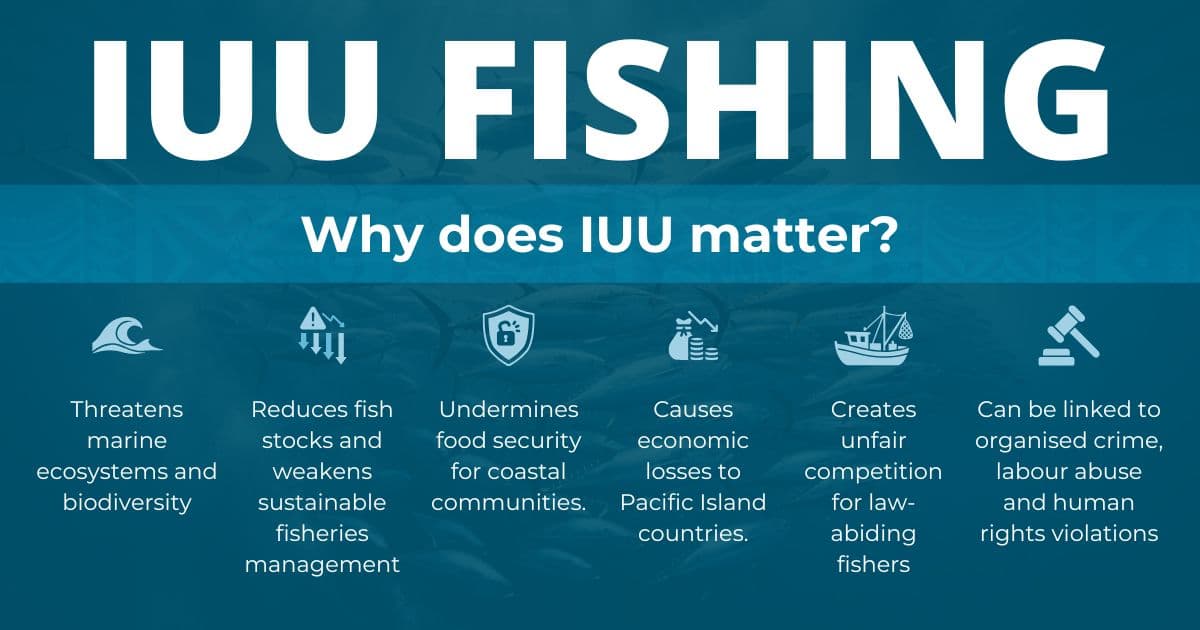
Illegal fishing in Pacific tuna waters still took a hard bite out of the fishery, costing coastal states an estimated US$43 million in 2021. For anglers, that is not an abstract accounting loss: it is fish removed from the system, less confidence in the numbers behind management, and less money flowing back into the places that depend on tuna.
The Pacific Islands Forum Fisheries Agency said the figure marks a steep drop from US$152 million in 2016, but the problem has not disappeared. In its 2021 analysis, the agency and MRAG Asia Pacific estimated that 192,186 tonnes of tuna product harvested or transshipped in the Western and Central Pacific during 2017-19 involved illegal, unreported or unregulated activity, worth about US$333 million at ex-vessel value. That was down from an earlier 2010-15 estimate of 306,440 tonnes worth about US$616 million. The agency said misreporting made up 89% of the IUU volume, while only 5% came from unlicensed fishing.

That detail matters because it changes where the leak is coming from. FFA director-general Dr Manu Tupou-Roosen said the decline showed regional cooperation was working, while lead author Duncan Souter of MRAG Asia Pacific said the Pacific differs from some other regions because licensed-fleet misreporting dominates rather than rogue unlicensed fleets. In other words, the biggest threat is not just boats sneaking in, but boats already in the system that distort the catch record. For tuna management, that is poison, because bad data weakens stock assessments, quota decisions and the trust that keeps the whole arrangement standing.
The agency points to stronger monitoring, control and surveillance as the reason losses have come down. Those tools include 100% observer coverage on purse-seine vessels, the Regional Vessel Register and the Vessel Monitoring System. Even so, FFA has flagged longline fishing as less tightly controlled than purse seine, leaving a weaker seam in the region’s enforcement net. A 2023 FFA report said MCS cooperation among its 17 members had already helped reduce IUU volume by about one-third, with a surveillance hub in Honiara supporting fisheries, police, maritime and navy personnel.

The payoff is bigger than a cleaner balance sheet. In September 2025, FFA told Pacific leaders the region remained the only one in the world where all four major tuna stocks, skipjack, yellowfin, bigeye and albacore, were biologically healthy. It also said Pacific member fleets now capture 61% of catch value inside Pacific waters, up from 38% a decade earlier, while regional processing has nearly doubled to 286,000 metric tonnes and more than 26,000 Pacific Islanders work in tuna industries. If those gains are going to hold, watch the next round of enforcement on longline fleets and the next policy push to keep catch data honest, because the Pacific’s tuna story still turns on what gets reported, not just what gets hooked.
This article was produced by Prism’s automated news system from verified source data, official records, and press releases, then run through automated quality and moderation checks before publishing. The system is built and supervised by the people who set the standards it runs under. Read our full AI policy.
Did this article answer your question?