Quepos Yellowfin Tuna Bite Heats Up Early in Costa Rica's Spring Season
Surface-busting yellowfin were already crashing bait off Quepos on April 4 — and the footage doubles as a tactical breakdown of how to find and convert a spring bite.
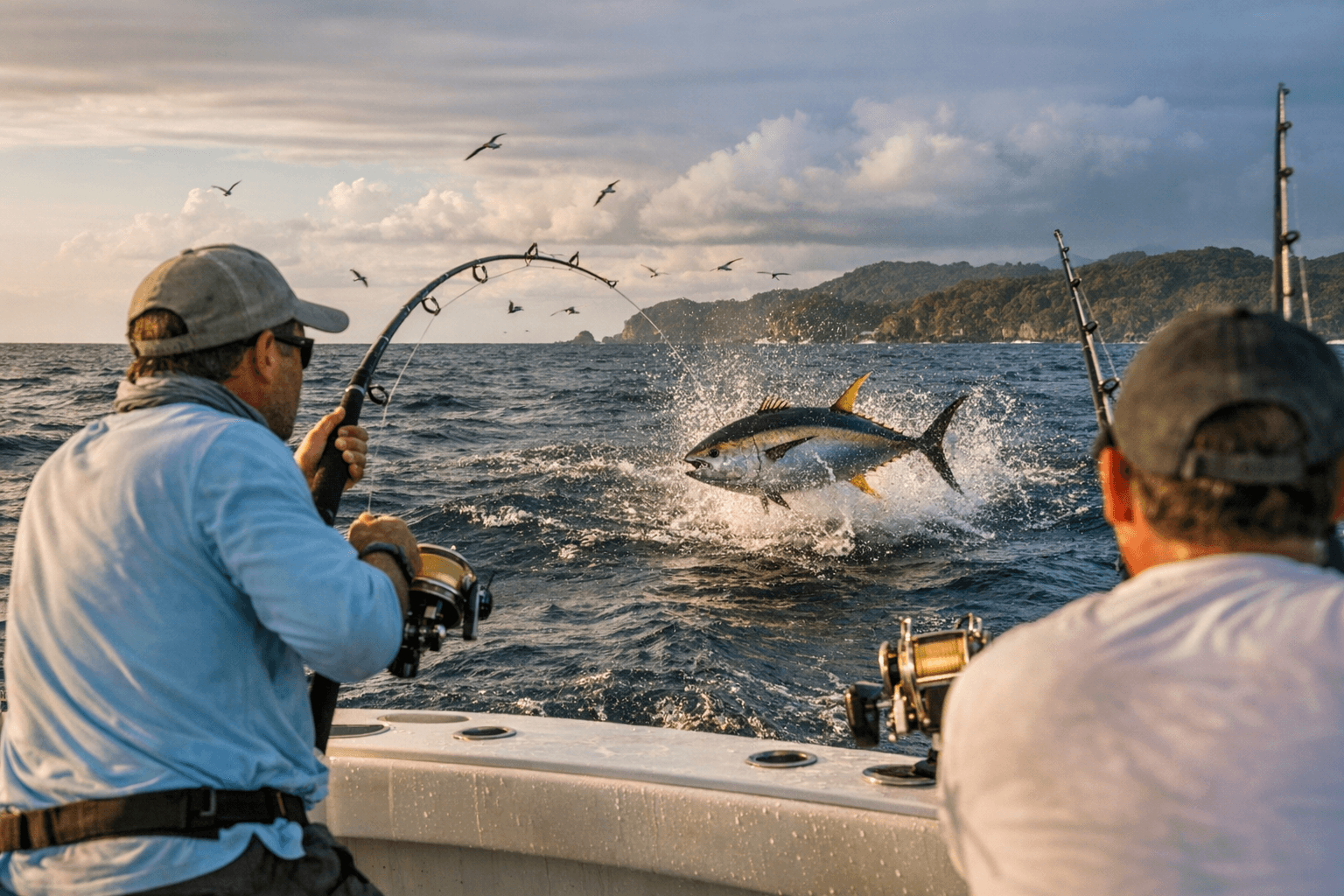
The spring season at Marina Pez Vela is already producing, with yellowfin tuna showing aggressively on the surface off Quepos just days into April. A short field video posted April 4 from the Central Pacific grounds documented the moment directly: schooling Pacific yellowfin erupting through bait, multiple hookups from the same spread, and at least one large fish brought alongside the boat for a close-up on deck. It is user-generated footage, not a charter log, but in a fishery where YouTube uploads and on-the-water reports tend to cluster when a real bite is happening, two-day-old visual confirmation carries weight.
The clip works best when treated as a field debrief rather than highlight reel. The surface-busting sequence telegraphs exactly what to look for when you run offshore from Quepos. A good captain finds fish by working temperature breaks, birds, and bait, and the April 4 footage showed all three converging. When tuna bust bait at the surface, birds diving overhead are the first visual cue: cast poppers, stickbaits, or metal jigs for explosive hits. Current lines, where blue water meets green and bait stacks against the edge, are the next signal to read. If your sonar is painting a dense bait cloud in the upper 30 to 80 feet of the water column, the surface action is being driven from below and is unlikely to move off quickly.
Troll the spread at 6 knots and, critically, do not stop trolling when the first fish hits — keep the boat moving until all rods are loaded. Once the troll is working, transitioning to spinning gear for the cast-and-retrieve phase is how you maximize the opportunity when fish are actively on top. Rig an 8-foot spinning rod with 80-pound braid and an 8-foot section of 80-pound fluorocarbon leader. Yellowfin respond to a cup-faced popper; the concave face throws spray and sound that mimics a breaking bait ball. Stickbaits worked with fast, aggressive retrieves and short pauses can draw strikes from fish that ignore a trolled presentation entirely.
For the trolling spread itself, a blue/white Ilander skirted over medium ballyhoo and a multi-colored spreader bar with a green machine trailing are two of the most productive charterboat setups. Green, pink, and blue/white run consistently for yellowfin; black/purple skirts produce on overcast days and early mornings. Effective trolling mixes skirted ballyhoo, jet heads, soft-head lures, and diving plugs at varied distances and depths, with speed adjustments tuned to lure action.
The timing of the April 4 clip is no coincidence. January through August represents the strongest window for yellowfin numbers in the Quepos fishery. Bisbee's Black & Blue, one of the most prestigious offshore tournaments in the world, is running its first-ever Costa Rica edition at Marina Pez Vela in April 2026, with organizers citing trophy yellowfin tuna and some of the world's biggest dorado as headline draws alongside marlin and sailfish. The Offshore World Championship, which draws approximately 50 qualifying teams from around the world, also calls Pez Vela Marina home at the end of April.
For anyone targeting the Central Pacific this spring, the footage from April 4 is the earliest confirmation that yellowfin are accessible and feeding. The tournament fleet will be showing up soon; the fish, it turns out, arrived first.
This article was produced by Prism’s automated news system from verified source data, official records, and press releases, then run through automated quality and moderation checks before publishing. The system is built and supervised by the people who set the standards it runs under. Read our full AI policy.
Did this article answer your question?