ISSF 2026 Position Statement Targets Indian Ocean Yellowfin and Bigeye Tuna
Indian Ocean yellowfin just flipped from overfished to healthy for the first time in nearly a decade, and ISSF wants IOTC to lock in that progress at its May meeting.
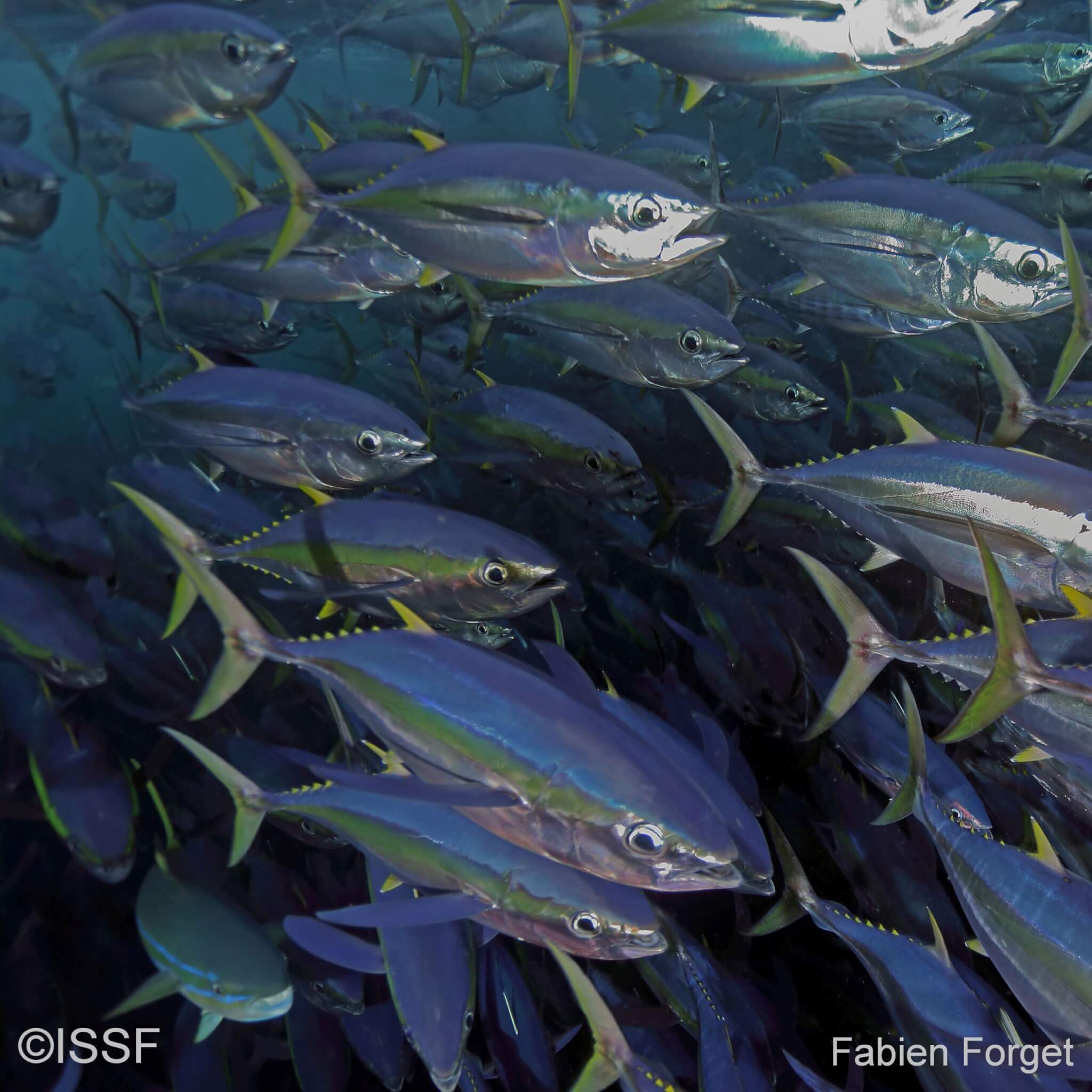
The fish that spent nearly a decade on the wrong side of the ledger just got a green light. Indian Ocean yellowfin tuna, which scientists had declared overfished since roughly 2015, now carries a healthy abundance rating in ISSF's January 2026 Status of the Stocks report, shifting from uncertain yellow to healthy green for the first time in years. That reversal is exactly what reshapes global tuna supply, and the International Seafood Sustainability Foundation is making sure nobody squanders the recovery.
ISSF published its 2026 position statement for the Indian Ocean Tuna Commission on April 2, setting the agenda for the IOTC's 30th Annual Meeting scheduled May 11-15, 2026. Five demands frame the document: improved compliance, effective catch limits for tropical tunas, strengthened bycatch mitigation, expanded electronic monitoring, and enhanced vessel and transshipment transparency. Those aren't abstract policy goals. Each connects to something anglers booking Indian Ocean trips, or U.S. buyers pulling sashimi-grade yellowfin into West and East Coast markets, will feel directly.
The catch limit fight carries the sharpest stakes. The IOTC adopted a harvest strategy for bigeye tuna in 2022, a management procedure that gives managers pre-agreed rules to adjust quotas as stock conditions shift. Yellowfin has no equivalent backstop yet. A recovering stock without a binding control rule can tip back into trouble within a single season if fishing pressure surges to meet renewed commercial demand. Locking in a management procedure for yellowfin at the May meeting is ISSF's clearest ask, and the most consequential one on the table.
On FADs, the recent scorecard is mixed. The 2024 IOTC session in Bangkok reduced the number of fish-aggregating devices each vessel is permitted to deploy, dropping the cap from 300 to 250 for 2026 and to 225 by 2028, alongside a FAD register to track electronically tagged buoys. That's genuine forward movement. The 2026 position statement pushes further, calling for stricter monitoring of FAD interactions and better reporting of dead discards and non-target species. Those bycatch numbers, when consistently logged, are what make the true ecological cost of FAD fishing visible and manageable.
Electronic monitoring is where the practical gap is most visible. The IOTC acknowledged in 2022 that expanding EM was a viable path to closing observer coverage gaps across the Indian Ocean fleet. Camera systems capable of logging every set are now standard equipment on modern purse-seine and longline vessels. The technology objection has largely evaporated; what remains is a compliance and political will problem, which is precisely where ISSF's 2026 statement applies pressure.
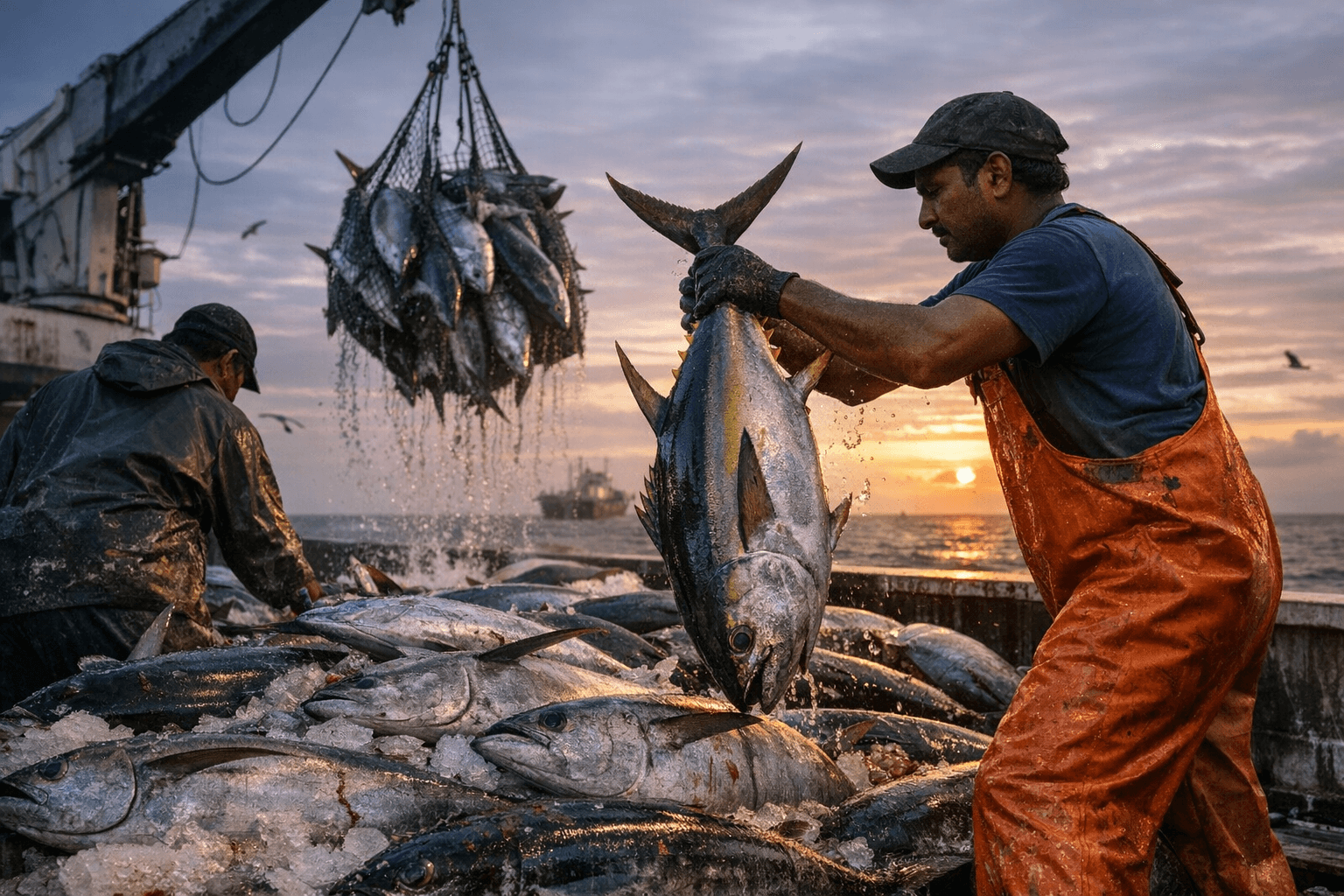
For anglers, the yellowfin green rating carries near-term implications that go well beyond stock graphs. ISSF repealed its own Conservation Measure 1.3 in February 2026, a rule that had required participating companies to cut Indian Ocean yellowfin sourcing by 11 to 22 percent. With that constraint gone, more supply flows to U.S. importers, easing price pressure on sashimi-grade Indian Ocean tuna, including what recreational anglers see when they sell catch at the commercial dock or price out a Maldives or Seychelles offshore trip where guide rates track closely with species availability.
The biggest unresolved data gap is transshipment transparency. At-sea transfers between longliners and refrigerated cargo ships remain notoriously difficult to monitor, and ISSF has flagged the issue in consecutive position statements. Until catch documentation traces verifiably from set to importer, the green stock rating rests partly on an incomplete picture.
The May meeting is the 30th in IOTC's history. ISSF updated its RFMO Best Practices Snapshots alongside the position statement, covering all five major tuna management bodies: the IOTC, ICCAT in the Atlantic, the IATTC in the Eastern Pacific, the WCPFC in the Western and Central Pacific, and the CCSBT for southern bluefin. The yellowfin recovery is the best news Indian Ocean tuna has seen in a decade. Whether the 30th annual meeting actually protects it is the question worth watching this May.
This article was produced by Prism’s automated news system from verified source data, official records, and press releases, then run through automated quality and moderation checks before publishing. The system is built and supervised by the people who set the standards it runs under. Read our full AI policy.
Did this article answer your question?