Southern California Dock Totals Show Strong Inshore Action, Mixed Offshore Results
The Polaris Supreme's 60-bluefin haul cuts through April 4's rockfish-heavy totals, signaling that San Diego's offshore transition is already underway for tuna anglers.
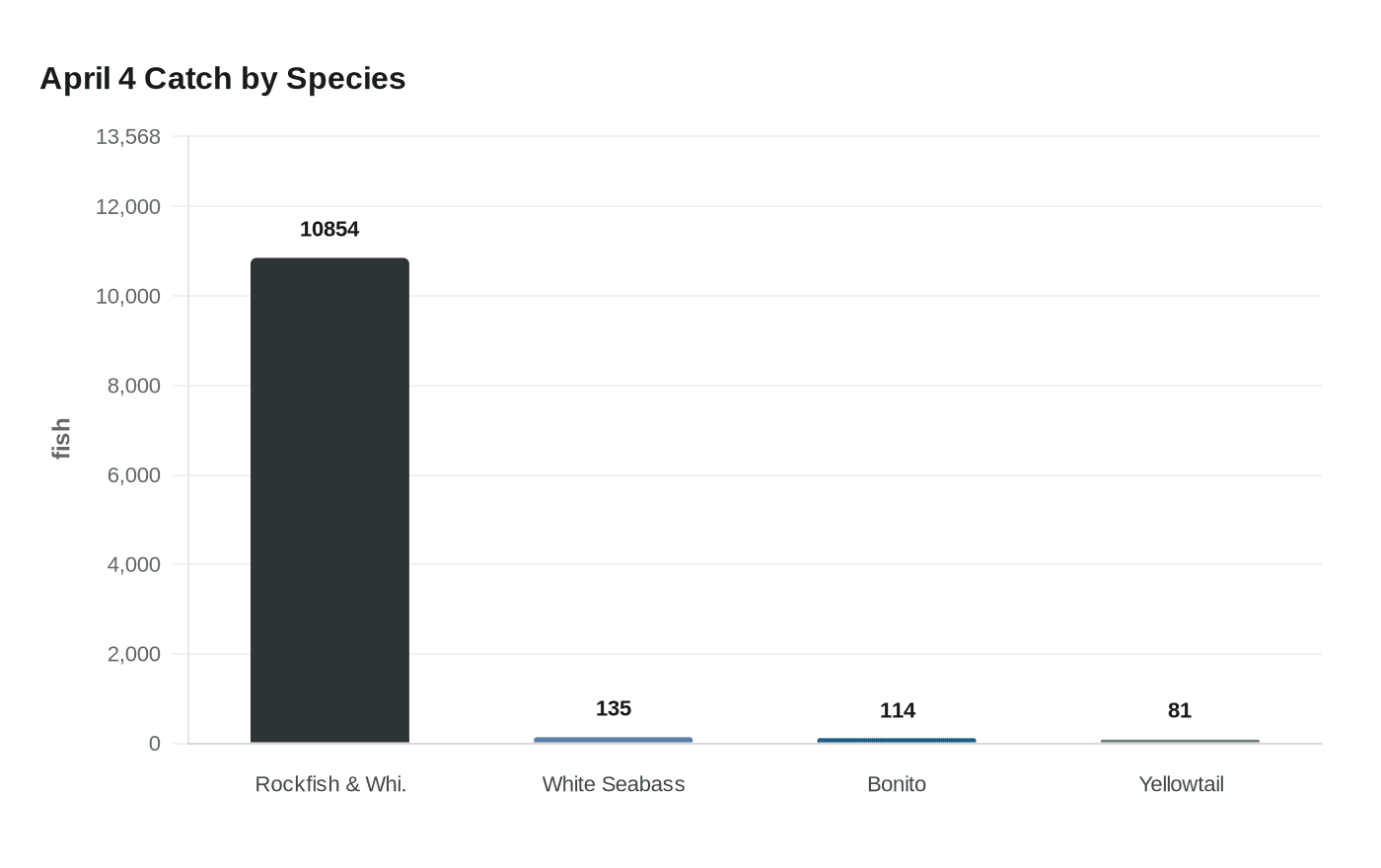
Scan the April 4 dock totals and you'll see a Saturday that looked, on paper, like a textbook spring inshore day: 57 trips, 1,974 anglers, and 14,874 fish landed across Southern California. Rockfish and whitefish alone accounted for 10,854 of those fish, 73 percent of the regional haul. Most captains ran their anglers to the bottom and filled boxes.
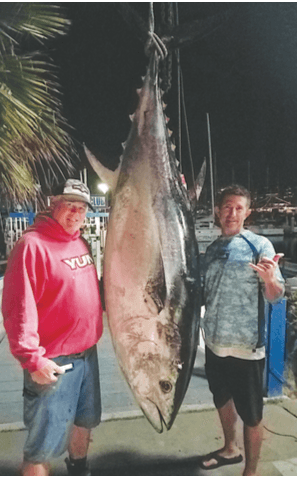
But buried in that ledger, on a two-day long-range trip out of San Diego, the Polaris Supreme checked in with 53 bluefin from 20 to 50 pounds, with their running count hitting 60 by end of day. The bite started in the dark and, by the crew's own account, transitioned into steady flyline action by morning. The trip before that one, the bluefin were elusive. A week later, they were back to business.
That's the transition signal tuna anglers have been watching for.
The Coronado Islands are printing the same message at shorter range. The Mission Belle out of Point Loma ran a full-day Coronado trip with 29 anglers and docked 13 yellowtail. The San Diego out of Seaforth Landing worked the same water and came home with 21 yellowtail and 7 bonito. Captain Matt flagged flyline, yo-yo iron, surface iron, and dropper loops as all getting bit; bring a 40-to-50-pound setup paired with a 30-pound live-bait rig as your second rod. The Seaforth crew noted they're watching inshore kelp lines for yellowtail sign even on rockfish opener days, telling you exactly what mood is building at the Point Loma docks.
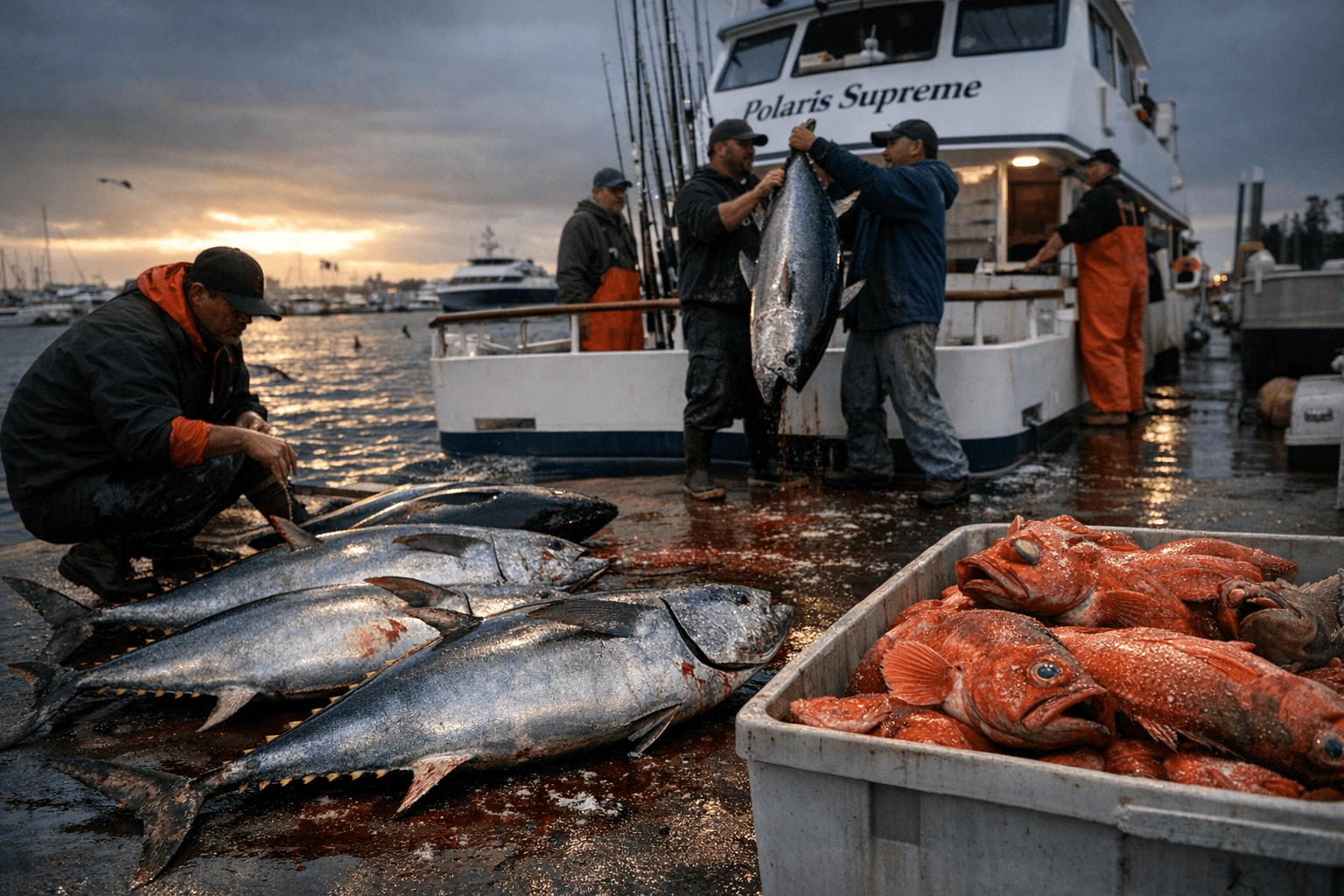
The central and northern ports haven't caught that energy yet. The Mirage out of Oxnard sent 21 anglers home with 210 rockfish, 76 whitefish, and 40 lingcod, a clean day of bottom work with zero pelagic action. Channel Islands Sportfishing logged similar counts, heavy on reds and whitefish. From Newport to Ventura, the fleet is still firmly in rockfish-and-lingcod territory.
The species mix in the aggregate totals is where the water-temperature story surfaces. Of the 14,874 fish landed, the regional count included 135 white seabass, 114 bonito, and 81 yellowtail. White seabass don't stack in those numbers without bait in the water. Add in that Fisherman's Landing reported water temperatures along the Baja corridor running 8 to 10 degrees above last year's levels, and the warmth is already showing up in the biology before it shows up in the headlines.
For this weekend, run two targets in sequence. First call is the Coronado Islands: the yellowtail bite has been consistent across multiple boats and a full-day trip with surface iron and live bait gives you the most flexibility. If the Coronados are crowded or the yellows have moved off structure, step north to the Catalina kelp lines, where calico bass and bonito mixing on the same structure often precede yellowtail pushing in.
If you're willing to commit two days offshore, the Polaris Supreme has departures on April 6 and April 8. Sixty bluefin from 20 to 50 pounds in early April, with Baja water running nearly 10 degrees above last year, is not an anomaly worth watching from the dock.
The indicator to act on before you commit fuel: if the next two daily dock reports show Coronado yellowtail counts pushing past 20 fish per boat while bonito start appearing at San Pedro or Newport simultaneously, the push is going regional. If the totals stay locked to bottom fish from San Diego north, the Coronados remain the southern outlier and the coast is still waiting on the water to move.
This article was produced by Prism’s automated news system from verified source data, official records, and press releases, then run through automated quality and moderation checks before publishing. The system is built and supervised by the people who set the standards it runs under. Read our full AI policy.
Did this article answer your question?