U.S. Letter on Recreational Bluefin Reporting Draws Fire from Conservation Groups
A Jan. 27 U.S. letter could let recreational bluefin catches run 752,000 lbs over ICCAT quota, and conservation groups warn anglers will pay the long-term price.

Every tuna angler knows the feeling: you've worked hard for that fish, cleaned it perfectly, and you want to eat it. What you probably don't want is to find out months later that your lawful catch contributed to an international quota dispute that could shut down your seasons for years to come. That is exactly the scenario the Marine Fish Conservation Network laid out on April 3, 2026, in a pointed analysis of a little-noticed letter that NOAA sent in late January.
The letter, signed by Andrew "Drew" Lawler, Principal Deputy Assistant Secretary at NOAA International Fisheries and dated January 27, 2026, makes a declaration with major implications for the Atlantic bluefin fishery. In it, Lawler states that the United States will continue to report recreational bluefin catch to the International Commission for the Conservation of Atlantic Tunas for management purposes, but will no longer count those landings against the U.S. national quota. The operative language reads: "As such, beginning January 1, 2026 and henceforth, the United States will continue to report its recreational catch for management purposes but will not count its recreational catch toward its current quota."
That sentence, buried in a brief government letter, could add up to 341 metric tons, roughly 752,000 pounds, of Atlantic bluefin tuna that effectively disappear from U.S. quota accounting in 2026. The Marine Fish Conservation Network calculated that figure represents approximately 22.6% of the U.S. quota established under ICCAT documents for 2026, the single-year gap between what ICCAT's Total Allowable Catch framework is designed to manage and what the United States will actually account for.
The network's analysis takes direct aim at the legal argument embedded in Lawler's letter: that ICCAT Recommendation 22-10 does not require Western Atlantic harvesters to count recreational catches toward their quota. The analysis argues there is no explicit textual basis in either Recommendation 22-10 or the more recent Recommendation 25-05, which updated Total Allowable Catch figures for 2026 through 2029, that would compel or permit the U.S. to carve out recreational landings from national quota accounting. The post warns that treating recreational catches as reporting-only rather than quota-counted undermines the principle of an inclusive Total Allowable Catch and risks shifting harvest pressure to other gear types or ICCAT member nations that do count all removals.
For recreational anglers who keep bluefin, this may feel like good news on the surface. If the U.S. government is not counting your catch against the quota, the argument goes, there is more room in the commercial sector and less pressure on season closures. That short-term read is where many anglers will stop. The longer-term picture is more complicated. ICCAT manages Atlantic bluefin through a system where every member nation's credibility depends on consistent, comparable accounting. If other nations or conservation stakeholders perceive the U.S. as gaming that system, the likely response at future ICCAT sessions is exactly the kind of harmonized, stricter reporting obligations and quota reductions that recreational anglers dread most. The Marine Fish Conservation Network makes this case explicitly: full accounting of all removals, commercial and recreational, remains essential to the credibility and long-term effectiveness of international tuna management.
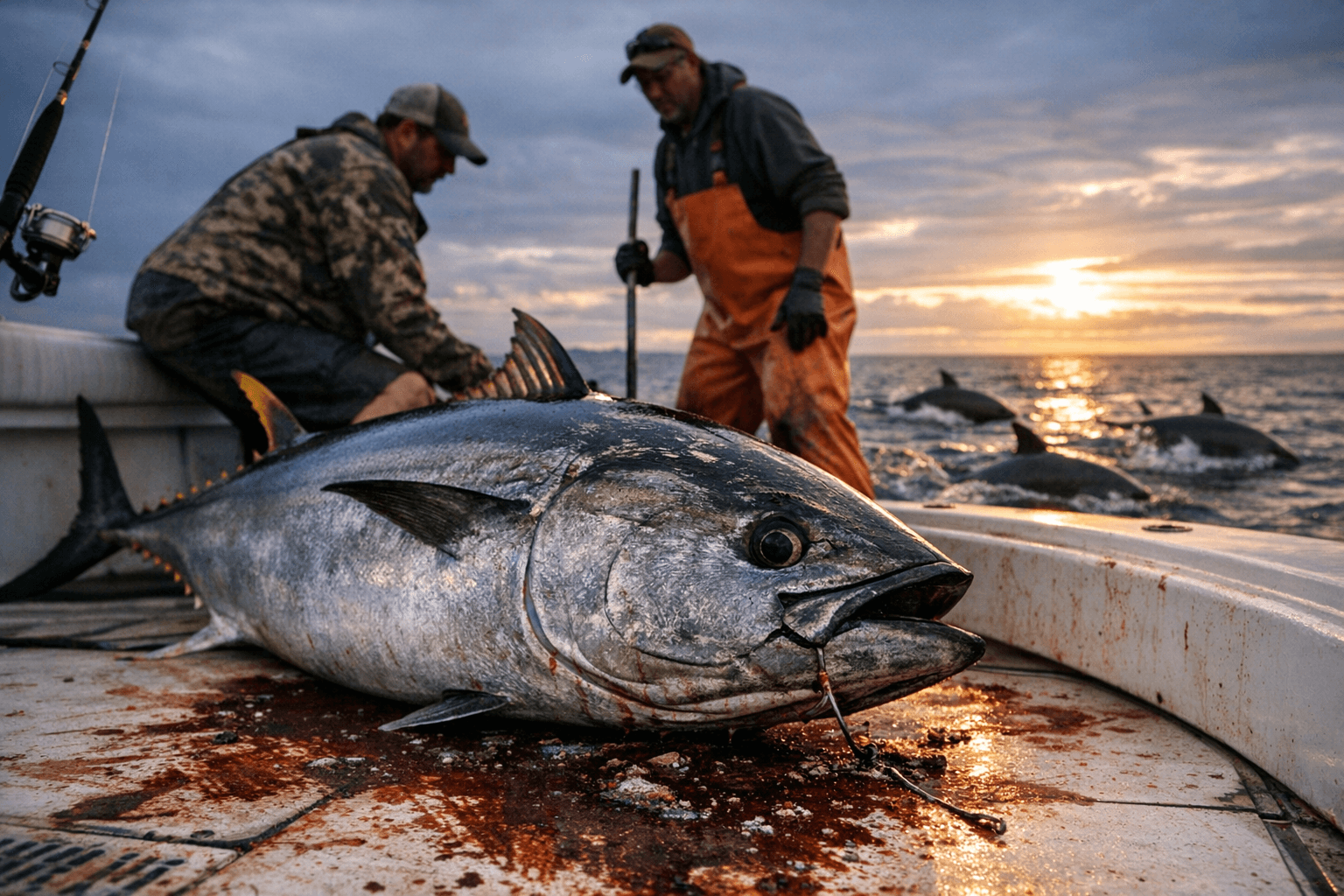
Here is where the picture gets genuinely murky at the dock level. The Lawler letter draws a distinction between "reporting for management purposes" and "counting toward the quota." These are not the same thing, and confusing them is the single most dangerous misread any recreational angler can make right now. Reporting obligations have not been waived. Individual anglers holding HMS permits are still legally required to report their bluefin landings, whether the U.S. government then chooses to count those landings against the national quota or not. The United States changed its international accounting posture; it did not change your personal compliance obligations. Treating them as equivalent is how an angler ends up facing enforcement action they never saw coming.
Which means documentation matters more right now, not less. If international pressure eventually triggers a retrospective audit or tightened rules mid-season, the angler with a clean paper trail is the angler who sleeps at night. Record your HMS permit number on every trip log alongside the date, time, and precise location of the catch. Photograph the fish in the water before gaffing and again on the boat with a visible scale reading, then capture a shot of your GPS unit showing coordinates and a timestamp together. When you file your bluefin report through NOAA's Highly Migratory Species online portal, or through the dealer receipt chain for commercially sold fish, print or screenshot the confirmation immediately. If your state requires a separate landing report, file within the required window and retain that receipt as well. Keep everything in a single folder, physical or digital, organized by trip date. The confirmation receipt from your NOAA submission is the document most anglers skip; it is also the one that proves you filed on time if the submission ever gets questioned.
The stakes are real regardless of how the international argument resolves. Atlantic bluefin are among the most politically scrutinized fish in the ocean. The 2026 ICCAT quota cycle runs through 2029 under Recommendation 25-05, meaning the accounting decisions made this year ripple through four full seasons of access. If ICCAT member nations or conservation groups press for formal review of U.S. compliance at the next commission meeting, the outcome will depend on exactly the kind of transparent, complete catch data the Marine Fish Conservation Network is calling for. Recreational anglers who misread "not counted toward quota" as "not worth reporting" are handing their future seasons to the outcome of a bureaucratic dispute they never showed up for.
Lawler's letter was dated January 27. The ConserveFish analysis dropped April 3. The bluefin are already in the water.
This article was produced by Prism’s automated news system from verified source data, official records, and press releases, then run through automated quality and moderation checks before publishing. The system is built and supervised by the people who set the standards it runs under. Read our full AI policy.
Did this article answer your question?