Yellowfin tuna bite builds off the Outer Banks in May
May turns the Outer Banks into a moving tuna window, with yellowfin first in line before mahi, wahoo, and billfish take over the offshore conversation.
How to read the May transition
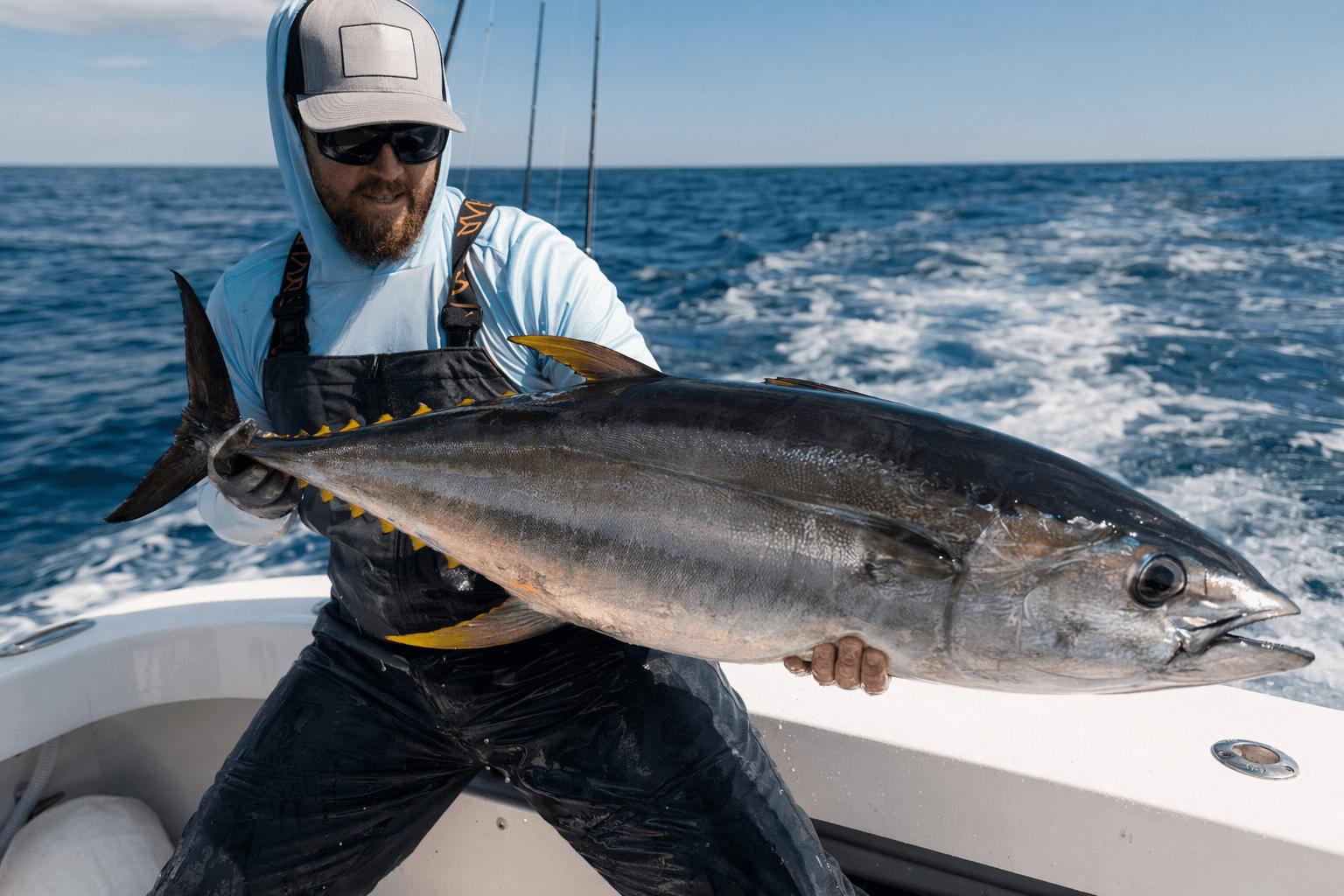
Yellowfin off the Outer Banks in May are not a random bonus. They are the first real signal that the offshore season is waking up, and if you know how to read that signal, you can time your run instead of chasing noise. Warm water starts pulling fish into both the surf and the sounds, but the real money for tuna-minded anglers is offshore, where the Gulf Stream edge begins to set up the kind of spring bite that still rewards early effort.
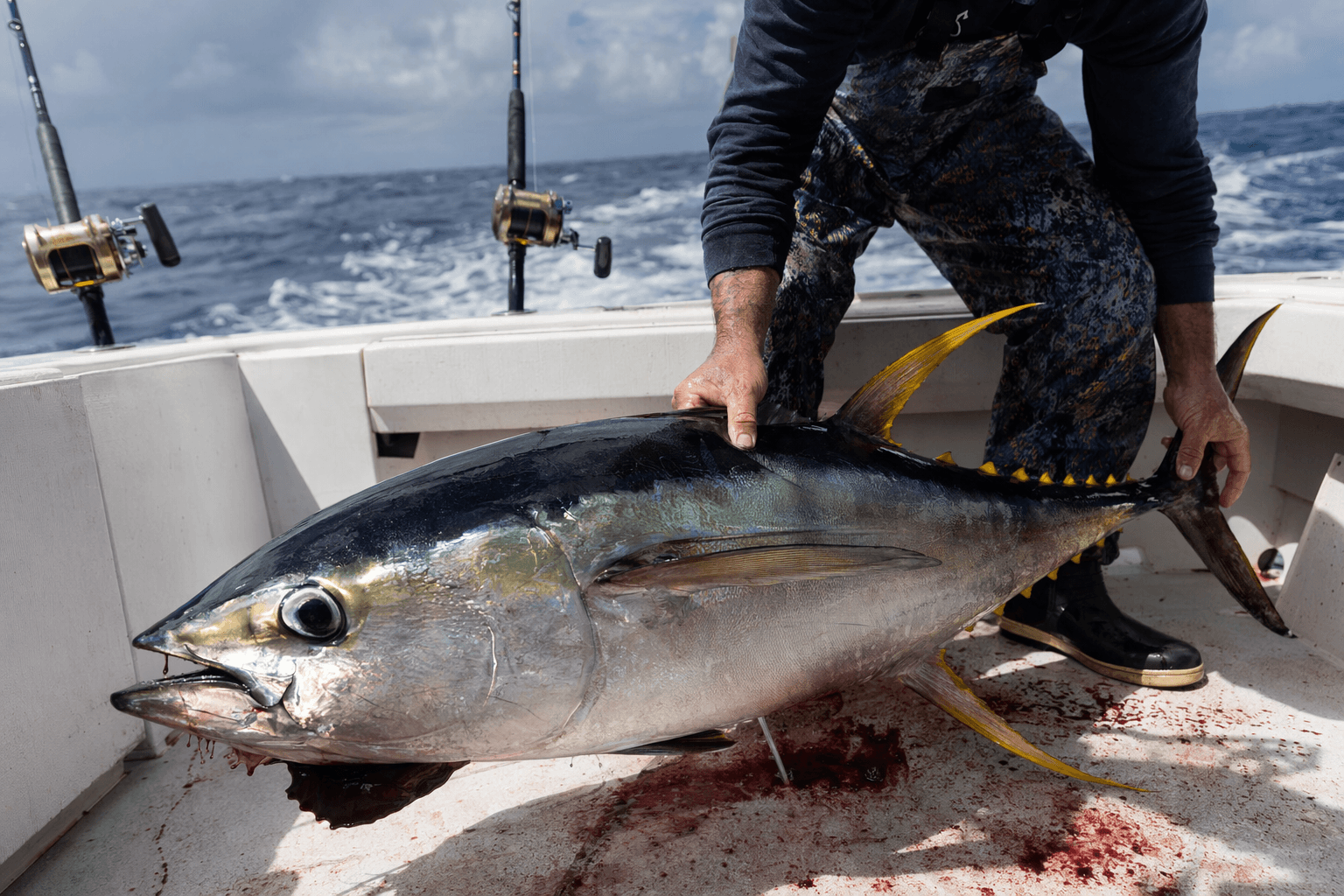
The key is not to treat May like one uniform month. Early May can still fish like tuna season, especially when the first clean offshore windows line up with moving water and bait. By the back half of the month, mahi-mahi, wahoo, and eventually blue marlin start crowding the picture, which means yellowfin can shift from being the main target to the fish you build the day around while other species join the mix.
Where yellowfin fit in the offshore mix
The Outer Banks is a layered fishery in May, and that matters more than any single hot bite. Inshore, the warming trend brings red drum to the forefront, with black drum, bluefish, and other migrants piling in behind them. Offshore, the same seasonal push opens the Gulf Stream window, and yellowfin sit right in that current of change, moving with the broader spring migration rather than showing up as a one-off event.
That is why the early-May offshore fleet gets so much attention. Reports from the Oregon Inlet area already showed yellowfin tuna, mahi mahi, wahoo, king mackerel, and occasional billfish by the first week of the month, and later updates added scattered blackfin tuna and a few blue marlin. When you see yellowfin paired with mahi and the occasional billfish in the same window, you are not looking at a straggler bite. You are looking at the season opening up in layers.
For a tuna angler, that distinction matters. Yellowfin should be your primary target when the offshore reports still center on tuna and the run is built around the Gulf Stream edge, especially near Oregon Inlet and Hatteras Inlet. Once the conversation shifts harder toward mahi, wahoo, and blue marlin, yellowfin are still worth the effort, but they become part of a broader offshore plan instead of the only reason to go.
Time the run around the water, not the calendar
The best practical cue in May is simple: follow the temperature break, not the rumor mill. Sport Fishing Magazine points to the productive zone off North Carolina as the edge where warm Gulf Stream water meets cooler water along the continental shelf, and that is exactly the kind of line you want to study before you ever clear the inlet. Yellowfin are highly migratory, so they are not tied to one exact spot; they track the kind of water that offers food, comfort, and movement.
That is why the old-school advice still holds. If the first offshore reports are stacking yellowfin and mahi near the same break, fish that edge hard before you start stretching into a longer run. If the water looks washed out, the temperature changes are soft, or the current line is messy and broken, you may burn a day on a search that never really locks in. May rewards anglers who can tell the difference between a promising edge and a pretty stretch of ocean that just looks fishy.
Timing matters too. The first week of May already showed the offshore season heating up, and by May 20 the pattern had widened enough that yellowfin were still in play early while other pelagics were becoming more common later in the month. That tells you to be ready when the weather gives you a window, because the fish are not waiting for summer. They are already moving through.
Read the bite as a seasonal sequence
The cleanest way to think about May is as a sequence. Early in the month, yellowfin can still be the headline fish. As the water keeps warming, mahi increase in numbers, wahoo begin to show more consistently, and blue marlin start slipping into the conversation as summer gets closer.
That sequence also matches the biology. NOAA Fisheries says Atlantic yellowfin are highly migratory, can reach about 400 pounds, and in the western Atlantic they spawn from May to August. That does not mean every fish you catch is on a spawning run, but it does explain why May lines up so well with the Outer Banks bite. The fish are part of a broad seasonal movement, and the coast is sitting in the path.
NOAA also says Atlantic yellowfin are not overfished and not subject to overfishing under the 2024 stock assessment. For you, that is less a conservation lecture than confirmation that the spring bite you are seeing is part of a healthy, recurring pattern. When May water starts turning over, the fish are supposed to be there.
Know the rules before you clear the inlet
May is also the month to make sure your paperwork is squared away. North Carolina’s recreational rules list yellowfin tuna at a 27-inch curved fork length minimum and a three-fish daily limit per person. If you are targeting highly migratory species recreationally, HMS permits apply, and certain tuna landings carry reporting requirements.
That matters because May is not just a good fishing month, it is a month when people start making real offshore runs again. A crew that is ready to fish but not ready to measure, report, and stay legal can turn a good day into an expensive one fast. Before you chase that first break, make sure the cooler is ready, the release gear is ready, and your compliance is ready too.
June tells you what May was building toward
The broader season keeps moving after the May yellowfin window opens. The Big Rock Blue Marlin Tournament in Morehead City is set for June 5-14, 2026, and that timing says a lot about the way this coast rolls from spring into summer. Yellowfin and mahi build first, then billfish take on more weight as the season deepens.
That is the real read on the Outer Banks in May: yellowfin are not a side story, they are the first serious offshore marker of the season. When the water warms, the edge sharpens, and the reports start stacking tuna with mahi and wahoo, you know the window is open. Run it early, read the break carefully, and understand that by the time summer fully shows up, yellowfin may still be there, but they will no longer be the only reason to go.
Know something we missed? Have a correction or additional information?
Submit a Tip