Alex Ball revisits the Moog Minimoog’s enduring sound and legacy
Alex Ball’s Minimoog mini-doc shows why the Model D still sets the bar: portable design, playable wheels, and a sound engine modern monosynths still chase.
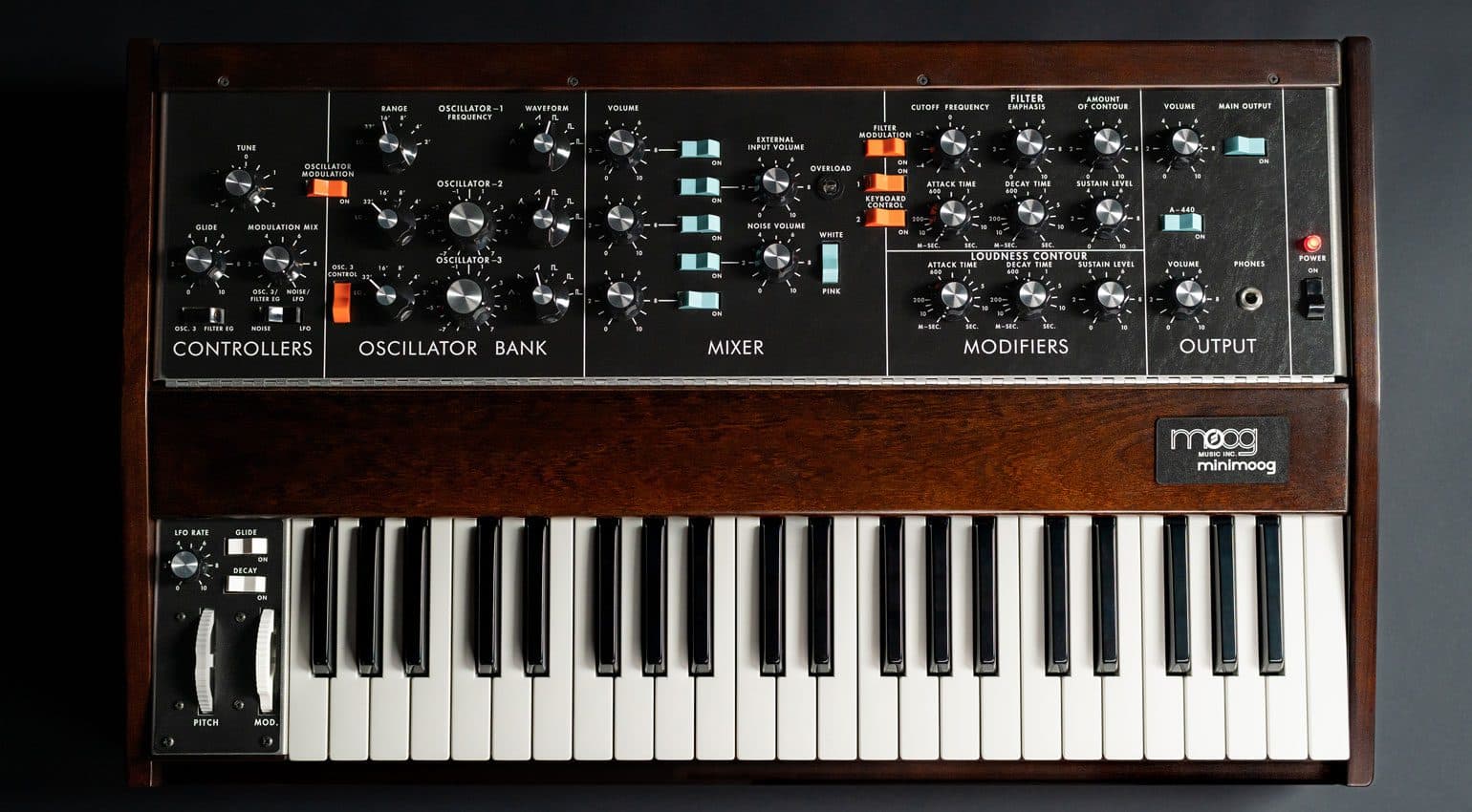
The first production-model Minimoog, serial number 1001, shipped to Walter Sear on November 19, 1970. Alex Ball’s new mini documentary treats the Model D as more than a legend, using a brief history and a sound review to show how a 1970 design still frames the way buyers judge monosynths today.
Why the Minimoog still feels immediate
The first thing that separates the Minimoog from earlier modular systems is how quickly it gets out of the way of the player. It was the world’s first portable synthesizer and the archetype for later electronic keyboards. That is the real foundation of its reputation. It was not simply smaller than what came before, it was performance-ready, with a layout that made the instrument feel like an instrument instead of a lab bench.
That is also why the early hardware details matter. Early production instruments already included the pitch-bend and modulation wheels that became part of the model’s identity. Those wheels were specified by Bob Moog, designed by Bill Hemsath, and fabricated by Don Pakkala. They helped make the instrument more playable than earlier modular rigs that demanded far more setup and patching.
What Ball’s documentary is really listening for
Ball does not treat the Minimoog as a museum piece. The documentary works through different versions from the original run and uses a broad set of audio examples to show how the instrument’s voice holds up more than 55 years after launch.
The answer sits in the low-pass ladder filter, the powerful oscillators, and the rich, saturating mixer that made the original sound engine so distinctive. Those are the audible traits that define whether a Minimoog reacts like a proper Model D when you dig in, feather the controls, or stack a line that needs weight without losing clarity.
What the original run tells collectors
The Minimoog’s production life gives you a useful lens for evaluating value and authenticity. The original run started in 1970 and ended in 1981, after Norlin Musical Instruments acquired Moog Music in 1973 and later shut down the line. Total production lands at roughly 12,000 units or, in Bob Moog Foundation material, 12,269. That volume made the instrument a serious working synth in its day, but still scarce enough to make clean examples collectible now.
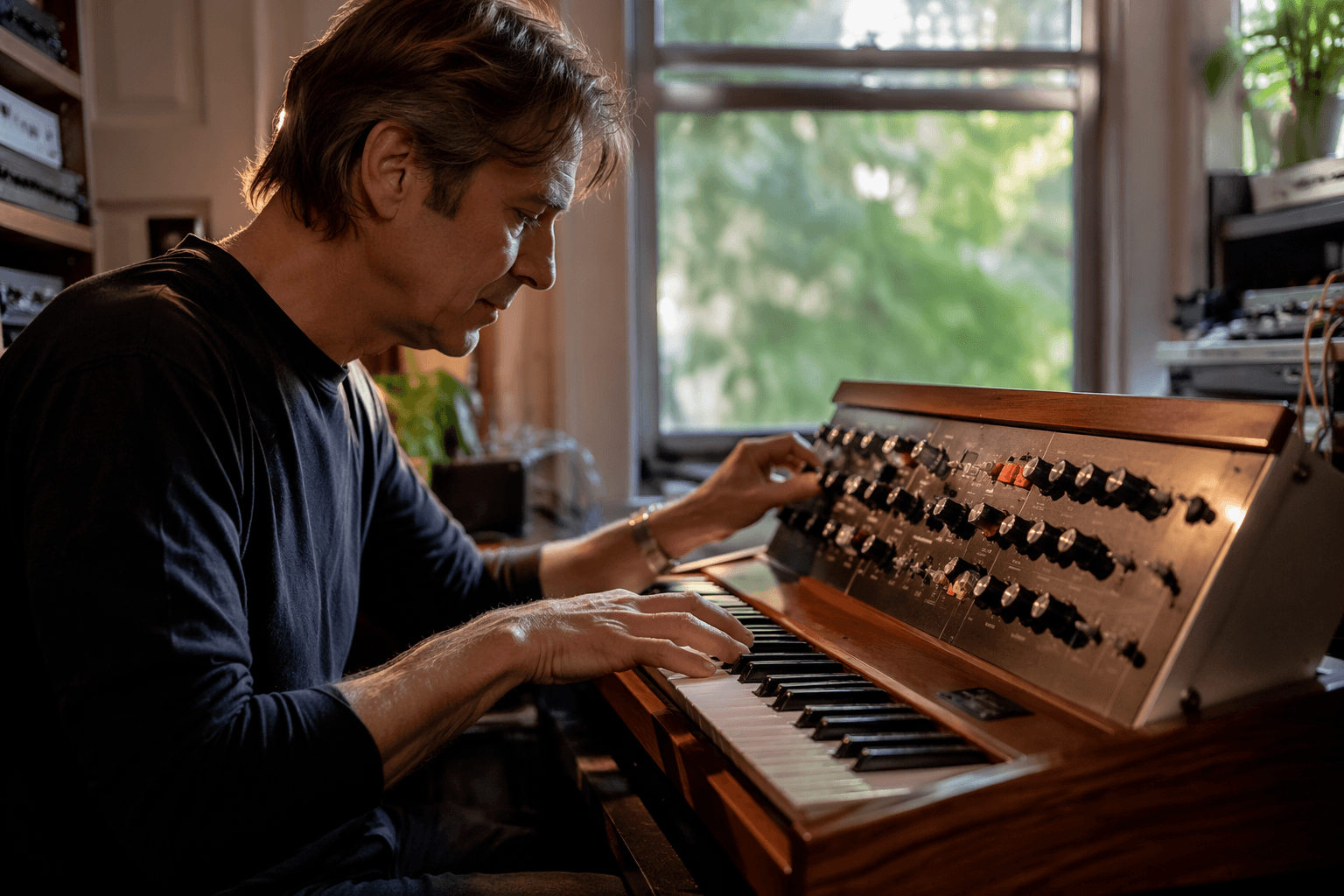
That production history also shows up in serial-number lore. Herbert A. Deutsch’s Minimoog, preserved in Bob Moog Foundation material, is serial number 1094, identified there as the 94th Minimoog of an eventual 12,269 produced. It is the difference between a documented early example, a later production unit, and a modern reissue that may sound close but belongs to a different chapter of the instrument’s life.
What still shapes modern monosynths
The Minimoog’s influence is easy to spot in any monosynth that tries to promise speed, authority, and hands-on control. The instrument’s core lesson is that portability and playability can be as important as raw synthesis power. The Model D established the portable, performance-ready analog keyboard synthesizer as the template that followed.
It still shows up in demos, clones, restorations, and comparison videos across jazz fusion, electronic music, prog, funk, and pop.
How to compare originals and recreations
The clearest comparison point is Moog’s own 2022 Minimoog Model D. Moog says that reissue keeps the original sound engine and audio signal path while adding functional modifications, so buyers comparing an original and a modern unit are really choosing between provenance and convenience, not between two unrelated synths. That makes the listening test straightforward: focus on whether the recreated instrument preserves the feel of the filter, the balance of the oscillators, and the way the mixer contributes to the overall push of the sound.
A practical checklist helps when you are dealing with vintage units, restorations, or modern recreations:
- Confirm whether you are looking at an original-run instrument, a documented early serial, or a modern reissue.
- Check whether the wheel layout feels like the classic Bob Moog, Bill Hemsath, and Don Pakkala design that made the Minimoog so stage-friendly.
- Listen for the low-pass ladder filter and the saturating mixer behavior that define the Model D voice.
- Weigh whether the added functional modifications of the 2022 reissue matter more to you than original-run authenticity.
This article was produced by Prism’s automated news system from verified source data, official records, and press releases, then run through automated quality and moderation checks before publishing. The system is built and supervised by the people who set the standards it runs under. Read our full AI policy.
Did this article answer your question?