Bell Labs digital synth, the Alles Machine, reshaped early electronic sound
The Alles Machine shows digital synth history was already alive in 1977, with 16-bit additive control, 32 sine oscillators, and a real performance test.
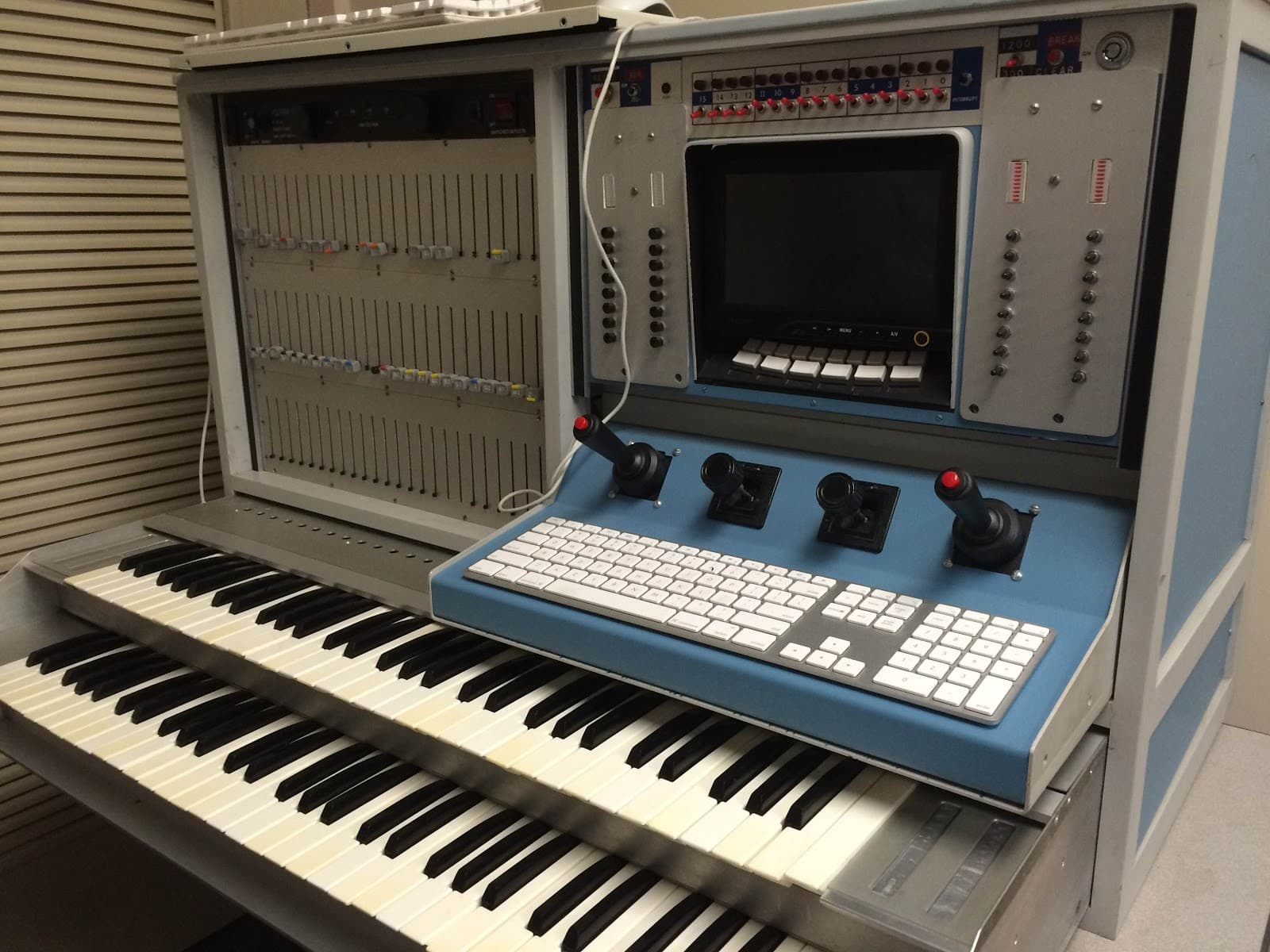
The Bell Labs Digital Synthesizer, also known as the Alles Machine or Alice, pushes vintage-synth history far beyond the usual analogue storyline. Built in Bell Labs’ Murray Hill, New Jersey research environment, it stands as one of the earliest real-time digital instruments and a first-of-kind all-digital synthesizer, with computer-controlled 16-bit synthesis running at 30,000 samples per second across 32 sine-wave oscillators.
Why the Alles Machine matters in the synth timeline
The machine sits in the pre-commercial history of digital additive synthesis, which is exactly why it changes the map for collectors. Instead of starting with a sawtooth or square wave and carving it down with filters, additive synthesis builds tone from the ground up by combining sine-wave components. That makes the Bell Labs instrument a different kind of ancestor from the classic subtractive analogue machines that dominate most vintage collections.
It also predates the later commercial digital-additive lineage that synth fans often associate with the Crumar GDS era. That detail matters because it shows digital synthesis was not a sudden 1980s market shift, but a research path that was already being explored in the mid-1970s at Bell Labs. The result is a much broader and more accurate vintage-synth timeline, one that includes lab prototypes alongside the better-known commercial classics.
What the machine actually did
The specs tell you why this instrument still gets attention: it was computer-controlled, it worked in real time, and it used 32 sine-wave oscillators to create its sound. That combination put the control layer in computation rather than in a traditional analogue voice path, which is a major shift in how a synth can be played and designed.
- Computer-controlled 16-bit synthesis: the instrument’s note behavior and sound structure were governed digitally, not by a conventional analogue signal path.
- 30,000 samples per second: that sample rate places it firmly in the realm of early digital engineering, where every decision had to be made with limited computing headroom.
- 32 sine-wave oscillators: this is the additive heart of the machine, letting it build complex tones from many simple waveforms.
- Real-time operation: the instrument was not just a studio curiosity; it was presented as a playable digital instrument, which is why it is remembered as one of the first real-time examples of its kind.
Those limits are part of the story, not a footnote. In 1977, 16-bit processing and real-time additive synthesis were serious achievements, and the machine’s architecture shows how much engineering it took to make a digital instrument feel immediate enough to perform.
Hal Alles and the performance side of the story
Hal Alles is the name that anchors the instrument on the engineering side. His role is crucial because the Bell Labs synthesizer was not simply an abstract research project, but a working instrument that had to prove itself both technically and musically. That is the classic vintage-synth tension: a machine can be brilliant on paper and still fail the real test if it cannot be played.
Roger Powell’s 1977 performance on the Bell Labs synthesizer shows the other half of that equation. Once a musician is actually performing on the instrument, the machine stops being only a lab demonstration and becomes part of the live vocabulary of electronic music. Laurie Spiegel is also associated with using the Bell Labs synthesizer in 1977, which reinforces the point that this was not a one-off curiosity, but a research instrument that composers and performers could use in practice.
That pairing of engineer and musician is what makes the Bell Labs story so important. It connects Bell Labs’ technical ambition with the needs of actual players, and it shows that digital sound design was already being tested as an expressive performance tool years before the mass-market digital era arrived.
Why collectors should care
For collectors, the lasting value of the Alles Machine is not just rarity, it is placement. It explains where later digital and hybrid instruments came from, and it corrects the common assumption that vintage synth history is mostly analogue until a sudden digital break appears much later. The Bell Labs instrument shows that the digital branch was already alive, deeply experimental, and musically serious by the time many classic analogue machines were still defining the market.
It also gives collectors a better standard for judging heritage. A true vintage-synth map should include research prototypes, early additive systems, and instruments that were proven through demonstrations and performances, not only production models with polished panel layouts. The Bell Labs synthesizer, with Hal Alles at the engineering end and Roger Powell and Laurie Spiegel at the musical end, is one of those anchor points that makes the whole timeline more accurate.
That is why the Alles Machine still matters now. It stands at the point where computer control, additive sound generation, and playable workflow met in a single instrument, and it proves that the digital future of synthesis was already being built in the mid-1970s.
This article was produced by Prism’s automated news system from verified source data, official records, and press releases, then run through automated quality and moderation checks before publishing. The system is built and supervised by the people who set the standards it runs under. Read our full AI policy.
Did this article answer your question?