Casio opens SXC-1 preorder, budget sampler targets hands-on creators
Casio’s SXC-1 has moved from NAMM curiosity to preorder, with 208 sounds, 315 grams of weight, and a price aimed squarely at entry-level samplist budgets.

Casio is pitching the SXC-1 as a real-world sampler, not a shelf piece. The company calls it a “PORTABLE STANDALONE SAMPLER,” and the sell is clear: music creation and performance from the day you buy it, with a build that favors fingers over menus.
The practical hook is the price and size. In Japan, preorders opened on April 21, 2026, with Casio setting the SXC-1 as an open-price product and MusicRadar putting the preorder figure at ¥39,930, or about $250 before overseas pricing and distribution are added. The unit weighs 315 grams without batteries, which makes it closer to a grab-and-go sketchpad than a studio anchor. Casio says Japanese shipping begins May 28, 2026.
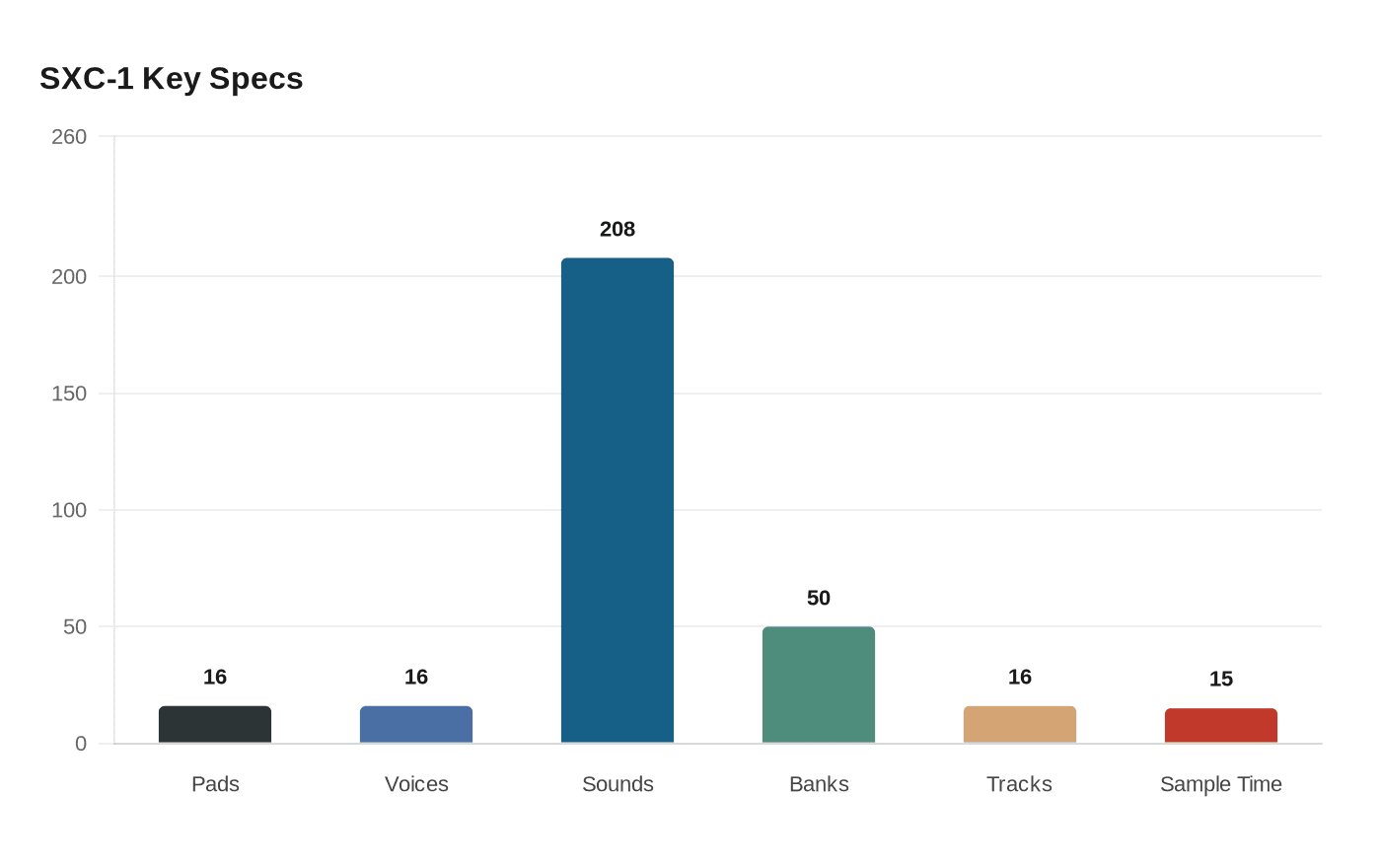
Under the retro styling, the SXC-1 looks like a deliberately simple machine. A 4x4 grid of 16 backlit pads sits above a 1.3-inch monochrome OLED display, with a D-pad and two rotary controls. One knob handles effects such as filter, flanger, phaser, and bitcrusher. The other covers delay and note-roll functions. That layout gives it a toy-like, game-console feel, but the workflow is meant to stay immediate rather than deep.
The limits matter just as much as the charm. Casio says the sampler records at 16-bit/48kHz through its built-in microphone, USB audio, or 3.5mm input, and it tops out at 15 minutes of sample time. It offers 16 stereo voices, 64GB of storage, room for 80 banks of 16 sounds, and a built-in speaker. Battery operation is listed at roughly one to two hours on four AAA batteries, which tells you this is a portable idea box, not a long-haul performance rig.
For home use, that makes the SXC-1 a promising gateway to classic Casio sampling habits, especially the SK-1 lineage the company keeps pointing back to alongside the MT-40. Casio says it ships with 208 built-in sounds, including one-shots, loops, and sound effects, with preset sounds centered on hip-hop. Beat Sync is off by default, the onboard sequencer stores up to 16 tracks, and the unit supports up to 50 sequence banks. Casio is also building a CASIO Sampler App for sequence control, waveform editing, file transfer, data organization, backup, and firmware updates, which suggests the hardware is meant to live inside a beginner-friendly ecosystem rather than stand alone as a novelty.
That is where the buyer’s test gets sharp. The SXC-1 can plausibly replace the feel of a compact, hands-on starter sampler like the old SK-1, and it may scratch the same itch as a playful budget box such as Teenage Engineering’s EP-133 K.O. II. It will not replace a serious desktop sampler with deep memory, long capture time, or sprawling multitimbral muscle. Casio’s return to the affordable sampler space is real, though, and the SXC-1 looks aimed at one specific promise: keep it light, keep it tactile, and make the first few minutes of sampling feel immediate enough to justify the preorder.
Know something we missed? Have a correction or additional information?
Submit a Tip