Cold War test gear inspires adventurous new synth sounds
Cold War test gear can make snarling drones and raw oscillators, but the real test is whether it offers a musical edge worth the high-voltage risk.
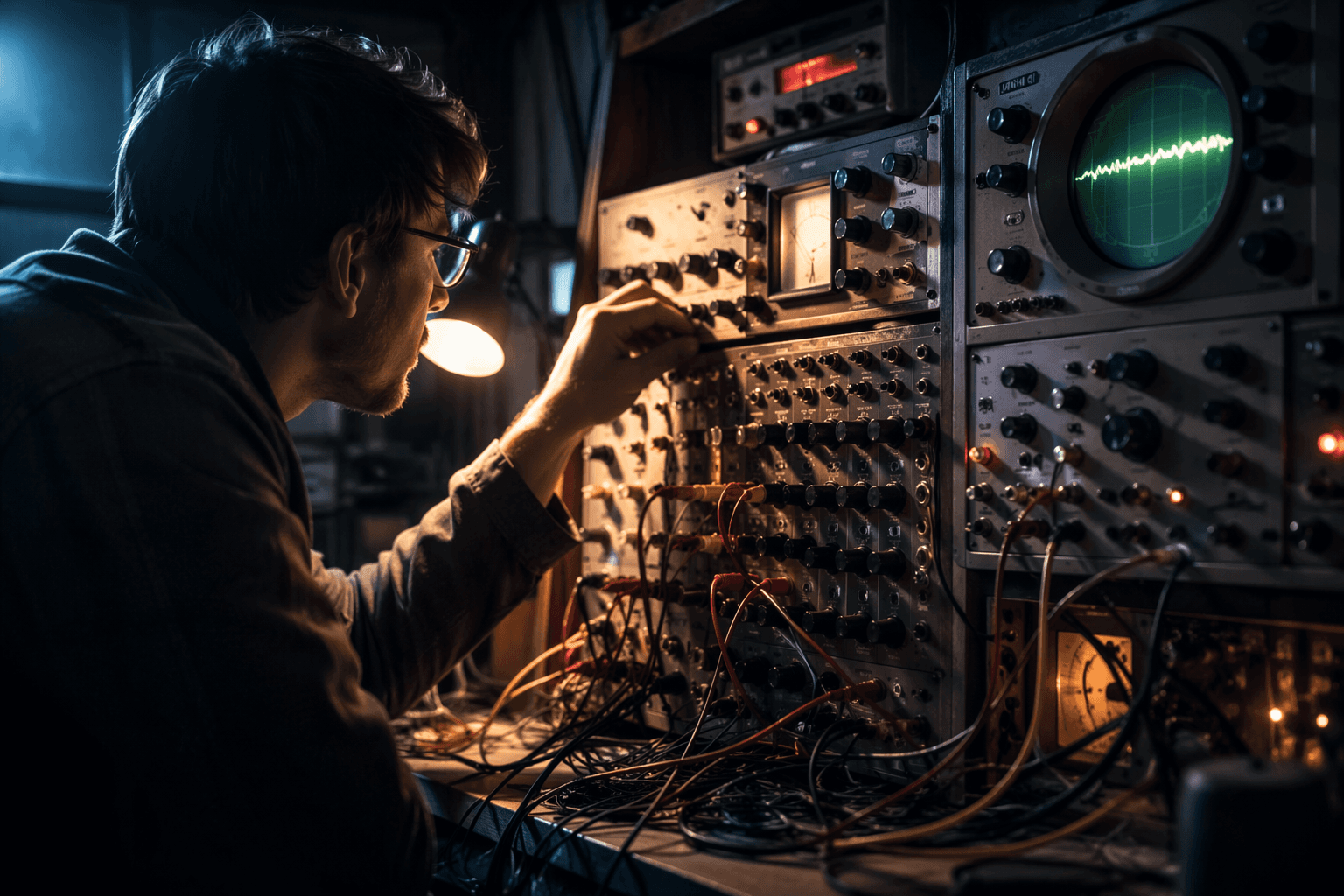
A lab oscillator with a warning label can throw off a raw, unstable tone as tempting as a rare monosynth. MusicRadar’s July 7 feature on people using test equipment to make music centers on that pull: these are not polite instruments but Cold War-era tools that can sing, buzz, and misbehave. For vintage-synth owners, the real question is simple: does this gear open a new sonic lane, or just add a more dangerous path to the same voltage-driven obsession?
Raw oscillators, not nostalgia bait
Adam Douglas calls them “raw oscillators” and “exotic Cold War-era test equipment.” The point is to think beyond keyboard playability and toward sound generation itself, which is where a lot of old electronic magic begins. That is why the story lands with synth people: it is about making music from devices built for measurement, not performance.
In practical terms, test gear can deliver the kind of waveforms and textures that sit between laboratory utility and musical personality. That makes it appealing for drones, pulses, and abrasive timbres, especially if you already like patching around broken signals and hearing what an oscillator does when it is left to speak for itself. The attraction is not that it replaces a classic synth, but that it strips the process down to the part vintage fans know best: voltage in, sound out.
What it can mimic, and where it stops
Test equipment can get surprisingly close to the raw sound source inside a synth, but it does not automatically behave like a synth. A classic keyboard gives you an integrated instrument, with a familiar panel, a performance surface, and a workflow built around notes and control. Lab gear gives you the building block first, then asks you to do the rest.
That difference is the whole point for experimenters. If you want a stable instrument that responds like a finished machine, a purpose-built synth still wins. If you want the sound source itself, with all the rough edges intact, test equipment can be a cheaper, stranger, and far less ergonomic route into that territory.
The old DIY lineage is real
The appeal is not some modern internet fad. After World War II, military-surplus oscillators were plentiful and inexpensive, which made them easy to press into musical service. Tristram Cary and Daphne Oram were among the early figures who used test oscillators and tape machines in electronic-music practice, and that connection still shapes how the vintage community thinks about repurposed hardware.
Today’s lab-box experiments sit in the same lineage as early modular hacking, tape splicing, and salvage culture. The vintage scene has long rewarded people who can see a music machine hiding inside a tool made for another job.
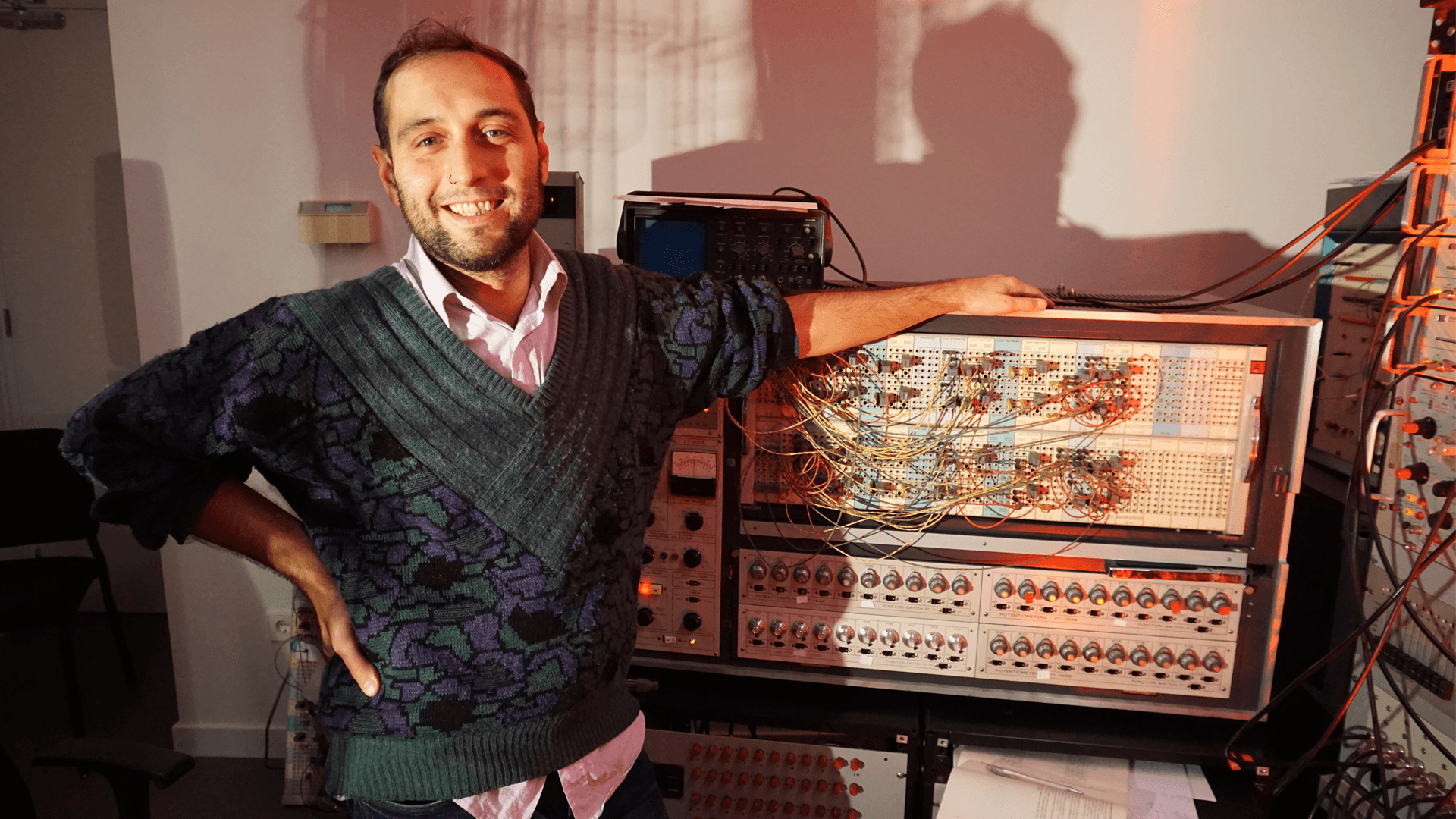
Hainbach shows how far the idea can go
One of the clearest modern examples is Stefan Paul Goetsch, known as Hainbach. On his official site, Goetsch describes his work as searching for sounds in uncommon electronic instruments, tape, and test equipment, making the “unmusical musical.” The site identifies him as based in Berlin, Germany, and as an award-winning film composer whose work has been featured at Witten, Gaudeamus, and Impulsfestival Halle.
He is not pretending a signal generator is a Jupiter or an MKS-80. He treats uncommon hardware as its own palette rather than forcing it into a keyboard-shaped role.
Safety is part of the workflow
The high-voltage warning is not decorative. Working with high-voltage test and measurement equipment requires safe work practices, insulated tools, and clear warnings. Using scientific equipment as a musical instrument is not without its hazards.
It may be inspiring precisely because it is unruly, but unruly is not the same thing as harmless. Engineers strive for precise readings while keeping the work area safe.
Why the archive and the museum angle matter
The National Electronics Museum in Hunt Valley, Maryland, includes test equipment in its historical collection. Its historical collection includes test equipment among roughly 25,000 artifacts documenting defense and civilian electronics. For synth people, the vintage world is never just about instruments in isolation. It is about the tools, prototypes, and repurposed machines that made those instruments possible.
This article was produced by Prism’s automated news system from verified source data, official records, and press releases, then run through automated quality and moderation checks before publishing. The system is built and supervised by the people who set the standards it runs under. Read our full AI policy.
Did this article answer your question?