Yamaha’s synth design shaped how vintage players make music
Yamaha’s smallest synths and its biggest performance machines prove the same point: the panel shapes the music. From the SY-1 to the CS-80, ergonomics changed how players played.
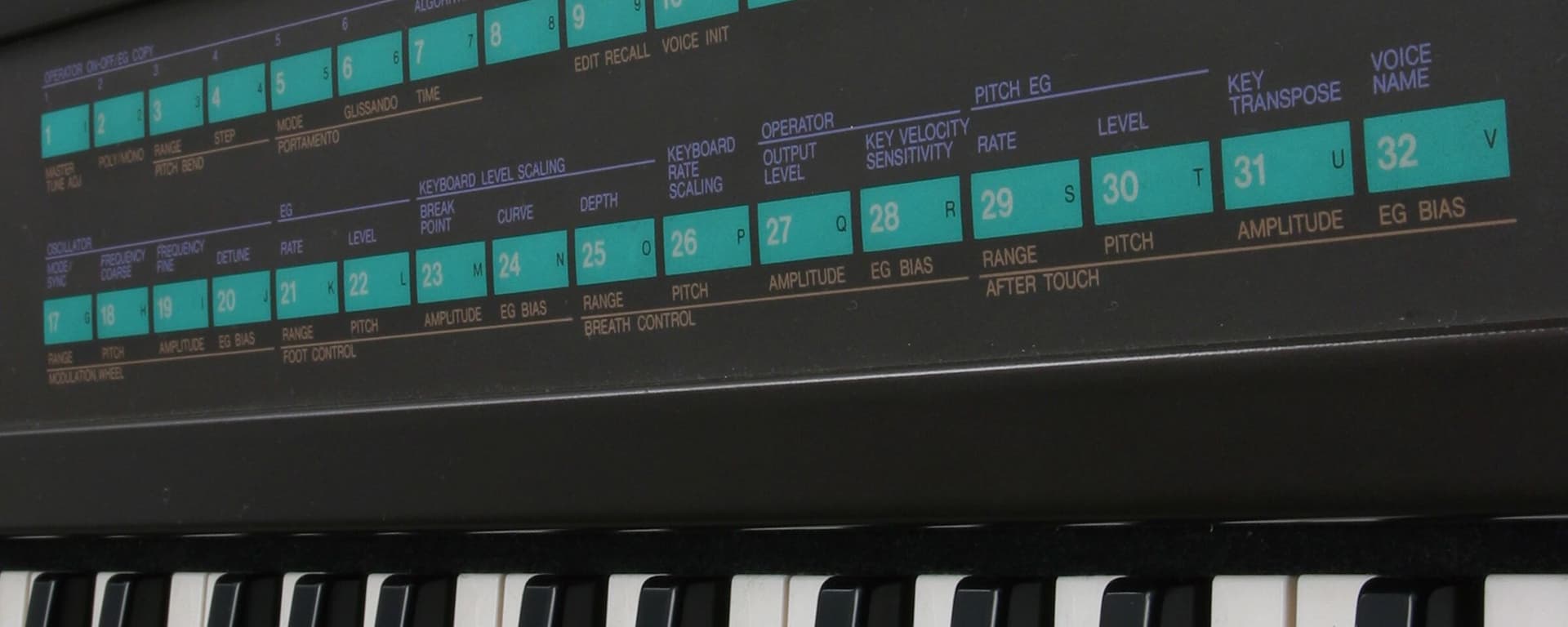
A single-oscillator SY-1 and a polyphonic CS-80 do more than differ on paper: their layouts push you toward different kinds of parts, different kinds of gestures, and different kinds of finished recordings.
The interface decides what you play
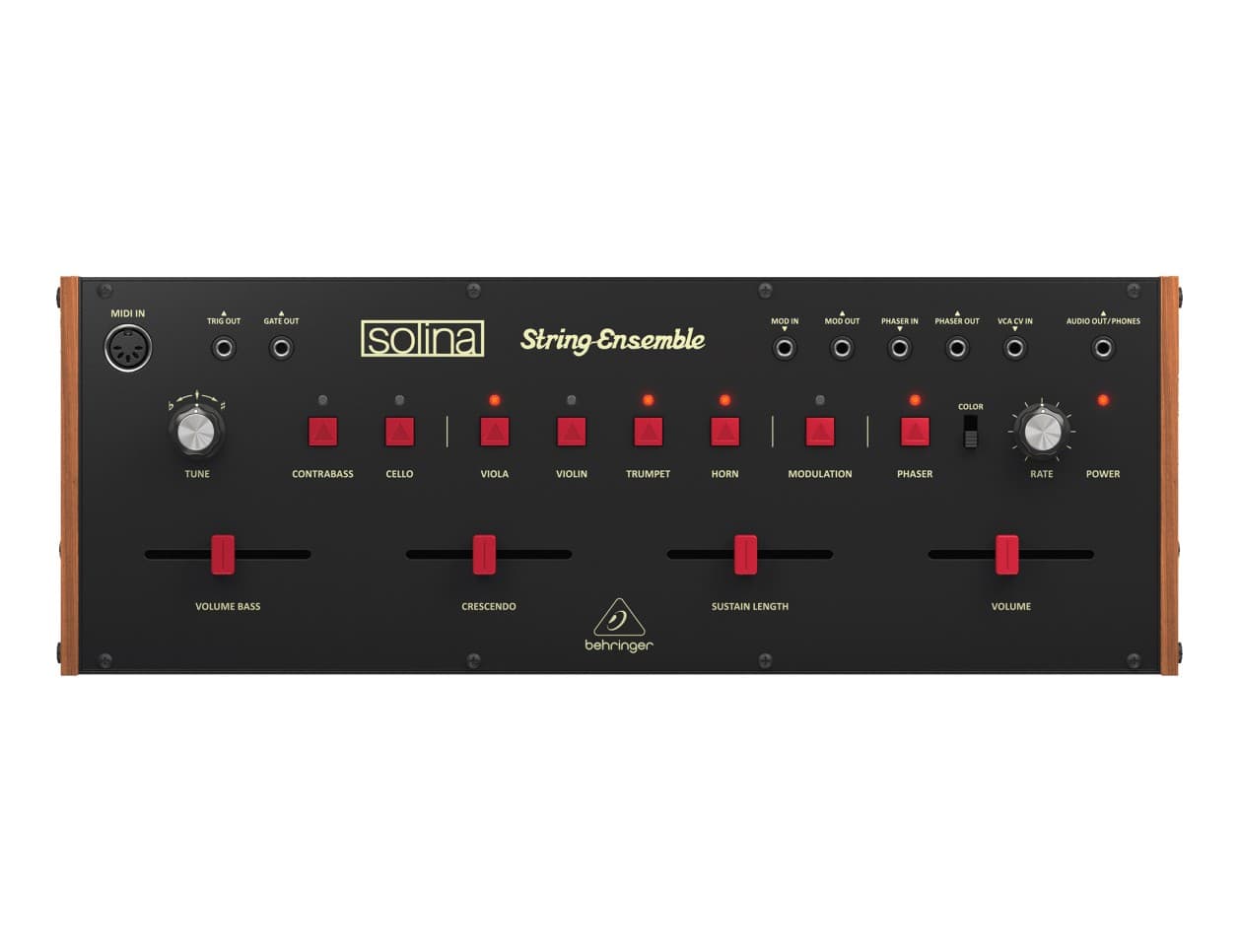
The fastest way to understand a vintage synth is to stand in front of its panel, not just read the spec sheet. Knob spacing, slider travel, modulation placement, and visual hierarchy all shape whether you explore by ear or play from habit. A design that puts controls within immediate reach tends to reward real-time shaping, while a cramped or buried interface makes you settle for the sounds you can get to quickly.
That is why one-knob-per-function machines have such a strong hold on vintage players. When every major function is visible, you can hear the result as you move a control, and that feedback loop leads to more committed choices. Once you move into menu-driven workflows, the act of programming becomes more abstract and the sound often arrives after the performance decision, not during it.
Yamaha’s SY-1 was built for speed, not complexity
Yamaha presented the SY-1 as a simpler compact synthesizer everyone could use. It was a single-oscillator, monophonic instrument with basic synth functions and preset sounds, and Yamaha positioned compact instruments like it to sit on top of electric pianos or organs for quick access. Yamaha positioned it as a ready-to-grab melodic or lead voice, not as a sprawling programming exercise.
Vintage Synth Explorer dates the SY-1 to 1974 and identifies the SY-1 and SY-2 as Yamaha’s first compact, portable analog synthesizers, derived from the GX-1. They were not stripped-down afterthoughts in the way cheap later keyboards often were. They were designed as practical accessories to larger rigs, and that compactness made them physically and musically different from the big, expressive synths that came later.
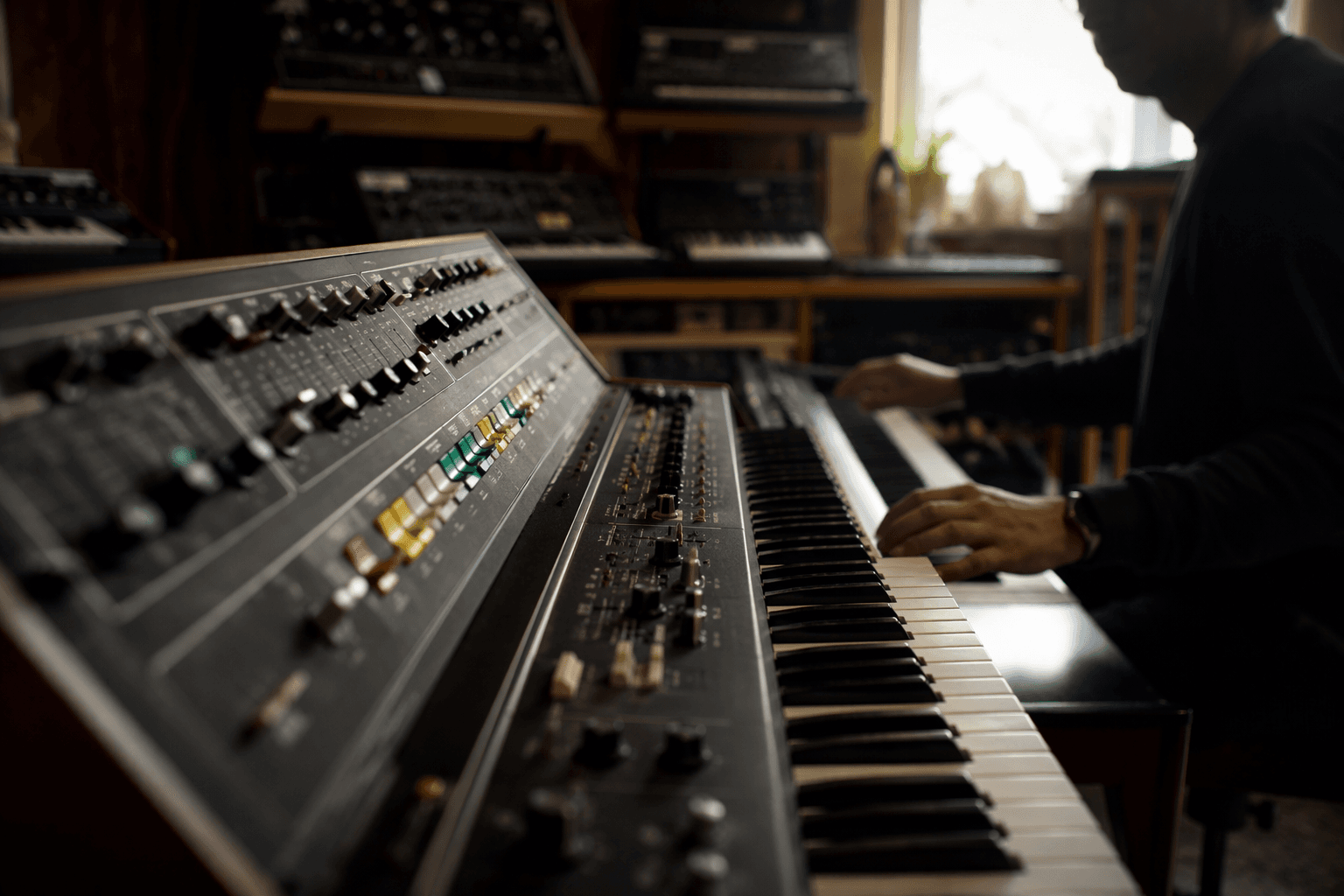
A synth like the SY-1 invites immediate use because the interface is small enough to understand at a glance. You do not need a deep architecture to get a lead line out of it; you need the controls laid out so you can reach them while the rest of the rig stays put.
The CS-80 turns the front panel into an instrument of expression
In 2018, Reverb Machine singled out two Yamaha CS-80 features that changed the way people play it: polyphonic aftertouch and a ribbon controller. Those are not just impressive bullet points. They put pressure, slide, and continuous gesture into the hands, so the player shapes the note after it starts instead of treating the keypress as the whole event.
That is where control placement and visual hierarchy become musical, not just ergonomic. When a ribbon sits where your hand naturally falls and the response is obvious, you start writing lines that lean on glides and swells. When the panel makes pressure and motion feel central, you stop thinking of the synth as a tone generator and start thinking of it as a performance surface.
This is also where the restoration mindset changes. If you are bringing a CS-80 back to life, the value is not only in the voice circuits; the panel has to feel alive.
Portability changed the whole game
The move toward portable, performance-ready design is one of the clearest shifts in synth history. The Bob Moog Foundation dates R. A. Moog and Co.’s introduction of the Minimoog to early 1970, after two years of development, and Red Bull Music Academy called it the ancestor of every modern portable synth. Once a synth was small enough and direct enough to travel, it stopped being just a studio curiosity and became a live instrument.
That shift also helps explain why design language matters so much in the vintage world. The Minimoog’s reputation did not come only from its sound. It came from the fact that players could put it in front of them, reach the controls quickly, and make decisions in performance. Portable hardware encouraged a different kind of phrasing than a large, fixed studio setup ever could.
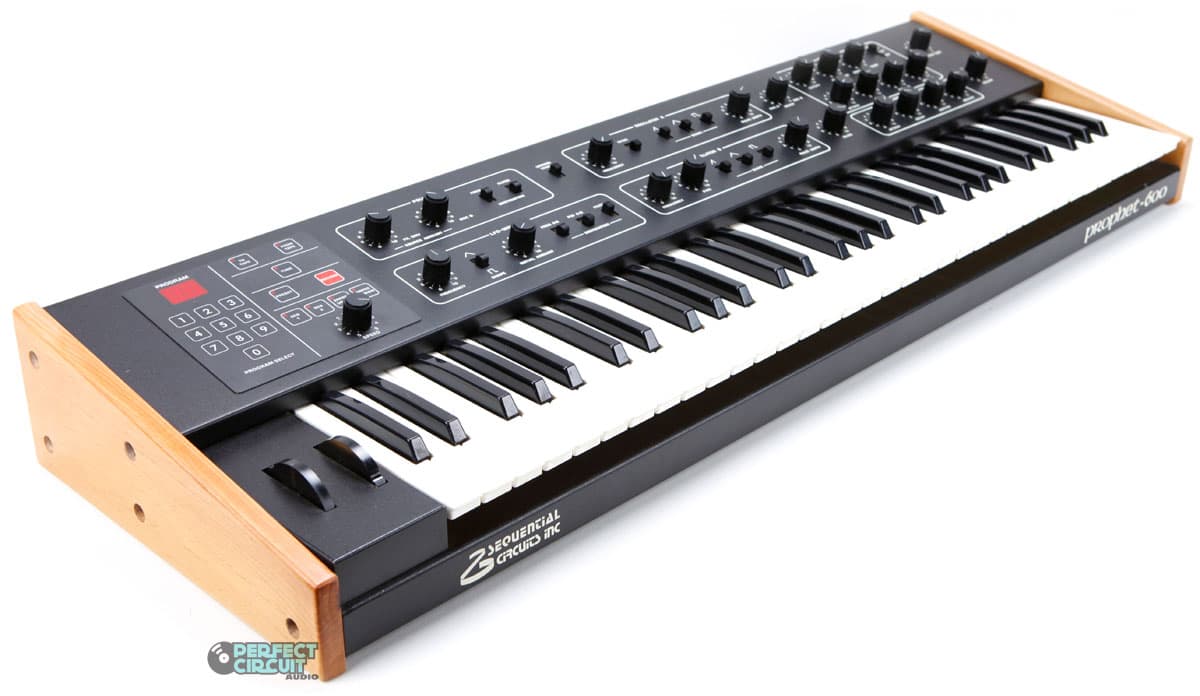
Sequential’s Prophet-5, from 1978, pushed that logic further as a successful programmable polyphonic synth. Programmable recall made it easier to build repeatable sounds without losing the immediacy players had come to expect from a hands-on panel. The interface became part of the workflow that made a polyphonic synth usable in the first place.
What matters when you buy, restore, or recreate the workflow
If you collect or restore vintage synths, the ergonomic details deserve the same attention as the electronics. A panel with clear labeling, sensible control density, and good physical access is easier to live with than a prettier machine that fights your hands. A compact layout can be inspiring when it is intentional, but it can also become frustrating if the controls are too close together or the visual logic is weak.
Ask yourself a practical question: does this layout make you want to play differently?
This article was produced by Prism’s automated news system from verified source data, official records, and press releases, then run through automated quality and moderation checks before publishing. The system is built and supervised by the people who set the standards it runs under. Read our full AI policy.
Did this article answer your question?