Early-production Moog Minimoog Model D surfaces with studio provenance
Serial 5233 pairs early-production Minimoog status with roughly 20 years in a smoke-free studio, the kind of provenance collectors chase.
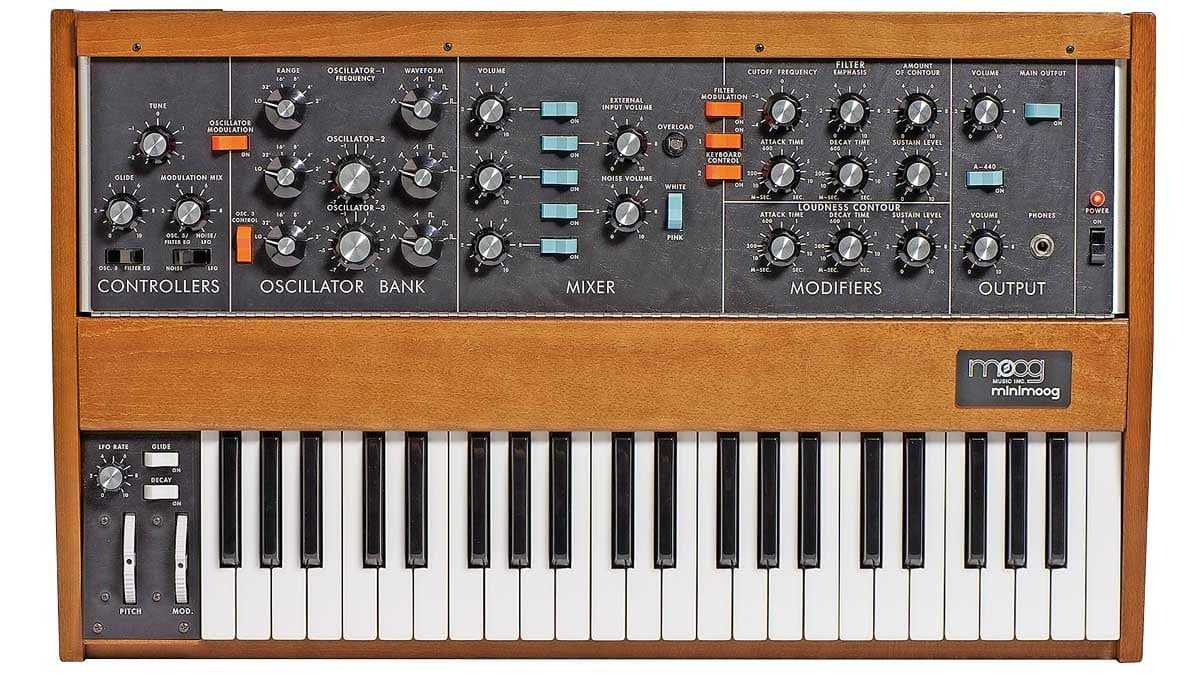
An early-production Moog Minimoog Model D, serial 5233, has surfaced with roughly twenty years of smoke-free studio ownership behind it. For vintage synth buyers, that combination puts provenance, originality, and service history front and center before the first note is played.
The listing points back to Portland keyboardist Ramsey Embick, who used the Minimoog during the 1980s with The Pointer Sisters before it later entered the studio. That ownership trail matters because a documented working life can be worth more than a vague resell history, especially on a Model D from the early part of the instrument’s 1970 to 1981 production run. The Minimoog was introduced in 1970 as a portable, performance-ready analog keyboard synthesizer, and the first production unit, serial 1001, shipped to Walter Sear on November 19, 1970.
That origin story explains why low serial numbers still draw attention. Moog Music continues to frame the Model D as the archetype of a synthesizer and the first portable, performance-ready analog keyboard synthesizer, while Moog Archives preserves early Minimoog serial-number and shipping-record information. On a market where documentation can separate a survivor from a parts pile, a serial like 5233 sits close enough to the launch era to matter to collectors, players, and dealers watching the top end of the market.

The real buyer lesson is mechanical, not nostalgic. A smoke-free studio history lowers the odds of nicotine damage and heavy cosmetic wear, but it does not erase the need to inspect power supplies, pots, key contacts, calibration, and tuning stability. Comparable 1973 Model D listings have advertised work such as new electrolytics, a recapped power supply, cleaned and aligned keyboard contact springs, rebushing, calibration, tuning, a modern power cord, and even a new feather-touch keybed, which is the kind of service record buyers should ask to see before treating an early Minimoog as ready for daily use.
That is what makes serial 5233 interesting: it is not just an early Model D, but an early Model D with a traceable studio life and a player pedigree that reaches from Portland to The Pointer Sisters. In the Minimoog market, that is the difference between a collectible and a serious instrument with a story.
This article was produced by Prism’s automated news system from verified source data, official records, and press releases, then run through automated quality and moderation checks before publishing. The system is built and supervised by the people who set the standards it runs under. Read our full AI policy.
Did this article answer your question?