Free Juno-106 Emulation Plugin KR-106 Arrives as Open-Source Virtual-Analog Synth
A 25-year Brooklyn loft project just dropped as a free, GPL-licensed Juno-106 emulation with chip-level accuracy and 128 SYSEX-decoded factory presets.
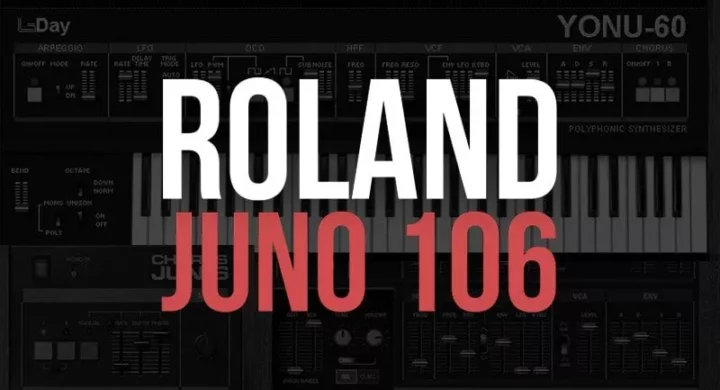
We started building a Juno software synth in a Brooklyn loft in 2000. 25 years later, we're releasing it as open source. Meet the Ultramaster KR-106." That's how one of the developers introduced the project on Reddit last week, and the backstory is as good as the plugin itself.
The KR-106 dropped on March 18-19, 2026, and it's a 6-voice polyphonic virtual-analog emulation modeled explicitly on the Roland Juno family. It runs as AU, VST3, CLAP, and LV2, with OS-specific mappings: AU and VST3 on Mac, VST3 and LV2 on Linux, VST3 on Windows, plus a standalone build. It's completely free, GPL-licensed, and the project explicitly declines donations.
The story behind it is worth knowing. Around 2000, the developer and his collaborator Dave launched Ultramaster Group with what they described as "a wild idea: professional audio software for Linux." Life intervened. One founder opened a screen printing studio. Dave ended up at Google. But as the Ultramaster website puts it: "We never really stopped thinking about the synth." When they finally returned to the project, the landscape had shifted enough to make the original ambition achievable: "Hardware is exponentially faster, DSP methodology has evolved, and we now have access to oscilloscopes, service manuals, and communities like this one. So we went back to the source code and overhauled everything."
That overhaul shows in the technical spec. Each of the six voices runs its own DCO, VCF, VCA, and ADSR. The VCF is a TPT cascade implementation of the IR3109 OTA-C design with 2x oversampling. The sub-oscillator models the CD4013 flip-flop circuit. The noise source models the 2SC945 transistor in avalanche mode. The BBD chorus emulates the MN3009 chip using Hermite interpolation. These aren't generic "analog-inspired" labels; they're specific silicon references, the kind that matter to anyone who's ever pulled a 80017A chip out of a dead Juno-106 and gone hunting for a replacement.
The analog tolerance modeling goes just as deep. Per-voice component variance is modeled with pitch deviation at ±3 cents, envelope timing at ±8%, and VCA level at ±0.5 dB, the sort of voice-to-voice inconsistency that makes hardware feel alive rather than sterile. PWM runs in manual, LFO, or envelope mode. The four-position HPF covers bass boost, flat, 240 Hz, and 720 Hz, matching the original hardware positions.
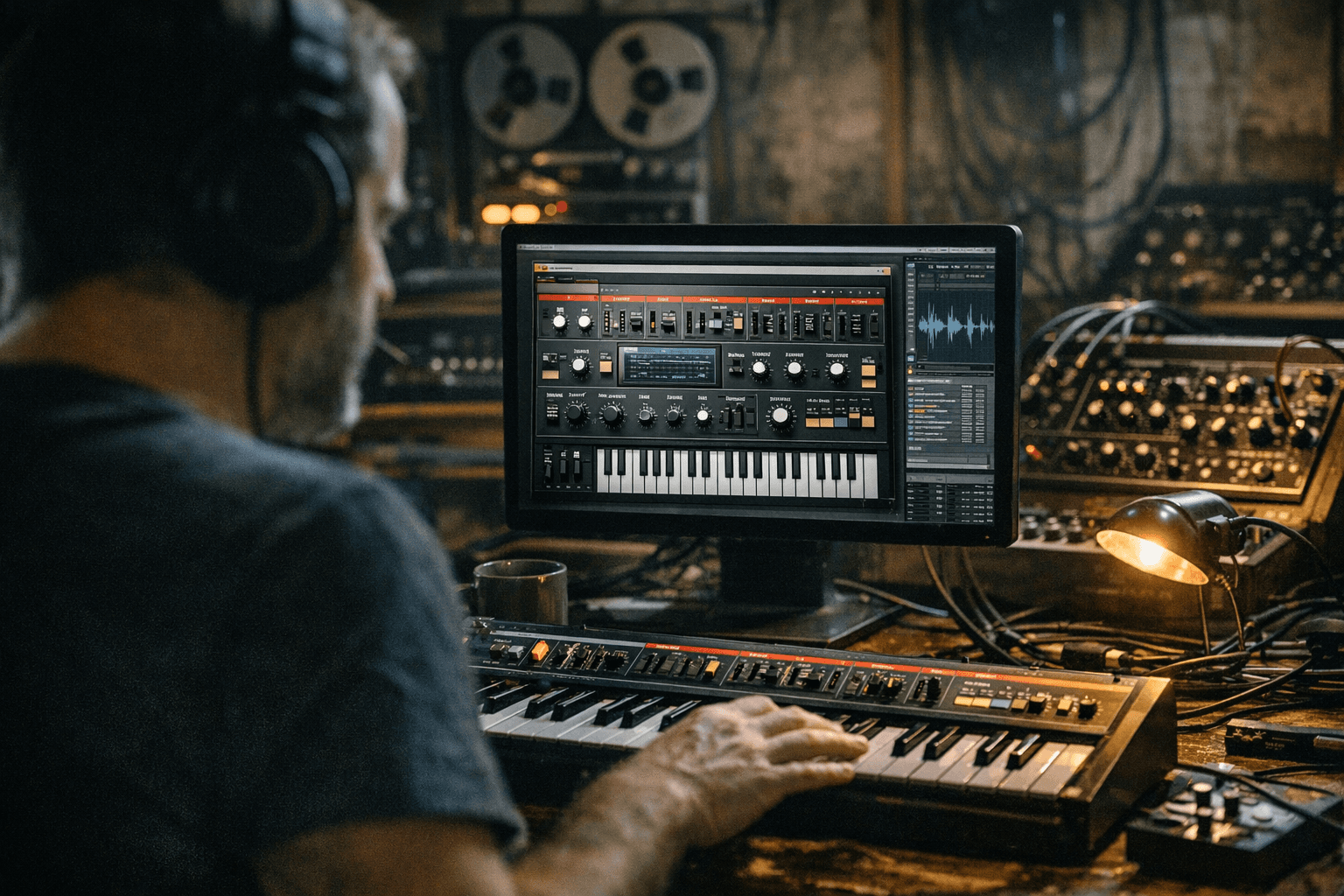
Two calibration modes give the plugin different sonic characters. "1984 Mode" draws from the original firmware and factory schematics. "1982 Mode" uses circuit analysis and hardware measurements taken directly from the developer's own Juno-6. The 128 factory presets were decoded from original SYSEX data rather than recreated by ear.
"It's 100% free, GPL-licensed, and we don't take donations," the developer wrote. "We just want it to be as accurate as possible, and we'd love help getting there."
For a project that sat dormant while one founder printed T-shirts and the other shipped code at Google, the KR-106 landed with a level of technical rigor that most commercial Juno emulations don't attempt. The invitation for contributors to improve accuracy is open.
Know something we missed? Have a correction or additional information?
Submit a Tip