How early Japanese synths made vintage synthesis affordable and portable
Japanese makers turned synths into portable, player-friendly instruments. The miniKORG-700, SH-1000, and SY-1 show why the vintage market opened up.
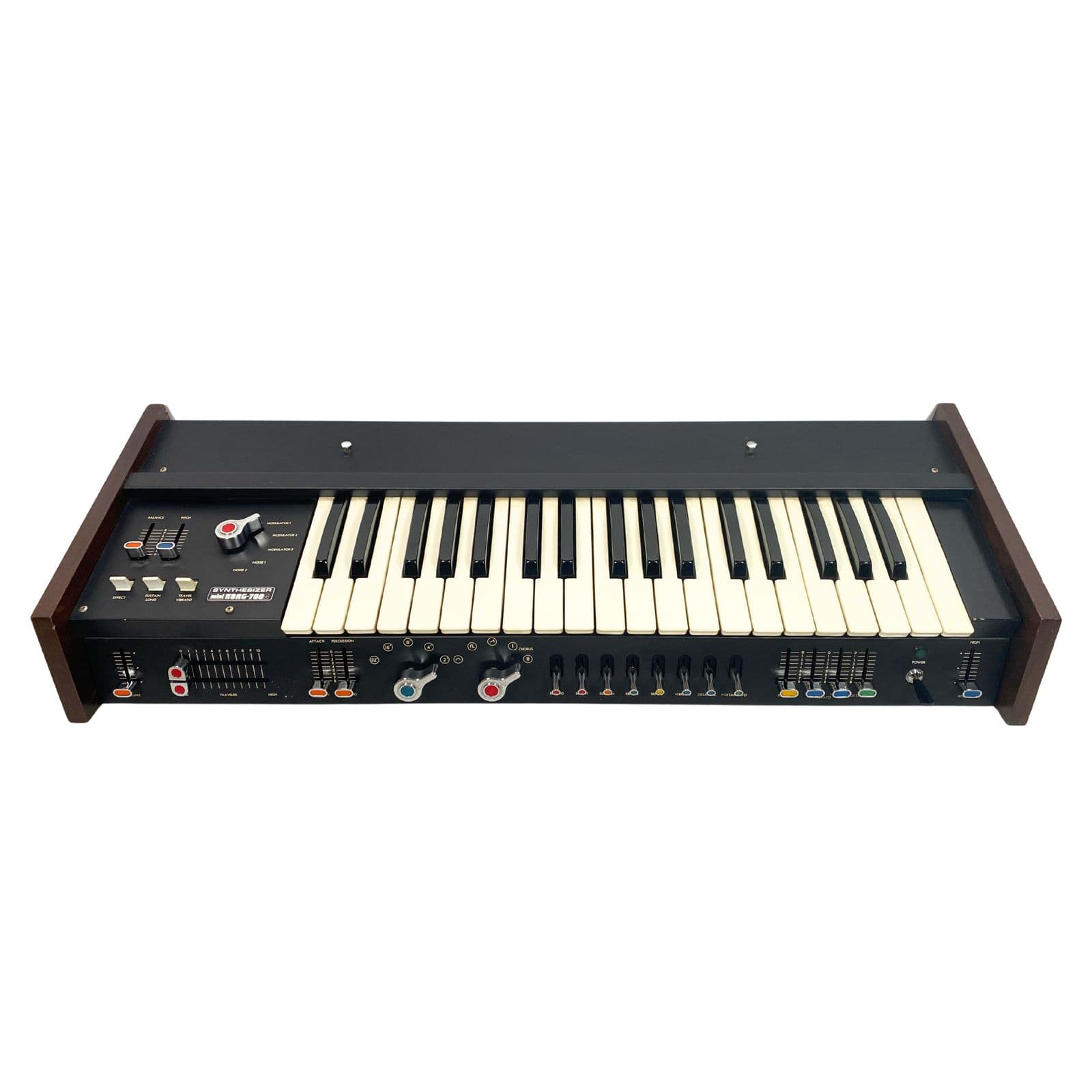
The first Japanese synthesizers did something the modular giants had not: they made synthesis look playable. By the spring of 1973, Korg’s miniKORG-700 had opened Japan’s local synth race, and Roland and Yamaha were moving just as fast with compact, preset-minded instruments that working musicians could actually carry, set up, and use on a bandstand.
From lab machine to stage instrument
For a lot of players, the big shift was not just sound, but shape. American modulars defined the earlier synth image: huge, expensive systems built for studios, experimental music, and specialist users. Early Japanese makers took a different path, borrowing the ergonomics of organs, combo keyboards, and portable performance gear already familiar in Japanese band life.
That is why the earliest Japanese synths feel so important in hindsight. The miniKORG-700 and the Roland SH-1000 were not trying to recreate the modular studio in smaller form. They pushed synthesis into compact, portable instruments with preset-based simplicity and control layouts that made sense to keyboard players who wanted to get to the gig, find a sound fast, and keep playing.
Korg’s miniKORG-700 set the pace
Korg’s miniKORG-700 is the cleanest marker of the turning point. Reverb identifies it as Japan’s first synthesizer, released in the spring of 1973, and that debut effectively started the country’s local synth race. It was a monophonic synth, which matters because it shows the logic of the moment: one voice, direct controls, and a form factor much closer to a playable keyboard than a laboratory rack.
That Korg came out of the Keio Organ Company world is part of the story too. The company was already rooted in organs and portable keyboard culture, so the miniKORG-700 did not arrive as a weird detour from mainstream music making. It arrived as a practical answer to a practical question: how do you give ordinary players access to synthesis without the scale, price, and complexity of the modular era?
For collectors, that makes the miniKORG-700 more than a first. It is one of the clearest examples of the Japanese approach that would dominate later decades, where a synth’s value is tied not only to its tone, but to the moment it made the whole instrument class feel usable.
Roland’s SH-1000 made the new category feel real
Roland’s SH-1000 followed in 1973 and is identified in Roland history materials as the company’s first synthesizer. That timing matters because Roland’s synth chronicle begins in 1973, which puts the SH-1000 right at the start of the company’s identity as a synth maker rather than an organ or electronics company in transition from Ace Tone.
The SH-1000 belongs in this conversation because it confirms that Japan’s early synth story was not a one-off from Korg. Roland was building the same new idea from a different angle: compact, stage-ready, and accessible enough to move synthesis out of avant-garde corners and into regular keyboard rigs. It helped establish Japan as a serious manufacturing center for synthesizers, not just another market for imported ideas.
That is one reason the SH-1000 still matters in the vintage world. First-generation Roland synths carry a special weight because they sit at the start of a lineage that later fed instruments like the SH-101 and Juno-60. When you see the SH-1000 now, you are looking at the point where the company’s synth language began.
Yamaha came at synthesis through organs, not labs
Yamaha’s path was different again, and that difference says a lot about why Japanese synths looked the way they did. Yamaha’s own history traces the company’s electronic-instrument development back to founder Torakusu Yamaha and to the Electone D-1 electronic organ, designed and built in 1959. That organ lineage matters because Yamaha did not arrive at synthesis from a pure experimental-synth tradition. It arrived through the world of keyboards people already played.
By 1974, Yamaha had introduced the SY-1 and SY-2, which Vintage Synth Explorer describes as Yamaha’s first compact, portable analog synthesizers. They were single-VCO instruments derived from the GX-1, with preset sounds and basic synthesis capabilities. That combination tells you exactly how Yamaha was thinking: keep the instrument manageable, keep it usable, and make it fit the way organ and piano players already worked.
The SY-1 and SY-2 are also among the most historically underappreciated Japanese synths because they were not built to look like standalone flagship machines. They were designed as accessories for organs and pianos, which means they often get remembered less loudly than later Yamaha icons. In collecting circles, that makes them especially interesting: they are early evidence of Yamaha’s performance-first philosophy, long before the CS and DX families made that philosophy famous.
Why these early Japanese synths still shape the vintage market
What Korg, Roland, and Yamaha changed was not just electronics. They changed the economics of who could enter synthesis. By moving from enormous modular systems to compact, monophonic, preset-friendly instruments, Japanese manufacturers widened the market beyond wealthy studios and experimental composers to gigging players and, eventually, hobbyists. Synthesis stopped being a specialist machine and started looking like a consumer product category.
That shift still defines what collectors chase now. The miniKORG-700 and SH-1000 are prized because they are firsts, and because firsts in this field are where the modern performance synth starts to take shape. The SY-1 and SY-2 draw a different kind of attention: they are the quieter, more overlooked link between organ culture and the portable analog synth, which is exactly why they matter.
The old modular dream was about building sound in a lab. These early Japanese instruments were about carrying it onto a stage. That is the moment the vintage synth world keeps returning to, because once a synth became small enough to gig with and familiar enough to buy, the whole culture around collecting, restoring, and playing it changed with the instrument itself.
This article was produced by Prism’s automated news system from verified source data, official records, and press releases, then run through automated quality and moderation checks before publishing. The system is built and supervised by the people who set the standards it runs under. Read our full AI policy.
Did this article answer your question?