How to preserve vintage synth sounds with careful multisampling
Sample the Prophet 600 before drift and parts failure make it unreliable, and you keep the sound even when the hardware becomes too fragile to trust.
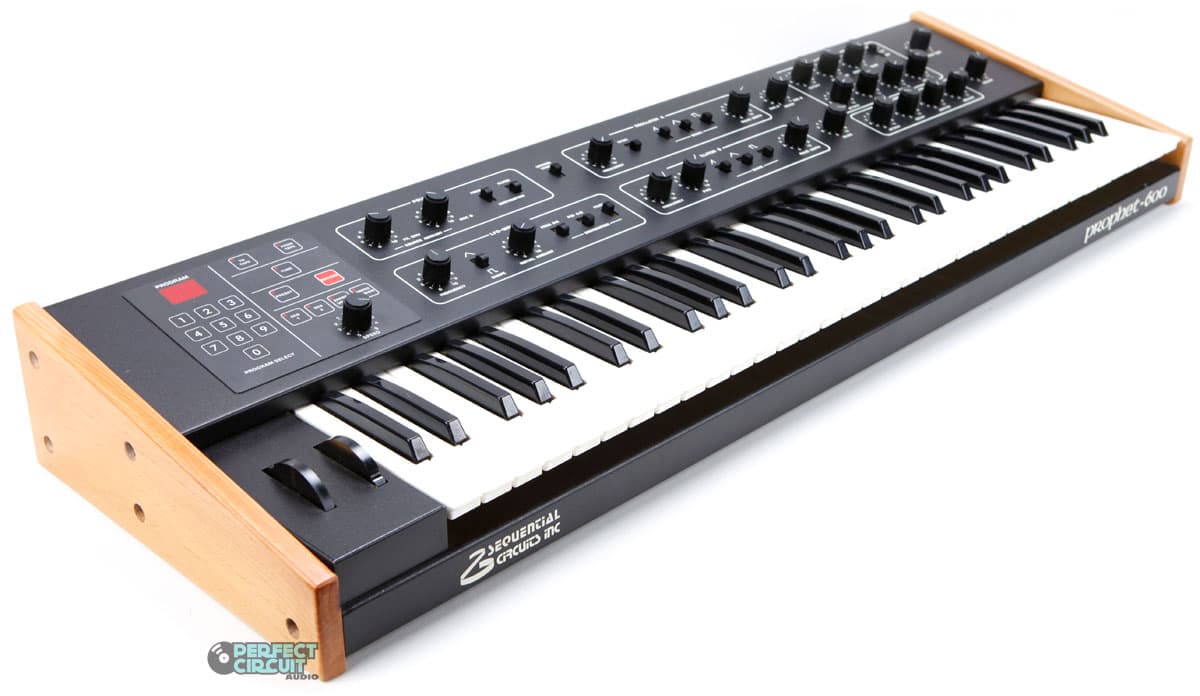
A Sequential Circuits Prophet 600 can be the machine you build a session around, but it can also become the instrument you hesitate to ship, gig, or even power up without a prayer. Careful multisampling turns that risk into a plan: you capture the voice while the tuning still holds, the chip set still behaves, and replacement parts are still obtainable. Sound On Sound’s “Synth Preservation Society” calls vintage synths “perfect for sampling” and says modern multisampling software makes the process “easy and creatively rewarding.”
Preservation starts before the first note is recorded
The key distinction is simple: restoration tries to bring one instrument back to life, while preservation tries to keep the sound available even if the hardware later becomes fragile, unreliable, or impossible to service. That matters most when you are dealing with hard-to-source chips, dead keybeds, unstable power supplies, or the kind of tuning drift that makes a vintage analog poly feel different every time it wakes up.
The Library of Congress has a Preservation section devoted to collections care and conservation, and the Society of American Archivists maintains preservation resources for archival, audiovisual, and digital collections. The Library of Congress announced its National Recording Preservation Plan in 2013; sound media needs deliberate stewardship if it is going to remain usable.
Why the Prophet 600 is such a good test case
The Prophet 600 is a strong preservation example because it is not a static sound source. It is a 6-voice, dual-VCO analog poly with a resonant low-pass filter, unison, arpeggiator, and a simple onboard sequencer, and that combination gives it movement across the keyboard and across performance states. One demo of the instrument also highlights VCO, VCF, sync, and filter-FM sounds.
That is exactly why one or two notes will not tell the full story. A Prophet 600 patch can shift with oscillator interaction, filter behavior, and the way the instrument responds at different points in its range, so a preservation-minded sample library should track those changes instead of flattening them into a single token sound. If the machine’s character changes every few semitones, the archive has to reflect that.
What to capture if you want the library to be useful later
The best approach is methodical and dry. Start by recording the synth’s raw output with no reverb, no compression, and no normalization that squashes the instrument’s natural dynamics. Then move through the range in a way that matches the synth’s behavior, whether that means every octave or every few semitones, and add extra passes for settings that define the voice: filter sweeps, resonance extremes, envelope variations, pulse-width changes, sync, noise sources, and any onboard modulation or performance controls.
A preservation-focused capture should also document the conditions of the recording itself. Include the instrument model, serial number, service history, tuning standard, recorder settings, and whether the samples came straight from the synth’s own outputs or through external processing.
A practical capture list for a vintage analog poly looks like this:
- Dry notes across the range, with enough sampling density to catch timbral shifts
- Multiple dynamic strikes if the instrument responds differently to touch or level
- Filter open, halfway, and closed positions, plus resonance at usable extremes
- Modulation states that define the patch, such as sync or filter-FM on the Prophet 600
- Notes about calibration, tuning standard, and any instability heard during the session
The mistakes that ruin archival usefulness
The most common error is treating preservation sampling like preset copying. One sample per note can be fine for a quick playback patch, but it fails as an archive because it erases the way the instrument breathes across pitch, filter movement, and attack behavior. Heavy normalization can do the same thing by making every note feel equally loud, which destroys the very differences that give the synth its voice.
Over-processing is another trap. Compression, reverb, and thickening effects may sound flattering in the moment, but they bury the raw character you are trying to save. If the point is to preserve the Prophet 600’s own tone, you want the sound of the synth, not the sound of your mastering chain.
The other mistake is bad paperwork. If you do not record the serial number, service history, or how the samples were taken, the library loses provenance.
When a sample library is a smart backup, and when it is not
A good multisampled library is a smart backup when the original instrument is rare, temperamental, or too fragile to move around. It is especially useful when the synth has hard-to-source parts, when a repair could take months, or when you need the instrument’s sound in a project even as the hardware waits for service. In that situation, the library preserves the usable identity of the machine without asking the machine to keep performing at all costs.
It becomes a poor substitute when the whole point is the feel of the instrument in real time. A sample library will not recreate every quirk of oscillator drift, every tiny interaction between knobs and circuit response, or the physical pleasure of riding the front panel while the filter opens under your fingers.
EMEAPP is a nonprofit caretaker of historically significant electronic music and rock & roll gear.
This article was produced by Prism’s automated news system from verified source data, official records, and press releases, then run through automated quality and moderation checks before publishing. The system is built and supervised by the people who set the standards it runs under. Read our full AI policy.
Did this article answer your question?