How to program a Prophet-5 for classic vintage synth sounds
The Prophet-5’s biggest sounds come from small moves: detune, cutoff, envelope timing and restraint turn a simple panel into pads, brass and focused leads.
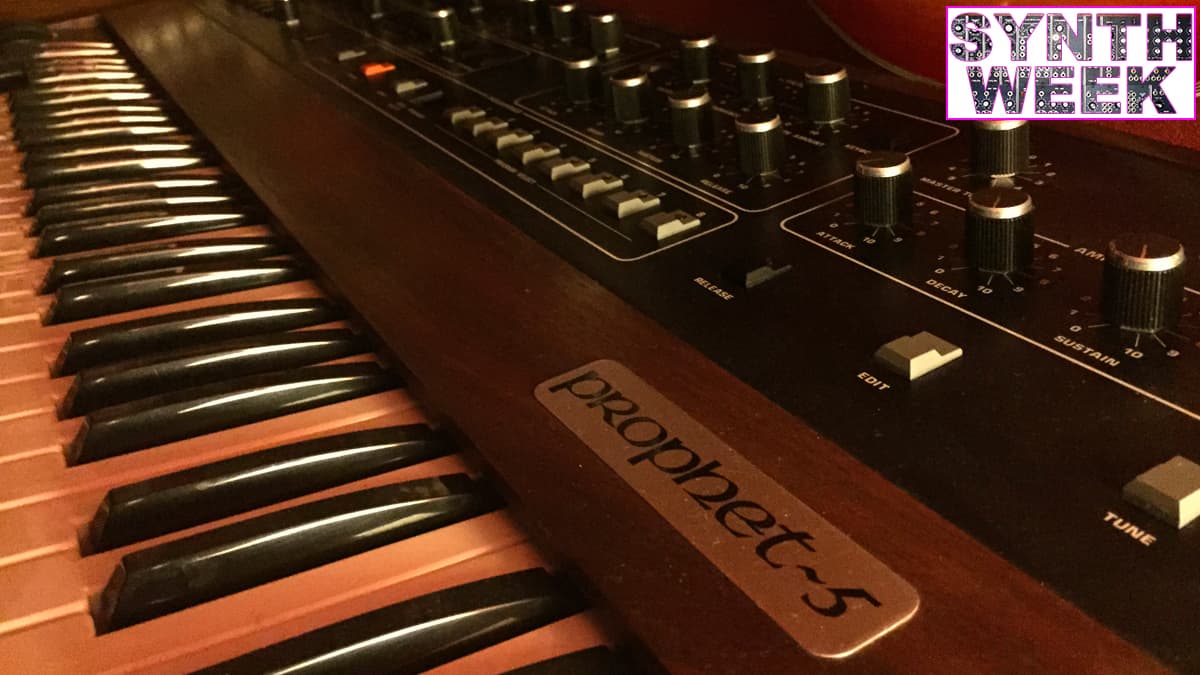
Sequential Circuits introduced the Prophet-5 in 1978, but the instrument only looks straightforward until you try to pull classic brass, pads and lead voices out of it at speed. That is where it teaches the real lesson: with two oscillators per voice, a resonant low-pass filter, ADSR envelopes, an LFO and poly-mod, tiny changes can completely change the feel of a patch.
Why the Prophet-5 still matters as a programming lesson
With Dave Smith behind the company and winter NAMM that year as one of its big public moments, the Prophet-5 was one of the first fully programmable polyphonic analog synthesizers, and the combination of five-note polyphony plus patch memory was a major leap for live players and studio work. MusicRadar summed up that shift in one line: “Think of it as a 5-note Minimoog, and your programs can be stored even when the instrument is turned off!”
Early Prophet-5 revisions used SSM components, while later Rev 3 units moved to Curtis chips, a change that helped stabilize tuning and made the instrument far more practical on stage and in the studio. The current Prophet-5/10 reissue keeps that architecture active today, and Sequential’s Prophet-5 User’s Guide version 1.3 is dated Feb. 2021.
Read the architecture before you touch the knobs
The Prophet-5 is a classic polyphonic analog synth with two oscillators per voice and a white noise generator, and that is the heart of its vocabulary. Two oscillators are enough to create movement through interval choice, slight detune or octave stacking, while the white noise source adds breath and edge when a patch needs more bite. The resonant low-pass filter does the subtractive work, shaving off harmonic content until the patch sits where you want it.
The ADSR envelopes and LFO are the other half of the personality. Short attack and decay times create punctuation, while slower envelope shapes soften the front edge and let the filter bloom into the note. The poly-mod section, which lets one oscillator and the envelope influence another, adds just enough extra motion for clang, growl or animated attack without forcing you into a modern modulation maze.
A good Prophet-5 patch usually comes from restraint, not density. The filter does not need to be wide open to sound expensive, the resonance does not need to scream, and the LFO does not need to be obvious.
Build the pad first, then widen it carefully
For a classic Prophet pad, start with both oscillators slightly detuned and keep the filter moderately open. That tiny pitch offset creates slow beating between the two oscillators, which gives the sound width without turning it into a chorus effect that smears the center. A slow attack and release let the note swell and fade naturally, which is why these patches feel expensive even before you add any modulation.
Keep resonance low to moderate. Too much resonance narrows the filter and pulls attention away from the body of the sound, while a gentler setting lets the oscillators’ shared harmonic content stay present. If you want more movement, use the LFO sparingly for subtle vibrato or drift rather than obvious wobble, because pads on this instrument work best when they feel alive but not nervous.
A practical pad recipe on a Prophet-5 or a clone follows a simple logic:
- Both oscillators active, slightly detuned
- Filter opened enough to preserve warmth, but not fully
- Slow attack, long release
- Low resonance
- Very subtle LFO, if any
That formula translates well to other vintage polysynths because it depends on fundamentals, not a specific panel layout. If your instrument has a different oscillator mix or more modern features, the same idea still holds: create small pitch movement, preserve enough top end for shimmer, then use the envelope to keep the edges soft.
Turn brass into a filter envelope problem
Classic Prophet brass comes from a very different shape. Shorten the amp and filter envelopes, then add a little envelope amount to the filter so the cutoff snaps open at the start of the note and closes quickly after the attack. That gives the transient its bite, which is what makes brass read as brass instead of just a bright synth stab.
This is where the Prophet-5’s envelope behavior really matters. A brass patch needs the initial attack to expose upper harmonics, but it also needs the filter to clamp down fast enough that the body stays focused. If the cutoff is too closed, the attack disappears; if resonance is too high, the patch can turn nasal or whistle-like instead of punchy.
The white noise generator is useful here in very small doses. A touch of noise can sharpen the front edge and make the patch feel more like a live ensemble hit, but it should stay subtle enough that the oscillators still carry most of the tone.
Make string-like textures and focused leads without overdoing it
For a warmer string-like sound, keep the oscillator interval stable, use low resonance, slow the attack and add just a touch of LFO vibrato. The stable interval gives the sound a solid core, while the slight vibrato prevents it from feeling static across held chords. On a Prophet-style instrument, the string illusion depends on motion that stays below the level of obvious modulation.
For a more aggressive lead, unison mode and oscillator sync-style behavior can create a thicker, more focused center that cuts through a mix. On instruments that offer sync, that effect sharpens the harmonics as one oscillator is forced into a tighter relationship with the other, which adds edge and vocal intensity. On an original Prophet-5, the same goal comes from stacking voices in unison and keeping detune tight enough that the sound stays centered instead of wandering.
A great Prophet lead usually needs less modulation than you think, because the oscillators and filter already carry enough character on their own. GForce Software calls the Prophet~5 a benchmark for analog tone and immediacy.
This article was produced by Prism’s automated news system from verified source data, official records, and press releases, then run through automated quality and moderation checks before publishing. The system is built and supervised by the people who set the standards it runs under. Read our full AI policy.
Did this article answer your question?