How vintage synths achieved true polyphony, not just note stacking
True polyphony meant every note got its own voice path, and that doubled as a buyer warning. The gap between a Polymoog, a PS-3100, and a paraphonic board still determines risk, repair cost, and playability.
The quickest way to get burned on a vintage synth listing is to assume “polyphonic” means the same thing every time. Sometimes it means each note has its own envelope, filter, and amplifier. Sometimes it only means you can stack pitches while the articulation stays shared, which is how a lot of paraphonic and divide-down designs fooled players with big chord names and small voice counts.
That distinction still matters because it changes how the instrument feels under your fingers and how ugly the repair bill can get. A truly polyphonic machine has to shape tone and envelope independently for each note, while a paraphonic design can let you play chords but makes those notes breathe together. The difference is not philosophical; it is the difference between a synth that behaves like a set of separate instruments and one that behaves like one instrument with a clever note-assignment trick.
What true polyphony actually means
In the vintage era, true polyphony was an engineering problem first and a musical breakthrough second. Early fully polyphonic synths were expensive because a four-voice design could require roughly four times the circuitry of a monophonic one. That means more filters, more envelopes, more VCAs, more tuning points, and more opportunities for drift, failure, and heat-related weirdness.
Divide-down and paraphonic systems were the practical workaround in the late 1970s and early 1980s. They let builders put more keys on the instrument without multiplying every voice circuit in the same way, which kept costs lower and made it possible to sell the idea of “polyphony” to players who wanted chords more than they wanted perfection. The tradeoff was articulation: when the envelope is shared, the first note and the last note do not speak the same way.
Why the architecture changes the shopping decision
When you evaluate a vintage poly synth, the architecture tells you how risky ownership will be. A true polysynth with independent voice cards can sound glorious, but every additional voice path is another place for a dead capacitor, a noisy VCA, or a tuning issue to hide. A paraphonic or divide-down instrument may be simpler in one sense, yet it can still be maddening if the shared contour circuitry is unstable or if one fault affects the whole keyboard.
That is why “plays a chord” is not enough information. You want to know whether the notes are merely stacked, or whether each note gets its own tone-shaping path. If you are restoring, sampling, or buying for daily use, that one question changes everything from parts cost to how much confidence you can have on stage.
The Polymoog: real polyphony, real maintenance gravity
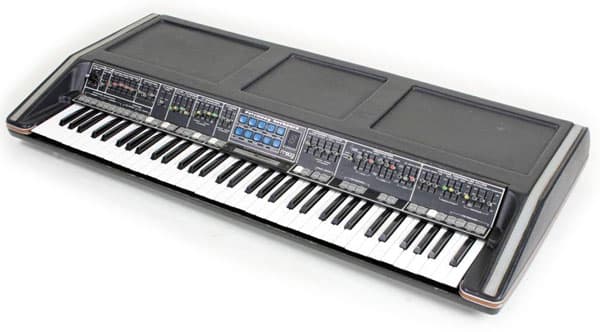
Moog’s Polymoog is a perfect cautionary example because it did the hard thing. The Bob Moog Foundation’s archival catalog describes it as a “fully polyphonic keyboard,” and that phrase is doing a lot of work. It tells you the instrument was not built around a shortcut; it was built around real voice independence, with the complexity that comes with it.
That complexity is why the Polymoog has such a strong reputation among collectors and such a mixed one among owners. A fully polyphonic design from that period meant more circuitry packed into one keyboard, and more circuitry means more service points. The payoff is obvious when you hear it: the keyboard behaves like a true chord machine rather than a monophonic circuit pretending to be bigger than it is. The risk is just as obvious when you are the one paying to keep it alive.
Moog later leaned into that lineage in a very deliberate way. The company framed the Moog One as its first analog polysynth in over 35 years and cast it as a modern re-imagining of the original 1976 Polymoog demo. That tells you how central the Polymoog remains in Moog’s own idea of polyphonic ambition, even decades after the original machine set the template for what could be attempted.
Korg’s PS series shows the hardware leap in plain sight
Korg’s PS line gives you one of the clearest ways to understand how far builders had to go to get real polyphony. Vintage Synth Explorer places the PS-3100 in 1976 and describes it as a 48-note polyphonic synth with one VCO, VCF, VCA, and EG for each key. It also used 12 divide-down VCOs and 2 LFOs, which makes it a hybrid in spirit: serious independent voice design bolted to older note-generation logic to make the whole thing practical.
That hybrid approach is exactly what makes the PS-3100 such a useful reference point for buyers. It shows that “polyphonic” was not one clean technical family tree. Builders were mixing old and new ideas to get the keyboard count up, while still trying to give each note enough independent behavior to justify the name.
For the owner, the lesson is simple. A PS-3100 is not just “more voices.” It is more circuits, more calibration, and more chances for the instrument to age unevenly. When one voice path drifts, the whole character of the keyboard can change, and that is part of the charm as well as part of the headache.
The PS-3300 and why rarity follows voice count
If the PS-3100 is the lesson, the PS-3300 is the warning label. Korg says the original PS-3300 was introduced in 1977 and built between 1977 and 1981, with fewer than 50 originals made. Korg also describes it as having 144 independent synthesizer voices, three for each of its 48 keys, and as the semi-modular predecessor to the MS-20.
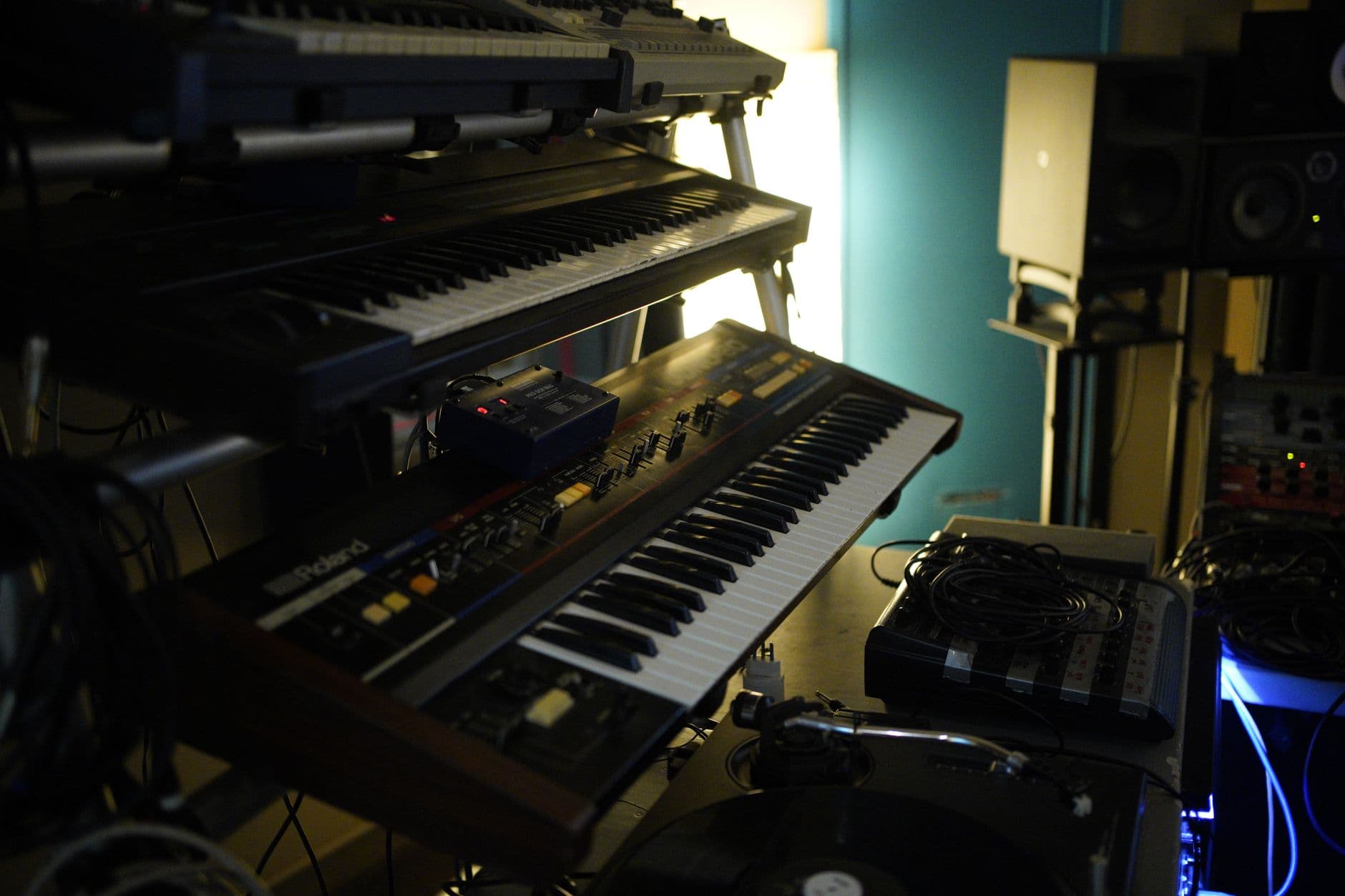
That specification is not just a brag sheet. It explains why the PS-3300 became legendary and why it is such a serious restoration proposition today. Three voices per key means a dense internal structure, and dense internal structure means that repairs are not casual. When an instrument this rare goes down, the issue is not only cost, but expertise and parts access.
The PS-3300 also shows how the vintage market assigns value. Collectors are not only chasing the Korg name. They are chasing an architecture that was expensive to build, scarce when new, and still difficult to service now. That combination is exactly why the most desirable poly synths can also be the most dangerous purchases.
The PE-1000 proves the road to polyphony was not linear
Korg’s Polyphonic Ensemble P, or PE-1000, helps fill in the path that led to later serious polysynths. Vintage Synth Explorer describes it as one of Korg’s first polyphonic instruments and notes that it used a separate oscillator per key rather than divide-down oscillator technology. That makes it a useful bridge between ensemble keyboards and the more fully fledged polyphonic machines that followed.
The important point is that manufacturers did not all march toward polyphony the same way. Some used divide-down logic, some used separate oscillators, and some built fully independent voice architectures that were gorgeous but costly. The market eventually rewarded the models that balanced voice count, reliability, and price, but the instruments that pushed hardest on true independence are the ones that still command the deepest attention from players and restorers.
How to read the label before you buy
A vintage synth that says “polyphonic” can mean several very different things, and the label alone is not enough. A good buyer checks whether the machine has independent envelopes and filtering per note, whether it uses divide-down or paraphonic sharing, and how many voices are actually inside the chassis. That single read tells you whether you are looking at a playable chord machine, a maintenance project, or a historically important artifact that happens to make sound.
The old myth is that polyphony was just about adding more keys. The real story is more demanding: true polyphony meant multiplying the entire voice path, note by note, until the instrument could behave like a stack of separate synths. That is why the Polymoog, the PS-3100, and the PS-3300 still matter today. They are not just classics, they are the machines that taught the market what “polyphonic” had to mean.
This article was produced by Prism’s automated news system from verified source data, official records, and press releases, then run through automated quality and moderation checks before publishing. The system is built and supervised by the people who set the standards it runs under. Read our full AI policy.
Did this article answer your question?