How Wendy Carlos helped launch the Moog synthesizer revolution
Wendy Carlos turned a Moog prototype encounter into a cultural reset, and vintage synth fans still chase the hardware vocabulary that her breakthrough made iconic.
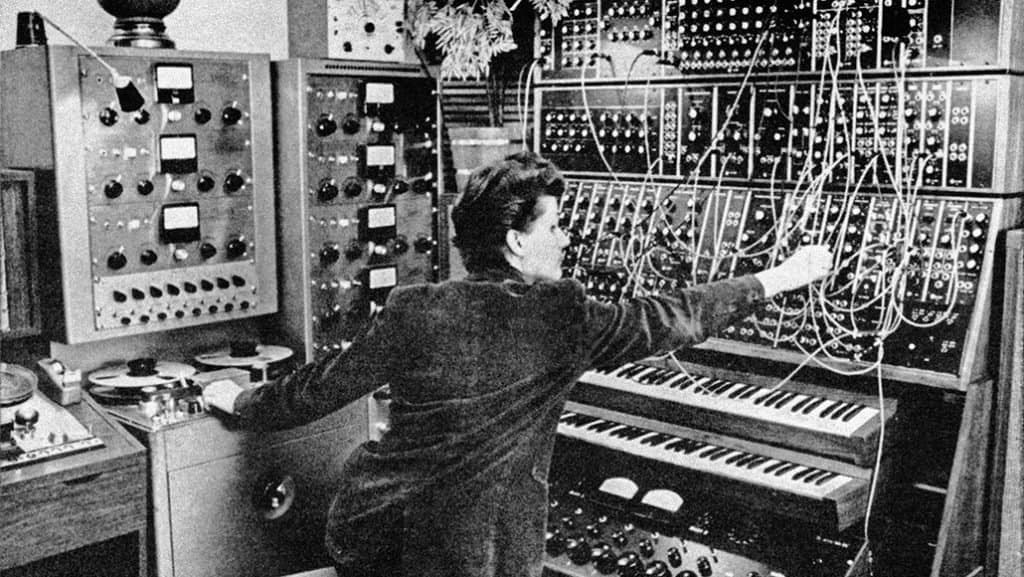
A Moog modular stops being a museum object the moment you picture Wendy Carlos at the Barbizon-Plaza Hotel in New York City, a Columbia University composition student staring at prototype modules on display. The knobs and patch points she saw there were not just early hardware; they were the blueprint for the vocabulary vintage synth people still use when they talk about real oscillators, filters, envelopes, and controllers.
The Barbizon-Plaza encounter
The origin story lands in 1964, at the Audio Engineering Society’s fall convention, where Carlos met Bob Moog and immediately recognized the instrument as something built at the intersection of science and musicianship. Moog says Carlos was drawn to the modules on display, and that those units were prototypes while he was only just beginning the synthesizer design work with composer Herb Deutsch earlier that same year. That detail matters because it keeps the Moog myth from hardening into a lone-inventor fable. The first modular was born from a working partnership between an engineer and a musician, with Deutsch later described by Moog as a co-inventor of the first Moog modular synthesizer.
Carlos’s own description of the meeting still captures why the partnership clicked. “He was a creative engineer who spoke music: I was a musician who spoke science. It felt like a meeting of simpatico minds.” That balance between engineering and performance became the template for how the modular would be understood by the people who actually used it, not just by the people who built it. Carlos became one of Moog’s earliest customers and a key contributor to the refinement of the earliest designs.
Switched-On Bach and the mainstream crossover
The leap from prototype fascination to mass recognition came with Switched-On Bach. Moog says Carlos began work on a custom modular system in 1966, and that the album’s 13 tracks were created entirely on that system before its release in October 1968. Britannica describes the record, recorded by Wendy Carlos and Benjamin Folkman, as a dramatic commercial success, and says it made the electronic synthesis of music more intelligible to the general listening public.
For the vintage synth world, that matters because Switched-On Bach did more than sell records. It fixed the Moog modular in the public imagination as a serious musical instrument, not a novelty, and it gave collectors and players a shared point of reference for what “classic Moog” sounds like. Britannica also frames Carlos’s work as a major reason the synthesizer moved out of experimental music and into popular consciousness, which helps explain why the instrument’s early topology still carries so much authority in gear talk today.
The industry recognized that crossover quickly. At the 12th Annual Grammy Awards, Switched-On-Bach won Best Classical Album, and Wendy Carlos also won Best Performance, Instrumental Soloist, and Best Engineered Album, Classical for the recording. That kind of prestige marker is rare for an instrument that had barely reached the public a few years earlier, and it turned a modular synth into a canonical object almost overnight.
The modular language collectors still chase
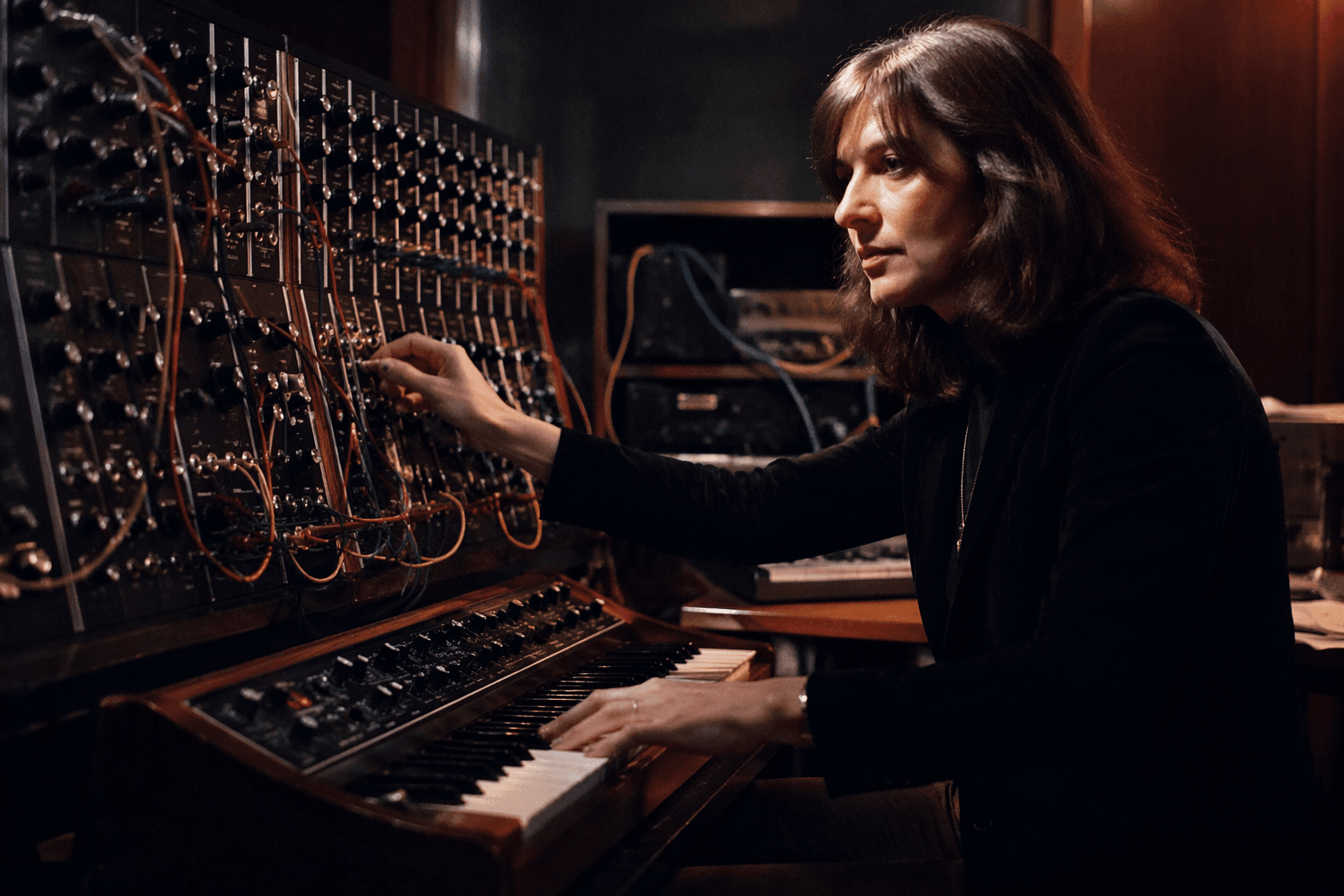
The reason the Moog story still shapes authenticity debates is that its core ideas were never abstract. The modules Carlos saw in 1964 already used the exact building blocks that restorers, collectors, and players still care about: voltage-controlled oscillators, filters, envelopes, and controllers. Those are the parts people still test, recap, calibrate, and swap when they bring vintage systems back to life, because the whole instrument is defined by how those discrete pieces behave together.
That lineage is visible in Moog’s Model 10, a 1971 faithful recreation of the first compact modular synthesizer created by Dr. Robert Moog. Moog says the Model 10 uses 11 discrete analog modules, including the 907 Fixed Filter Bank and three 900-series oscillators, the same sound-building architecture that powered landmark work like Switched-On Bach. For anyone who spends time around vintage gear, that is the bridge between myth and bench reality: the sound that defined the era came from a very specific modular logic, and Moog’s own modern recreation keeps pointing back to it.
The archive that keeps the story grounded
The story does not survive only as marketing copy or collector lore. The Smithsonian’s Analogue Music Synthesizer Oral History Project contains more than thirty hours of oral histories, plus tapes and transcripts, documenting the invention and development of the analogue music synthesizer. That archive gives the Moog origin story a physical record, which is exactly why this history still feels alive in synth circles instead of fading into nostalgia.
Moog’s own GIANTS docuseries reinforces the same point by centering Herb Deutsch as co-inventor and preserving firsthand accounts from the people who were there. Taken together, the album, the prototype encounter, the Grammy recognition, and the archival record explain why Wendy Carlos remains such a pivotal name in vintage synthesis: she helped turn the Moog modular from an engineer’s breakthrough into the shared reference point for what authentic electronic sound still means. The hotel ballroom, the prototype modules, and the Bach album all belong to the same moment, and the hobby still lives in its shadow.
This article was produced by Prism’s automated news system from verified source data, official records, and press releases, then run through automated quality and moderation checks before publishing. The system is built and supervised by the people who set the standards it runs under. Read our full AI policy.
Did this article answer your question?