JS80P 4.0.0 Brings CS-80 Inspiration to macOS With New Waveforms and Distortion
JS80P 4.0.0 lands on macOS for the first time, adding PWM waveforms and sin(x) distortion that cut straight to the Vangelis brass sound, free on every platform.
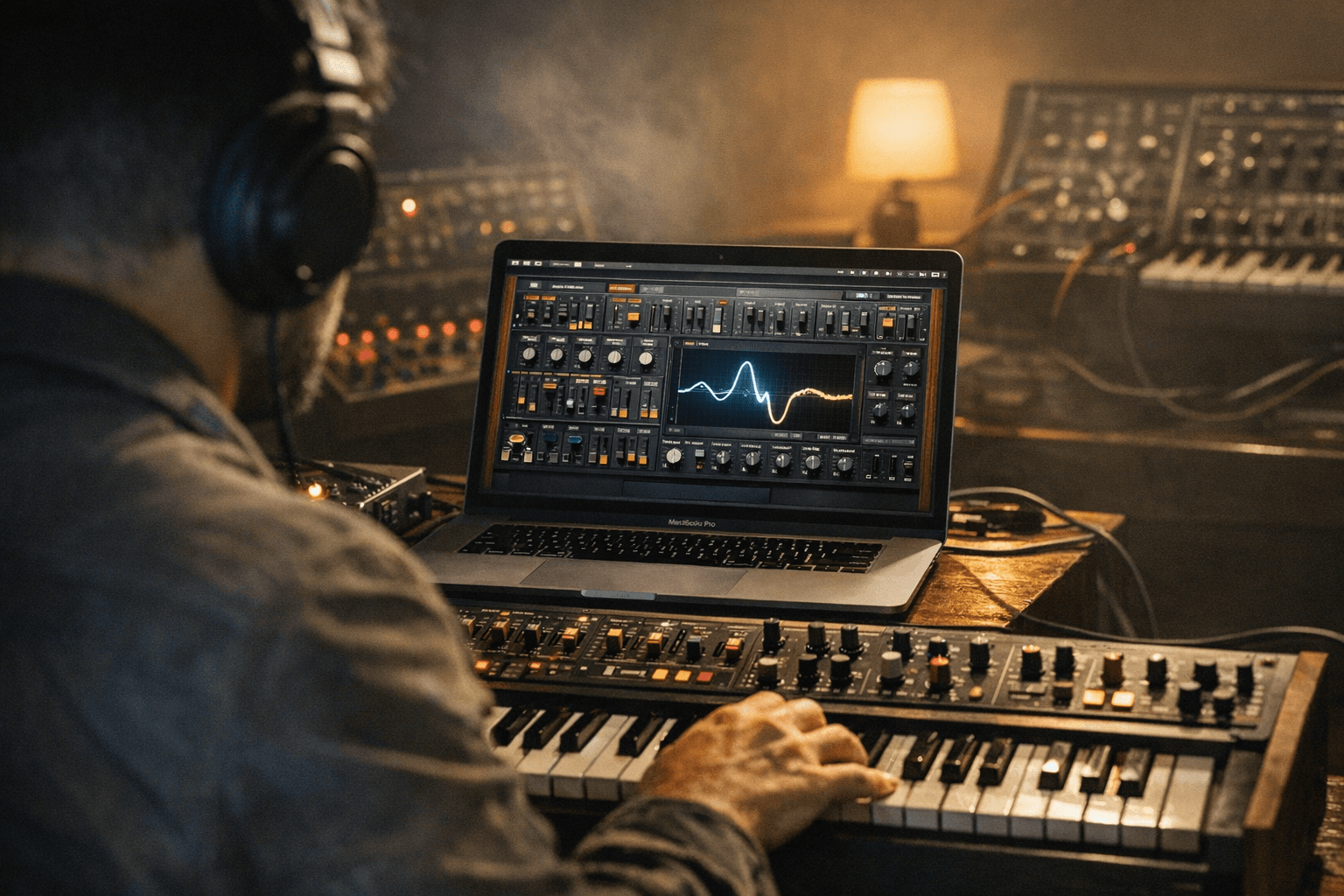
The Yamaha CS-80 weighs over 200 pounds and commands five-figure prices on the vintage market. JS80P costs nothing, runs in your DAW, and as of March 26 it finally runs on macOS. Attila M. Magyar's version 4.0.0 turns this GPL-licensed open-source plugin from a Windows and Linux curiosity into a genuine cross-platform instrument.
The changelog cuts straight to what matters for anyone chasing Vangelis-style cinematic textures. Four new PWM waveforms, pulse, soft pulse, bipolar pulse, and soft bipolar pulse, now appear across both oscillators and the LFO bank. These are the raw harmonic materials behind that chest-rattling CS-80 brass Vangelis drove through the Blade Runner soundtrack: asymmetric, phase-rich, and responsive to the kind of pressure-based modulation the CS-80 made famous. The new distortion modes, sin(x) and sqrt(x) among them, add non-linear grit that separates a clean pad from something with actual weight. Five presets shipped alongside the waveforms: 16 Beats Riser, Ambient Pluck, Chiptune, Octave Bass, and Tremolo PWM Bass, the last of which is the most direct demonstration of what the new waveforms unlock in context.
The GUI is now resizable, which sounds cosmetic but matters enormously on high-DPI displays where the previous fixed-size interface could run small enough to be nearly unusable. Magyar confirmed that v4.0.0 is nearly fully backward-compatible; the one edge case is patches that automate the waveform parameter directly, which need a manual check after upgrading.
For the Blade Runner brass specifically, JS80P's architecture maps well to the CS-80's two-layer voice structure. Each oscillator carries its own filter pair, and Magyar's macro system lets you route polyphonic aftertouch simultaneously to filter cutoff and resonance, which is exactly how the hardware produced that breathing, pressure-sensitive quality live.
Getting there takes five deliberate moves. Load oscillator A with the soft bipolar pulse waveform and set its filter to low-pass with resonance around 40 percent. Duplicate those settings to oscillator B and detune it up by roughly three cents. Route polyphonic aftertouch through a macro to both filter cutoff values, using a gentle upward curve so light pressure opens the sound gradually rather than jumping. Enable sin(x) distortion on oscillator B at low depth, enough to push harmonic warmth into the upper register without compressing the dynamics. Finally, map the modulation wheel to that macro's output range instead of vibrato depth. That single remapping is what transforms JS80P from a patch browser into a performance instrument: you can swell brightness mid-phrase with the wheel, layer in pressure with your fingers, and the two axes stay independent.
Magyar released JS80P under the GPL, with source available on GitHub. For macOS producers who have been watching this project from the outside, version 4.0.0 is the entry point worth taking.
Know something we missed? Have a correction or additional information?
Submit a Tip