Moog's Polymoog brought 71-note polyphony to vintage synths
Moog solved polyphony twice, first with the compromise-heavy Polymoog and later with the Memorymoog. Both still tempt buyers, but they demand careful restoration.
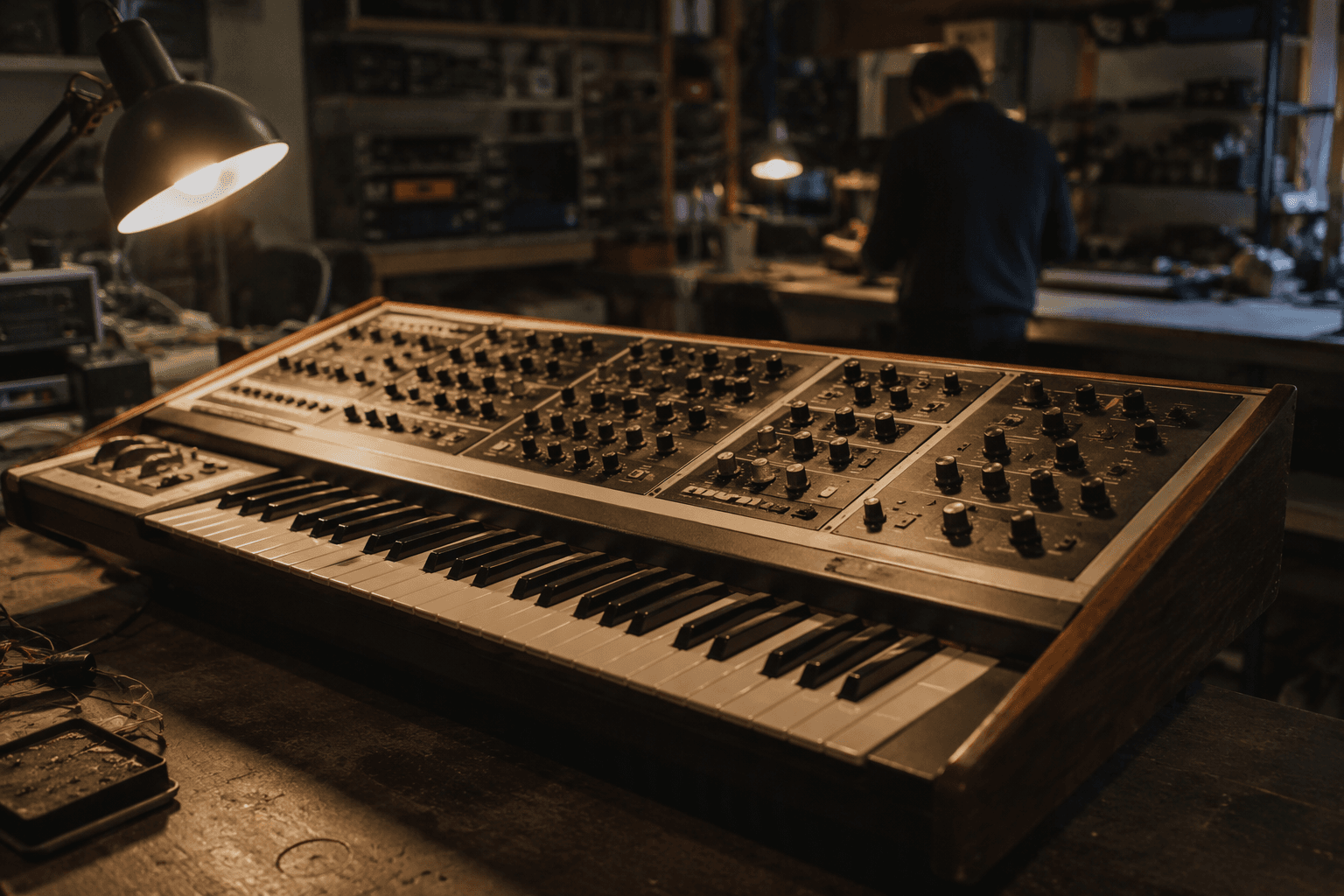
A Polymoog can still stop a room cold because it offers something the Minimoog never did: 71-note polyphony in a Moog-branded keyboard. The catch is that the same design that made full chords possible also made ownership a maintenance exercise, which is why these instruments are remembered as much for their failures as for their sound. That tension is the real lesson of Moog’s leap from monophonic dominance into polyphony.
The Polymoog solved one problem and created another
Moog had been chasing a polyphonic Minimoog concept for some time before arriving at the Polymoog in 1975. The result was not a bigger Minimoog with extra voices bolted on, but a different machine with different logic under the hood. Instead of building each note as a separate analog voice in the familiar way, the Polymoog used divide-down technology adapted from electronic organs, which let Moog reach full 71-note polyphony at a time when that kind of note count was still rare in commercial synthesizers.
That architecture explains why the Polymoog still divides opinion among vintage synth players. The Bob Moog Foundation describes the Model 203a as a fully polyphonic, preset analog synthesizer with a 71-key, velocity-sensitive keyboard that could be divided into three sections. Those features made it immediate to play and broad in texture, but they also moved it away from the flexible per-voice architecture that defines a classic Moog monosynth. It was a serious answer to the market demand for chordal keyboard parts, not a simple clone of the Minimoog experience.
Why the Polymoog feels like a compromise
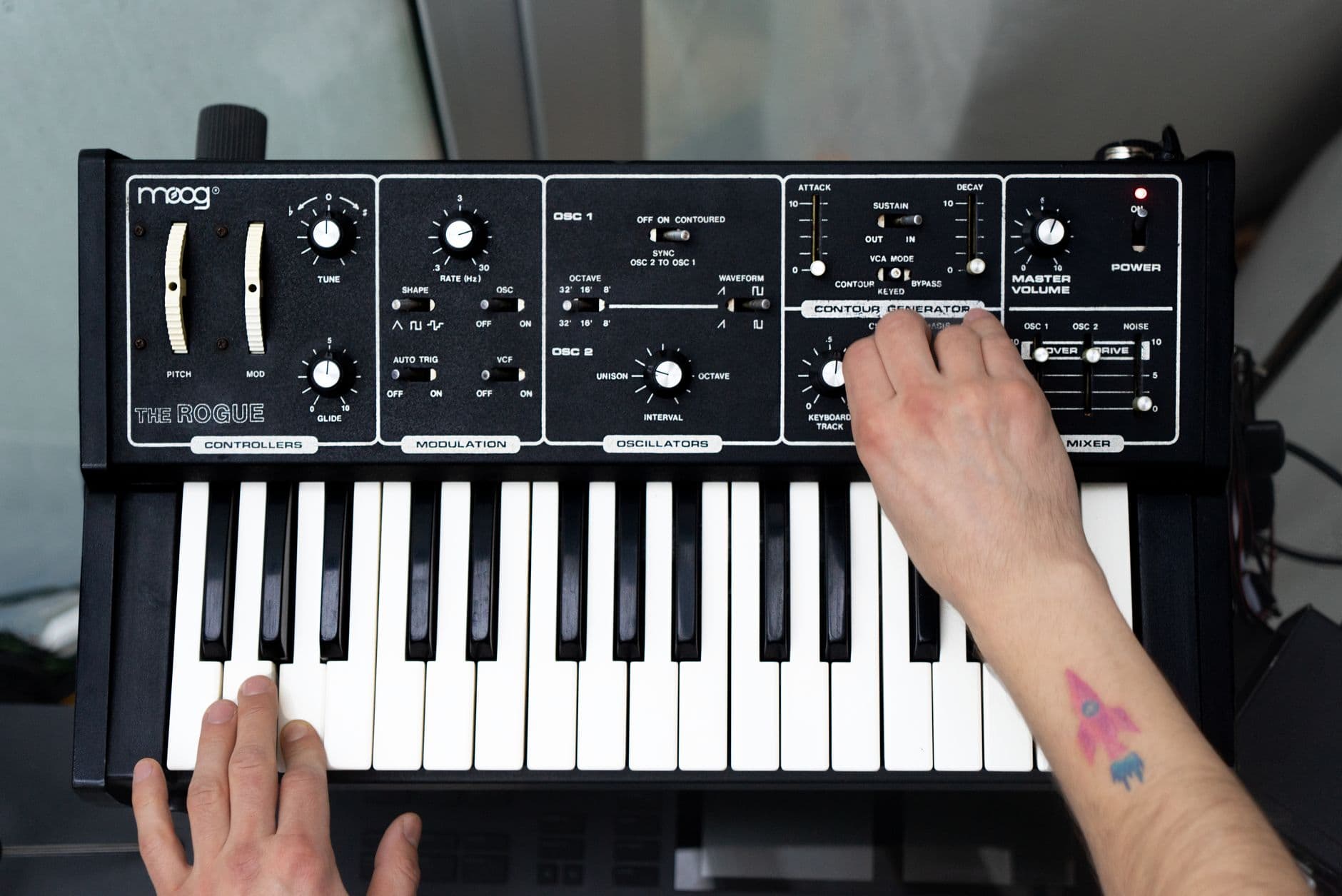
The Polymoog is often remembered as flawed, and that reputation makes sense once you look at the tradeoffs it had to absorb. Moog was balancing cost, complexity, and the musical demand for full chords on a keyboard bearing the company name. Divide-down polyphony helped with affordability and voice count, but it also changed the character of the instrument, pushing it toward lush ensemble textures, string-like pads, and other wide-screen sounds rather than the tightly focused synthesis players associate with a Minimoog.
That is why the Polymoog remains such a useful lesson for collectors. It shows how a company with a defining mono-synth identity had to rethink what “Moog sound” meant in a polyphonic era. The instrument’s large footprint, preset nature, and organ-derived voice scheme all reflect a company trying to serve players who wanted instant polyphony more than deep patch-by-patch control. In vintage-synth terms, it is a landmark not because it perfected the idea, but because it exposed the exact cost of making polyphony practical.
The Memorymoog chased the classic Moog voice in a new format
If the Polymoog was Moog’s compromise machine, the Memorymoog was the opposite: a direct attempt to bottle the classic Moog voice into a fully polyphonic, programmable keyboard. It appeared in 1982 and was often described as six Minimoogs in one unit, with six voices built from three oscillators per voice and individual voice cards. Perfect Circuit’s history of the instrument notes that it was designed to sound like a stack of Minimoogs, which is exactly why it has such a strong pull with vintage synth buyers.
That ambition came with a familiar burden. Large analog polysynths bring power-supply stress, voice calibration headaches, and aging components into the same chassis, and the Memorymoog is no exception. Community repair discussions repeatedly point to reliability concerns and the practical difficulty of servicing these machines, which is part of the reason the Memorymoog’s reputation is so tightly tied to restoration culture. Its sound is the draw, but its service burden is the price of admission.
What to inspect before you buy or restore
The smartest Polymoog or Memorymoog purchase starts with the boring parts, because that is where the failures tend to live. The repair notes in the synth community repeatedly flag power-supply problems on the Polymoog, including missing rails, and one repair report describes bridge diodes that had turned hot and crumbly. Another repair log on a Polymoog 203A describes resoldering more than 1,600 solder joints and finding over 40 cracked joints, which is a good reminder that age alone can turn a complicated keyboard into a troubleshooting project.
A practical inspection pass should focus on a few concrete things:
- Power supply health, including whether all rails come up cleanly
- Aging electrolytic capacitors, especially in supply and support circuitry
- Rectifier or bridge diodes that show heat damage or physical crumbling
- Cracked solder joints on boards and connectors
- Keyboard response, especially dead or incorrect sounding keys, which are a known Polymoog problem
- Voice stability and calibration, especially on a Memorymoog with individual voice cards
That list matters because these are not boutique issues, they are the difference between a playable collector’s piece and a beautiful chassis full of intermittent faults. The Polymoog’s complexity means repair cannot be assumed, and its small production footprint makes complete working examples rare enough that many restorations become full-system rescues rather than simple tune-ups.

Why these machines still matter now
Moog’s polyphonic arc from the Polymoog to the Memorymoog is really a study in how design goals shape the ownership experience. The Polymoog got full 71-note polyphony into a commercially available keyboard by borrowing from organ logic, while the Memorymoog pushed the company’s classic oscillator-heavy sound into six-voice territory with voice cards and a huge service footprint. One solved the problem of playable polyphony; the other solved the problem of making a polyphonic Moog sound like a Moog.
That is why both instruments still fascinate collectors, restorers, and players. They are desirable because they represent two different answers to the same question, and risky because each answer has its own failure mode. The Polymoog taught Moog how hard polyphony really was; the Memorymoog proved that even when the sound was right, the maintenance bill could be right there with it.
This article was produced by Prism’s automated news system from verified source data, official records, and press releases, then run through automated quality and moderation checks before publishing. The system is built and supervised by the people who set the standards it runs under. Read our full AI policy.
Did this article answer your question?