France's hidden synth legacy shapes electronic music history
France's synth story runs from RSF's rare Kobol to Jarre's ARP-and-EMS live rigs, and the smartest buys are the ones with service history.
France's synth legacy is easiest to understand when you stop treating it like a footnote and start looking at the hardware trail. The country gave vintage culture a rare compact monosynth in the RSF Kobol, a mainstream electronic icon in Jean-Michel Jarre, and a modern industrial anchor in Arturia, while Paris still has shops doing the unglamorous work of repair and restoration.
The French lineage starts with builders
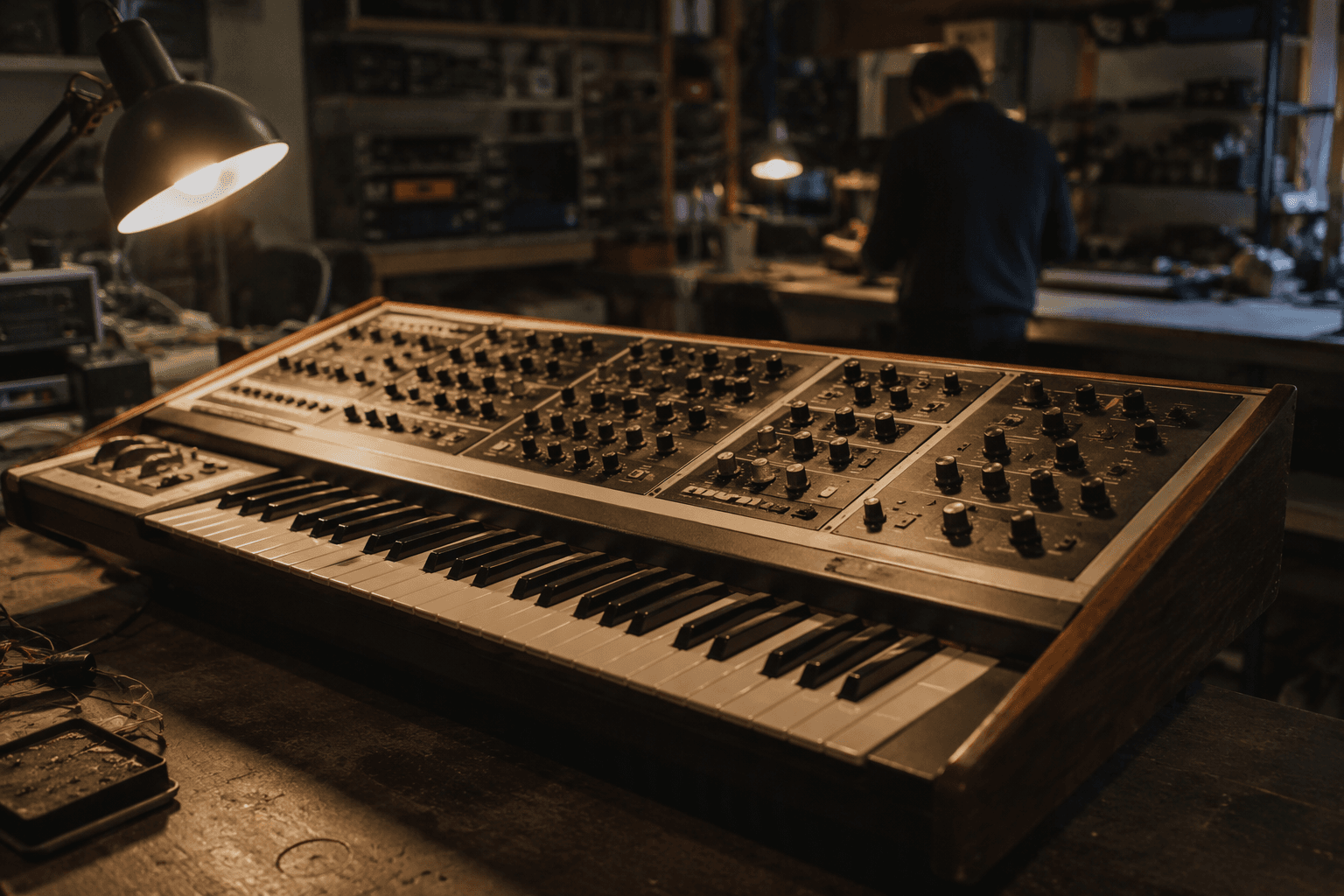
RSF is the name that keeps surfacing when you dig into French-made classics. The company was built by Ruben and Serge Fernandez, who came from Tarbes in southwest France and began with custom modules before moving the project to Toulouse in 1975. By 1978, RSF had its first compact keyboard synth, the Kobol, a monophonic analog instrument that collectors often call the French Minimoog.
That nickname matters because it tells you exactly where the appeal sits. The Kobol is not prized for being a sprawling polysynth or a studio centerpiece with endless memory slots. It is prized because it is a compact, dual-oscillator, hands-on analog voice with a cult following, and because scarce French originals force you to care about condition, provenance, and whether the last tech who touched it knew what they were doing.
Jean-Michel Jarre turned French electronics into a stage language
If RSF is the builder's side of the story, Jean-Michel Jarre is the public face. Born in Lyon in 1948, he was described in a 2012 Red Bull Music Academy profile as the French musician who most strongly fomented the electronic music revolution. His 1976 album *Oxygène* used early analog synthesizers such as the ARP 2600 and EMS VCS 3, and those choices still explain why his name comes up whenever people discuss the relationship between French music and classic hardware.
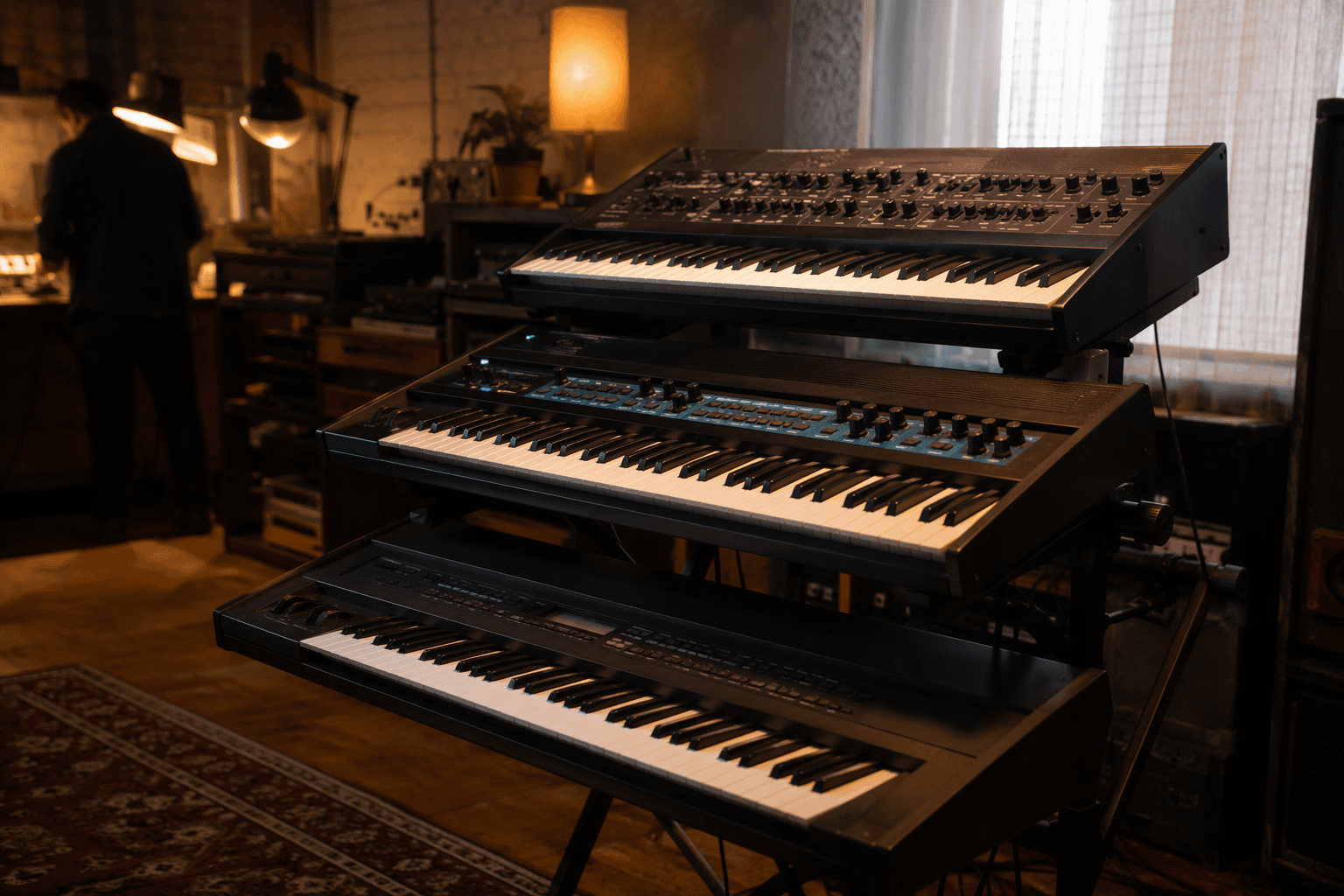
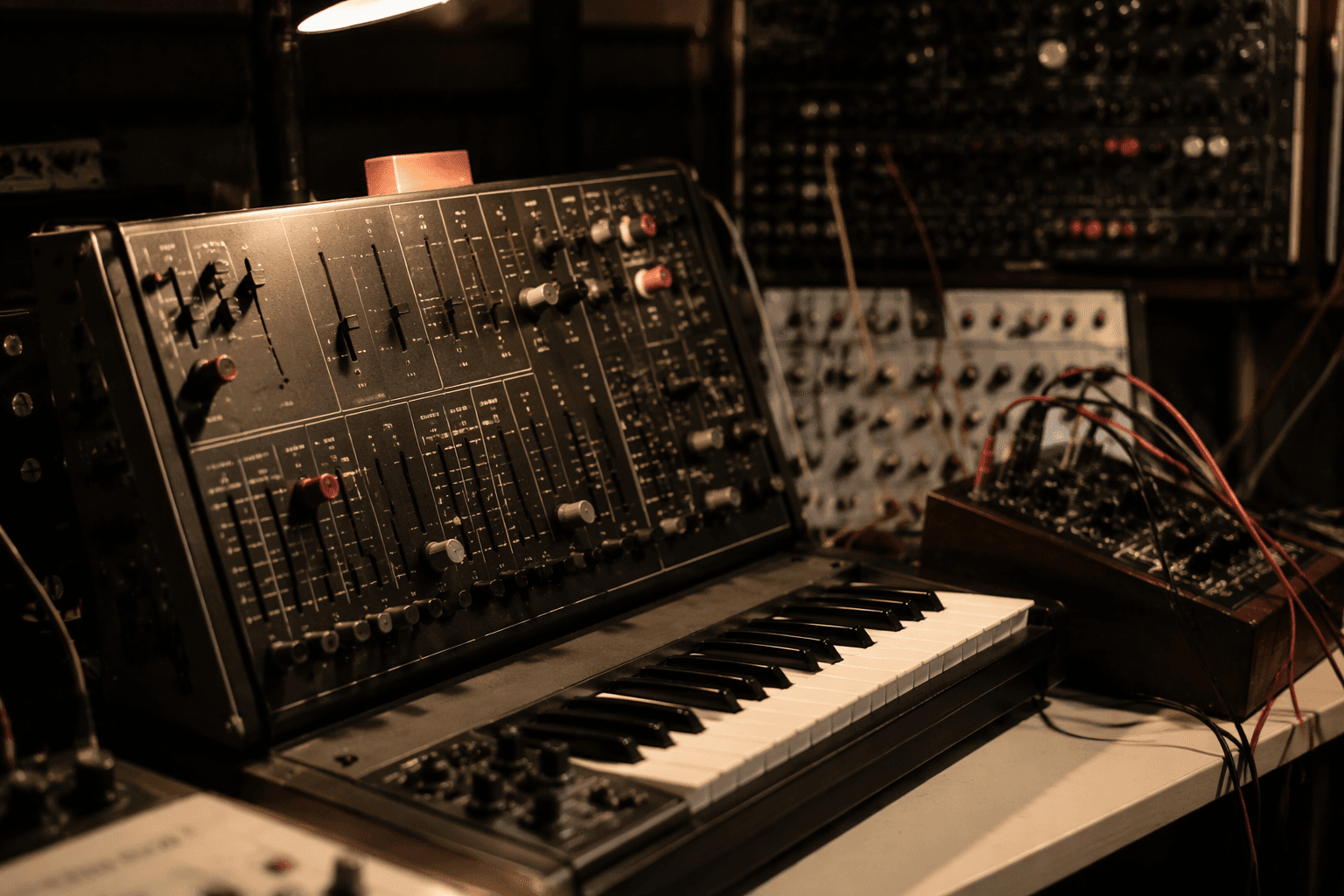
The gear lists from his 2007 *Oxygène* Tour are even more revealing. That live setup included EMS VCS3, EMS Synthi AKS, ARP 2600, ARP 2500, Moog System 55, Moog Taurus, Minimoog, and other vintage instruments, with more than 25 classic pieces in play and virtually no modern workstations. That is not just nostalgia, it is a blueprint for a certain kind of performance rig: multiple voices, patchable machines, and a refusal to let a single keyboard do all the work.
The underrated French classics are the ones that stayed playable
The Kobol is the obvious French grail, but it is not the only reason collectors should keep France on the map. RSF later showed up again in the collector scene, and at SynthFest France 2025, Olivier Grall's booth reportedly had nearly all vintage RSF synthesizers, including complete RSF Kobol systems and the super rare RSF Modular. That kind of display tells you there is real depth here, not just one famous machine with a good story attached.
The practical takeaway is simple: French classics tend to reward players who like immediate, tactile synths and do not mind living with rarity. A Kobol or a Jarre-style rig points you toward fast access, analog signal paths, and instruments that invite performance rather than menu management. If you are chasing one of these, the sound is only half the equation; the other half is whether you can actually keep it alive.
- Ask for service history, especially around power supplies and aging capacitors.
- Check provenance and shipping details, since rare French hardware is hard to replace if it gets damaged in transit.
- Verify whether custom parts are available before you commit.
- Make sure a local tech can actually work on it, not just admire it.
A buying checklist for French vintage pieces is not complicated, but it is non-negotiable:
France still matters because the repair bench never went away
Arturia keeps that legacy from becoming museum-only history. The company says its genesis began when Frédéric Brun and Gilles Pommereuil met at the Grenoble Institute of Technology, and another company profile places its founding in Grenoble in 1999. It now says it operates in 55 countries and has offices in France, the USA, and Mexico, which is a very different scale from the boutique maker era but still part of the same story: French synth culture did not stop at the vintage years.
That bridge between old and new is exactly where the current market lives. Sound On Sound's retrospective on Arturia's first 20 years shows how a French company moved into hardware and software synthesis as a serious presence, while Paris keeps its own hands-on infrastructure through Vintage Synths & Co, a workshop dedicated to vintage synthesizers and drum machines that handles repairs, restoration, sales, and custom parts. For anyone buying a rare French synth, that matters more than branding. It means the country's legacy is not just preserved in photos and records, but in benches, parts bins, and the people still willing to bring an old machine back to pitch.
France's hidden synth story is not hidden because it lacked important instruments. It is hidden because the attention usually goes elsewhere, even though RSF, Jarre, Arturia, and the Paris repair scene show a complete loop: design, performance, emulation, and restoration. That is the kind of legacy that survives the market cycle, because it is built for the player who still wants the machine to work.
This article was produced by Prism’s automated news system from verified source data, official records, and press releases, then run through automated quality and moderation checks before publishing. The system is built and supervised by the people who set the standards it runs under. Read our full AI policy.
Did this article answer your question?