Prophet-T8 redefined vintage synth performance with expressive control
The Prophet-T8’s weighted keybed, velocity, and assignable aftertouch made it feel like an instrument, not just a polysynth, and that still sets it apart.

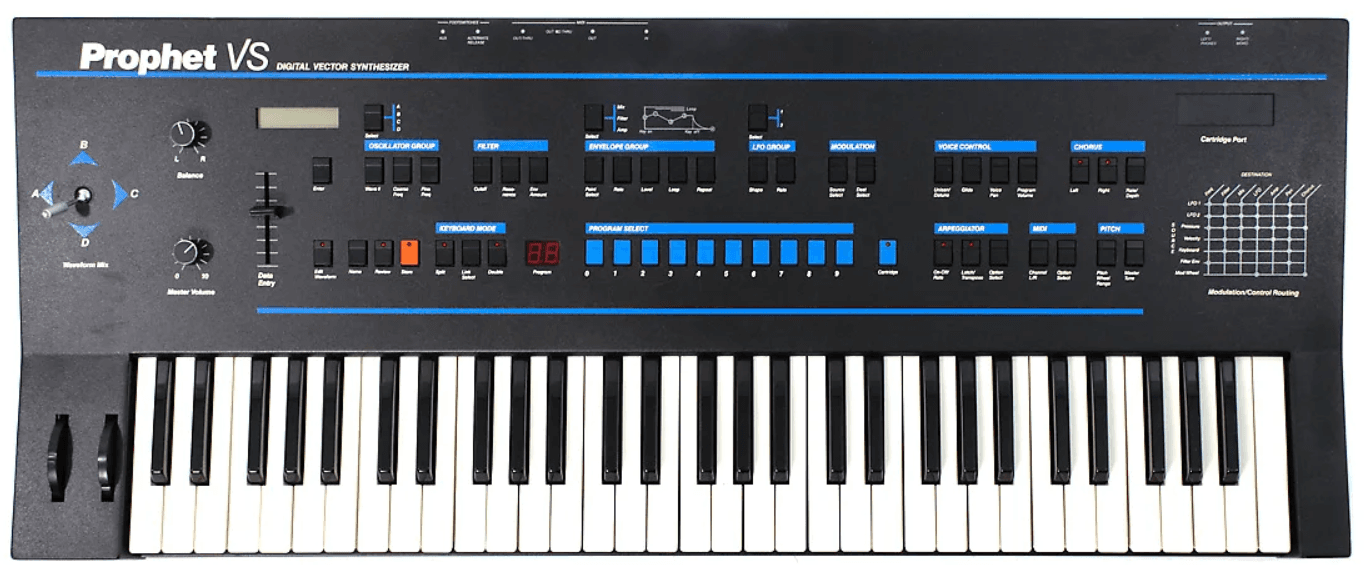
A weighted full-size keybed, velocity sensitivity, and pressure control that could move pitch, level, filter, or the LFO in real time set the Prophet-T8 apart the moment both hands hit the keyboard. Sequential Circuits built an 8-voice analog polysynth around that feel, not simply a stretched Prophet-5.
Expressive control was the whole point
The T8 arrived during a shift in synth design, when the best instruments were starting to behave like performance tools instead of static sound boxes. On earlier vintage polys, the front panel did most of the expressive work, so you shaped a phrase by riding sliders or reaching for external controllers. The Prophet-T8 changed that balance by putting dynamics under your fingers, where they belong.
The instrument does not ask you to pre-program every swell or vibrato. You can strike a note softly, lean in harder, and then push the sound somewhere new without leaving the keyboard.
What the T8 actually gives you
The feature set is straightforward, but the way those features stack up is what makes the synth unusual:
- 8 analog voices
- weighted full-size keyboard
- velocity sensitivity
- aftertouch assignable to pitch, level, filter, or LFO
- split and layer modes
- unison mode
- MIDI implementation
- simple real-time sequencer
The voice architecture gives you the expected Prophet family solidity, and the keybed and controller assignments turn the instrument into something more playable than many of its peers. The sequencer supports live use.
Why the keyboard mattered more than the panel
The Prophet-T8’s weighted action is not just a luxury feature. It changes how fast you can phrase, how hard you can attack a note, and how much control you have over dynamics before the sound leaves the speakers. Velocity makes the attack feel connected to the player’s touch, while aftertouch lets you animate a held note or chord with pressure instead of a hand reaching for a knob.
Plenty of older instruments have a beloved sound, but a surprising number of them still treat the keyboard as a trigger rather than an expressive interface. On the T8, filter movement, pitch bends, and level changes can feel embedded in the phrase instead of bolted onto it.
The CS-80 comparison is not hype
The Yamaha CS-80 is the obvious benchmark whenever vintage synth expression comes up, because it proved how far weighted keys and aftertouch could go. It was also expensive, huge, and notorious for being demanding to maintain, which made its magic hard to live with. The Prophet-T8 took some of that ambition and wrapped it in a more straightforward Sequential package.
That is why “a Prophet-5 with more voices” is the wrong shorthand. The T8 is better understood as Sequential’s answer to the question the CS-80 raised: what if the keyboard itself became part of the synth architecture?
It was noticed quickly, then made in small numbers
By late 1983, Electronics & Music Maker was already covering it, and One Two Testing followed in early 1984.
The first batch reached the market in the middle of 1983, and production ran between 1983 and 1985 with only 800 units in the world. The keyboard’s complexity delayed the launch by two years and hurt Sequential’s sales potential.
What to look for if you are chasing one down
If you are shopping for a Prophet-T8, the keybed is the headline, so test it like one. Weighted action should feel even across the board, velocity should respond consistently, and aftertouch should not be a dead zone or a random jump in control. If the pressure response is inconsistent, you are missing the one feature that separates the T8 from a plain vintage poly.
The usual vintage checks still matter too:
- electrolytic capacitors
- regulators
- rectifier diodes
- cracked solder joints
A clean cosmetic shell means very little if the keyboard response is tired or the power section is unstable.
This article was produced by Prism’s automated news system from verified source data, official records, and press releases, then run through automated quality and moderation checks before publishing. The system is built and supervised by the people who set the standards it runs under. Read our full AI policy.
Did this article answer your question?