Safari Audio launches PolyRex, a vintage-style polyphonic synth plugin
Safari Audio’s PolyRex leans hard into early-’80s polysynth cues: 8 voices, discrete VCO/VCF, and Juno-style oscillator basics wrapped in built-in FX.
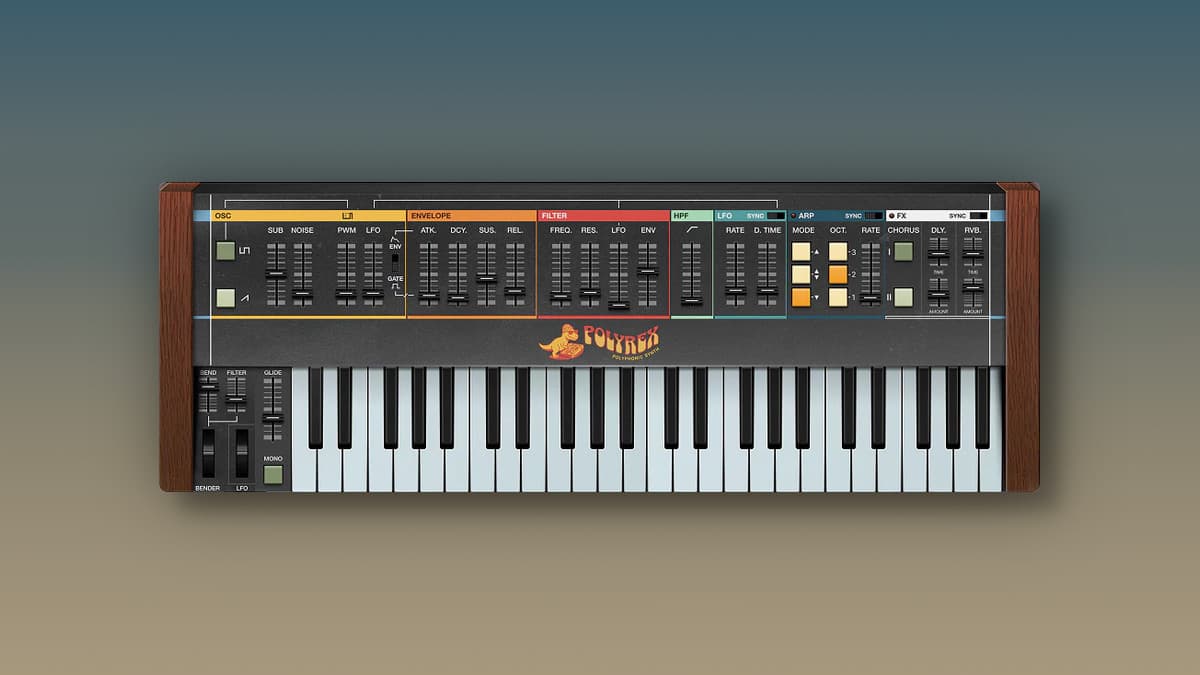
Safari Audio has launched PolyRex, a vintage-style polyphonic synth plugin built around 8-voice polyphony, discrete VCOs and VCF, an advanced modulation matrix, and a built-in Safari FX engine. The company says it is offering the instrument at an intro price, included in its Everything Bundle, as it pushes PolyRex as “Safari’s take on vintage polyphonic synths.”
The real question for vintage-leaning players is whether PolyRex behaves like a credible stand-in for the scarce classics collectors keep hunting, or whether it just borrows the look and shorthand of that era. One description places it squarely in early-1980s analog polysynth territory and calls it a Juno-style software synth, with a single oscillator, selectable saw or square waveforms, pulse-width modulation, a sub-oscillator, and a noise generator. That architecture points less to sprawling modern complexity than to the stripped-back, immediate workflow people remember from the most playable old polys.

That is where PolyRex starts to separate itself from simple retro styling. The single-oscillator core is the vintage cue; the advanced modulation matrix is the modern concession. Add the built-in effects section and the sound is clearly designed to be finished inside the plugin, not patched out into a rack of extras. Safari Audio says every sound in PolyRex is 100% PolyRex, with chorus, delay, and spring reverb built in, so the demos are meant to stand on the instrument’s own internal chain.
For players comparing it with the Juno-60 and Juno-106 benchmarks that usually dominate this conversation, PolyRex looks like a practical software interpretation rather than a museum clone. The appeal is in the workflow: 8 voices, immediate oscillator choices, pulse-width movement, and a modulation system that can take the sound beyond the tight, familiar early-’80s lane without losing the core silhouette. That makes it more useful as a writing tool than as a forensic recreation.
Safari Audio itself is still a young company, founded in 2023 and based in Tel Aviv, Israel, with a listed team size of 2 to 10 employees. That background fits the release: PolyRex feels like a compact developer’s attempt to bottle a recognizable polysynth language for modern sessions, and the final verdict will rest on whether that language delivers the touch and tone collectors associate with the originals, or just the right retro outline.
This article was produced by Prism’s automated news system from verified source data, official records, and press releases, then run through automated quality and moderation checks before publishing. The system is built and supervised by the people who set the standards it runs under. Read our full AI policy.
Did this article answer your question?