Vintage synth restoration turns scarce parts and manuals into lifelines
A synth that powers on can still be far from restored. The real work starts with manuals, scarce parts, tired caps and keybeds, and the choices that preserve value.
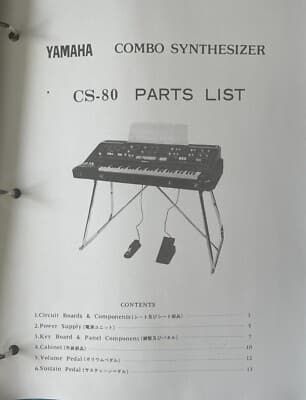
Vintage synth restoration starts with a correction that matters more than it sounds like it should: working is not the same as restored. A Yamaha CS-80 that makes sound again may still need a rebuilt power supply, fresh capacitors, a stable keybed, calibration, missing documentation, and the right cosmetic judgment before it is truly ready for another decade. That distinction gets sharper when you remember how few of these machines exist, how much value they carry, and how quickly spare parts disappear after 35 years or more.
Restoration begins with paperwork, not solder
The first lifeline is almost never a circuit board. It is the service manual, the owner’s manual, and the schematic that tells you what belongs in the chassis before you touch a screwdriver. The Internet Archive’s Synthesizer Manuals Collection is gathering several hundred manuals spanning more than 40 years of synthesizer technology, and that scale tells you how much of the hobby now depends on shared documentation rather than factory support.
Synthtopia’s manual roundup points owners toward the Internet Archive, Lojinx, Synth Zone, Synthfo, Tiny Loops, and Vintage Synth Parts for operation manuals, service documents, and schematics. Vintage Synth Parts describes itself as a company specialized in rare and obsolete parts for vintage synthesizers, drum machines, and effects, which is exactly what the modern restoration ecosystem looks like: scan archives, parts stashes, and people who know which document explains the trimmer you are about to adjust. If you are missing the paperwork, you are guessing.
Electronics are the first tier, not the whole job
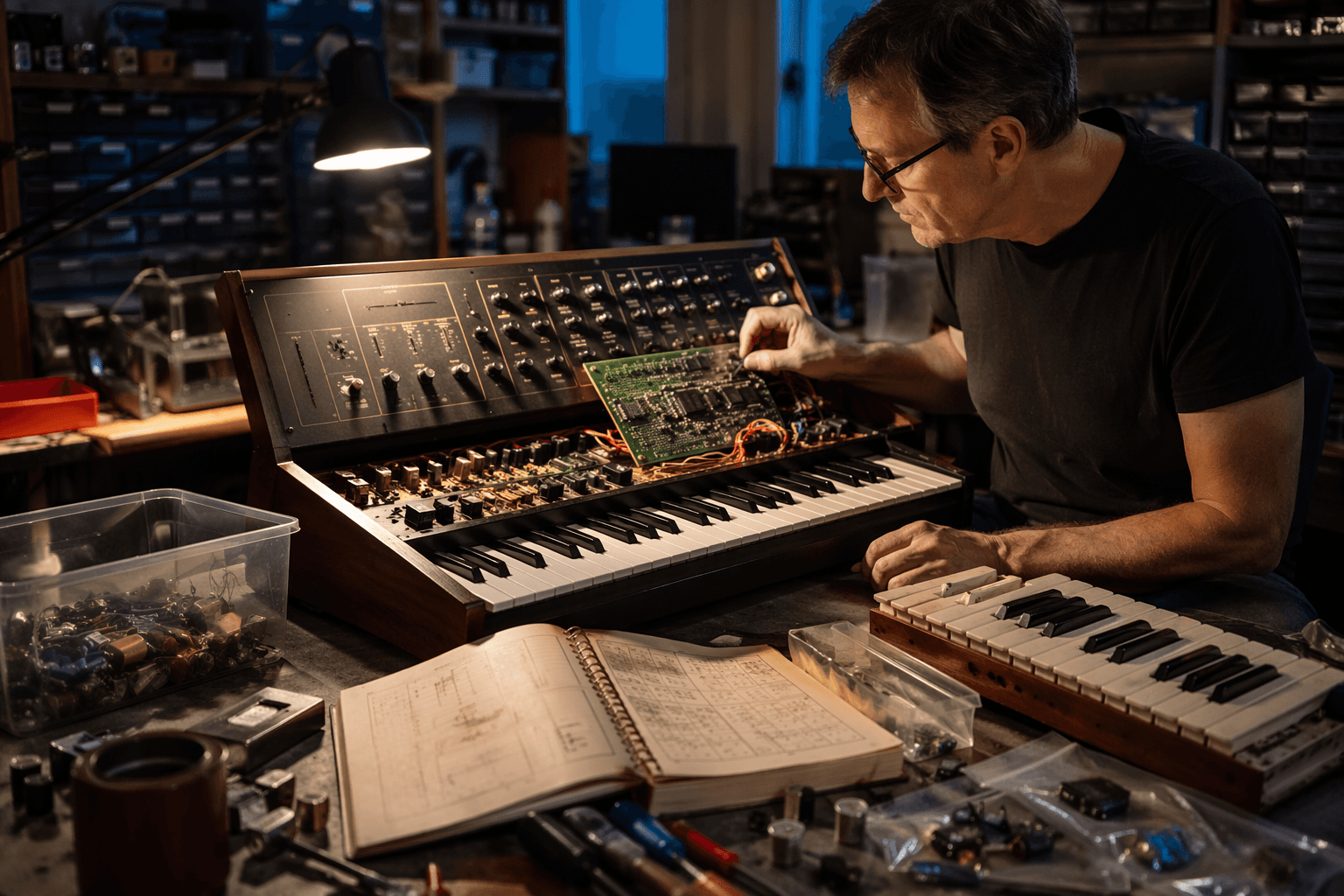
The electrical side usually comes first because it protects everything else. Power supply rebuilds, tired electrolytic capacitors, cracked solder joints, and drifted components can all hide behind a synth that appears to boot normally, and a calibration pass after repair is what turns a noisy survivor into an instrument you can trust. On low-production machines, the rule is simple: stabilize the electronics before you chase anything cosmetic.
The scarcity around the Yamaha CS-80 makes that rule feel less theoretical. Sound On Sound notes that Yamaha built only about 800 to 850 of them, around 300 have passed through one specialist workshop, and even a fine example has sold for more than £11,000. When a machine exists in those numbers, a shortcut on the bench is not just a repair mistake. It can become a value decision, because one bad replacement or an undocumented modification can permanently change what the instrument is worth to the next owner.
The keybed is where a synth stops feeling like itself
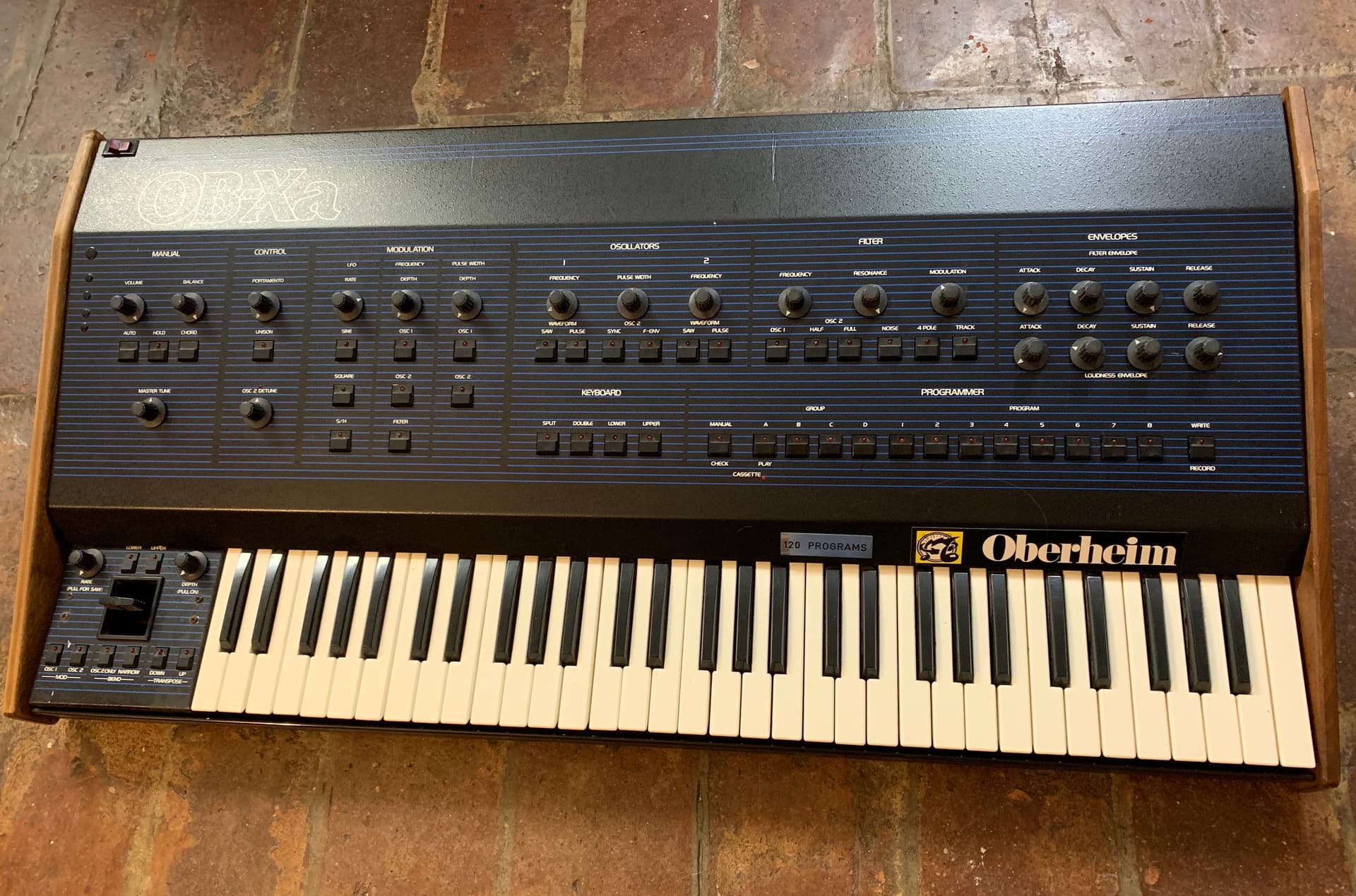
A restored synthesizer should play correctly, not just emit notes. Archive Sound’s Pratt-Read rebuild kits focus on worn bushings and keyboard action, and that is not a niche detail so much as a reminder that touch is part of the instrument’s identity. Those mechanisms show up in the Prophet-5, OB-Xa, PPG, many ARPs, and the Minimoog, so a stiff or uneven keyboard is not a small annoyance. It is a structural problem in the way the synth communicates with the player.
That matters because the Prophet-5 was one of the first fully programmable polyphonic analog synths. Dave Smith founded Sequential Circuits in 1974 and brought out the microprocessor-controlled Prophet-5 later in the 1970s, which gives keyboard-action work a historical edge: you are not just replacing wear parts, you are preserving the tactile behavior of a landmark design. The same logic applies to ARP gear, which existed for little more than 10 years but left a sound that is now part of synth history. A sloppy keybed repair can erase the very feel that made these instruments iconic.
Cosmetics can help value, but they can also erase history
The temptation to make an old synth look new is strong, especially when a panel is scuffed or a case has yellowed. Sound On Sound’s refurbishing guidance makes the upside clear: bringing old gear back to a pristine appearance can improve value, deepen your understanding of the instrument, and prevent further neglect. But the decision is not automatic. If the cabinet is structurally sound and the original finish is intact enough to preserve, cleaning and stabilization usually make more sense than a full cosmetic rewrite.
That is where shortcuts become expensive. Heavy refinishing, swapped knobs that do not match, improvised replacement panels, or unrecorded part changes can all chip away at originality, especially on rare machines with tiny production runs like the CS-80. Preserve what still tells the instrument’s story. Replace what is failing, but document every change so the next person is not left guessing what was original and what was a survival fix.
Parts sourcing is now part of the craft
Restoration lives or dies on parts availability. Spare components are disappearing from shelves built for a different era, which is why the work gets harder the farther these instruments move from their manufacture date. That is also why specialist suppliers matter so much: a company like Vintage Synth Parts exists because the hobby routinely needs rare and obsolete parts for instruments that no mainstream distributor supports anymore.
The best restorers treat sourcing as a separate skill, not an afterthought. They compare donor parts, scan archives for the correct spec, and avoid the trap of using a near-enough substitute that changes behavior or makes future service harder. On a common keyboard, that may be tolerable. On a scarce instrument, it can be the difference between a reversible repair and a permanent downgrade.
Know when to send it out, and what the bill is really buying
There is a real tradeoff between attempting the work yourself and handing it to a specialist. DIY makes sense when you have the manual, the bench discipline, and the patience to trace faults one stage at a time, but a power supply rebuild or keybed overhaul on a rare synth is not the place to learn by feel. A pro is not just charging for labor. You are paying for diagnosis, calibration, parts sourcing, and the judgment to know when to preserve original material and when replacement is the safer move.
That judgment becomes even more important on instruments where the market already rewards condition and originality. A synth that only “passes audio” can still lose value if the keybed is sloppy, the cosmetics are over-restored, or the service history is undocumented. The real finish line is not sound alone. It is an instrument that plays correctly, documents honestly, and still carries the hardware and history that made it worth saving in the first place.
This article was produced by Prism’s automated news system from verified source data, official records, and press releases, then run through automated quality and moderation checks before publishing. The system is built and supervised by the people who set the standards it runs under. Read our full AI policy.
Did this article answer your question?