Why Vintage Moog and ARP Synths Drift Out of Tune
A little warm-up drift is normal in a vintage Moog or ARP. Persistent wandering usually points to oscillators, compensation parts, or power issues that need real service.
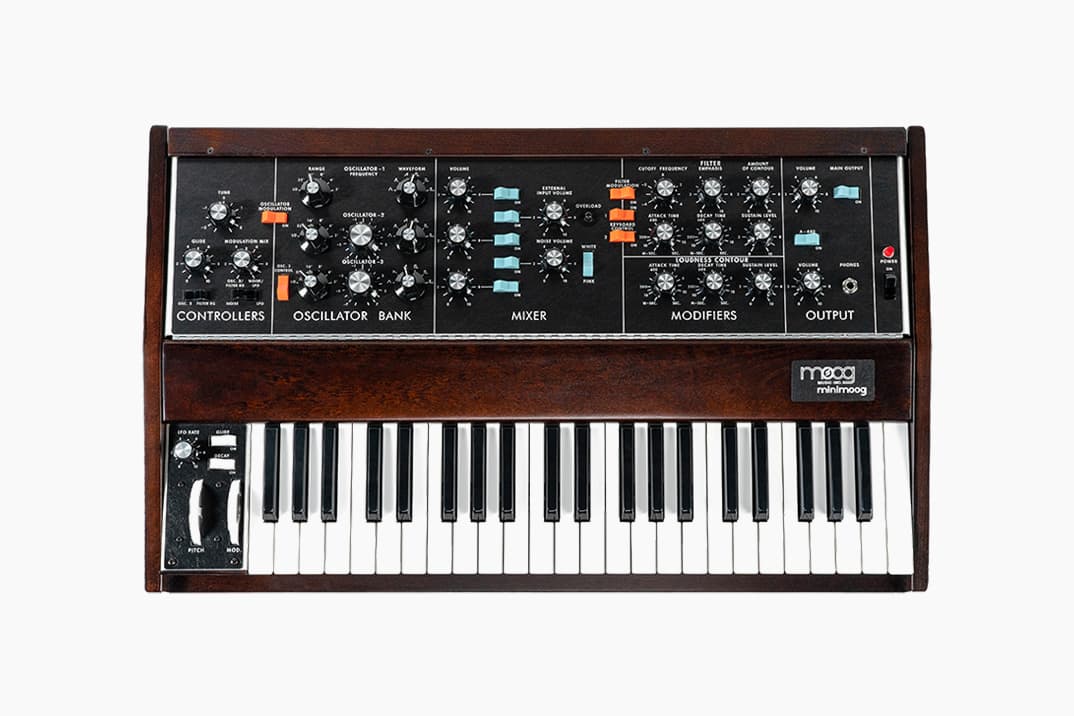
Why pitch drift is part of the vintage deal
If you own a Minimoog Model D, an ARP 2500, or any other classic analog, the first thing to understand is this: some drift is baked into the design. Moog describes the Minimoog Model D, released in 1970, as the world’s first portable synthesizer, and that portability came with the tradeoff every owner eventually hears. These instruments were built around voltage-controlled oscillators, not modern digital pitch locks, so temperature, component age, and tolerance all matter.
That is why a vintage Moog or ARP can sound a little loose after power-up and then settle. A few minutes of movement is not automatically a fault. The real question is whether the synth settles into a playable, predictable place or keeps wandering until every chord feels like a fight.
What is actually drifting
At the center of the problem is the oscillator core. Many classic synths use a sawtooth-style architecture where a capacitor charges at a constant current and then discharges at a threshold. When that current changes even slightly, or when the capacitor behaves differently with age or temperature, the pitch shifts. That is not mythology, just electronics doing what electronics do.
The takeaway is simple: pitch drift usually comes from one of three places. The current source is not behaving exactly as it should, the capacitor is changing over time, or the compensation around the oscillator is no longer holding calibration the way it once did. When you hear a note climb or sag as the instrument warms, you are often hearing the chemistry and semiconductor behavior of the era, not some mysterious curse built into the panel.
Normal warm-up versus real trouble
A stable vintage analog often needs a warm-up period. That is expected, especially on instruments that have sat unused or have not been serviced recently. Current Moog forum posts in 2025 still show owners asking about pitch instability after about 15 to 20 minutes of use, which tells you this is still a living maintenance issue, not a museum footnote.
Where you need to pay attention is the pattern. If the synth drifts early and then settles, that can be normal. If it keeps moving, never really locks in, or changes from session to session in a way you can’t predict, you are looking at something deeper: a calibration problem, failed thermal compensation, or aging parts that need replacement. The distinction matters because the fix is different in each case, and so is the bill.
The Moog side of the story
Moog’s own history explains why this keeps coming up. The company’s Model 10 is presented as a recreation of the first compact modular synthesizer Dr. Robert Moog created in 1971, and the page calls out its three 900-series oscillators. That is a reminder of how central oscillator design was to the whole Moog sound from the start.
Service chatter around Moog’s 901 and 901A system adds another layer. Forum posts point to the CA3019 diode array compensation circuitry in the 901A as a reason calibration can be temporary rather than permanent. In plain English, you can dial it in, have it sound right, and still watch the temperature behavior pull it off target again later. Other forum guidance says the 901A drivers have a working range of -4 to +6 volts, with an optimal range of 0 to 5 volts, which means some pitch problems are not in the oscillator core at all. Sometimes the control voltage range is the real culprit.
That is also why Moog still keeps Minimoog Model D downloads and manuals available. People are still servicing these machines, and they still need the original documentation to make sense of them.

ARP was fighting the same battle
ARP was founded in 1969 by Alan R. Pearlman, and the company’s first modular, the ARP 2500, arrived in 1970. ARP’s Odyssey manual describes the instrument as using phase-locked oscillators, which tells you exactly what the industry was chasing at the time: stability. The market knew analog drift was part of the game, so the engineering answer was always some version of better locking, better compensation, or better thermal control.
That context matters when you compare a healthy ARP to a sick one. Some looseness is period-correct. Wild instability is not. The same goes for a Moog. You are not trying to make it behave like a DAW plugin. You are trying to get it back into the range where the character is musical instead of distracting.
What actually helps, and what does not
When the drift is manageable, calibration is the first move. When calibration keeps slipping, you start looking at the parts that hold the calibration together. That may mean replacing aging components, checking thermal compensation, or addressing the physical layout of the board itself.
One practical repair note from Minimoog discussions is worth keeping in mind: a user reported that moving certain resistors onto ICs greatly reduced temperature drift on old Minimoog VCO boards. That is a classic vintage fix in spirit, not just a tune-up. It shows how often stability depends on heat management and component placement as much as on electrical values.
A sensible repair order looks like this:
1. Let the synth warm up fully and see whether it settles.
2. Verify the control-voltage range before blaming the oscillator.
3. Recalibrate if the drift is mild and predictable.
4. Inspect compensation parts and thermal-sensitive components if calibration will not hold.
5. Stop and call a tech if the pitch is unstable, worsening, or beyond normal warm-up behavior.
When you should stop and hand it off
This is the point where a lot of owners save themselves money by not being heroic. If the instrument is drifting after a reasonable warm-up, but also refusing to stay tuned across sessions, you are past casual adjustment. If the pitch range seems to fight the 901A driver limits, or if compensation parts like the CA3019 are no longer doing their job, the fix can move from calibration into real service work fast.
That is especially true on instruments with history, not just age. A vintage Moog or ARP may have been recalibrated many times over the decades, and every repeated adjustment tells you the underlying parts are aging along with the cabinet and keybed. The goal is not perfect laboratory stability. It is a machine that lands where you expect, holds long enough to make music, and does not drift so far that every take becomes a rescue mission.
Vintage synth drift is not a flaw you simply tolerate, and it is not always a disaster either. The practical skill is knowing the difference. Once you can tell warm-up behavior from oscillator trouble, compensation failure, or voltage-range issues, you stop guessing and start restoring with purpose.
This article was produced by Prism’s automated news system from verified source data, official records, and press releases, then run through automated quality and moderation checks before publishing. The system is built and supervised by the people who set the standards it runs under. Read our full AI policy.
Did this article answer your question?