Wolfgang Palm and the PPG Wave, the birth of wavetable synthesis
Wolfgang Palm made wavetable synthesis playable in the PPG Wave 2.2 and 2.3, and that hardware still defines the sound software emulations chase.
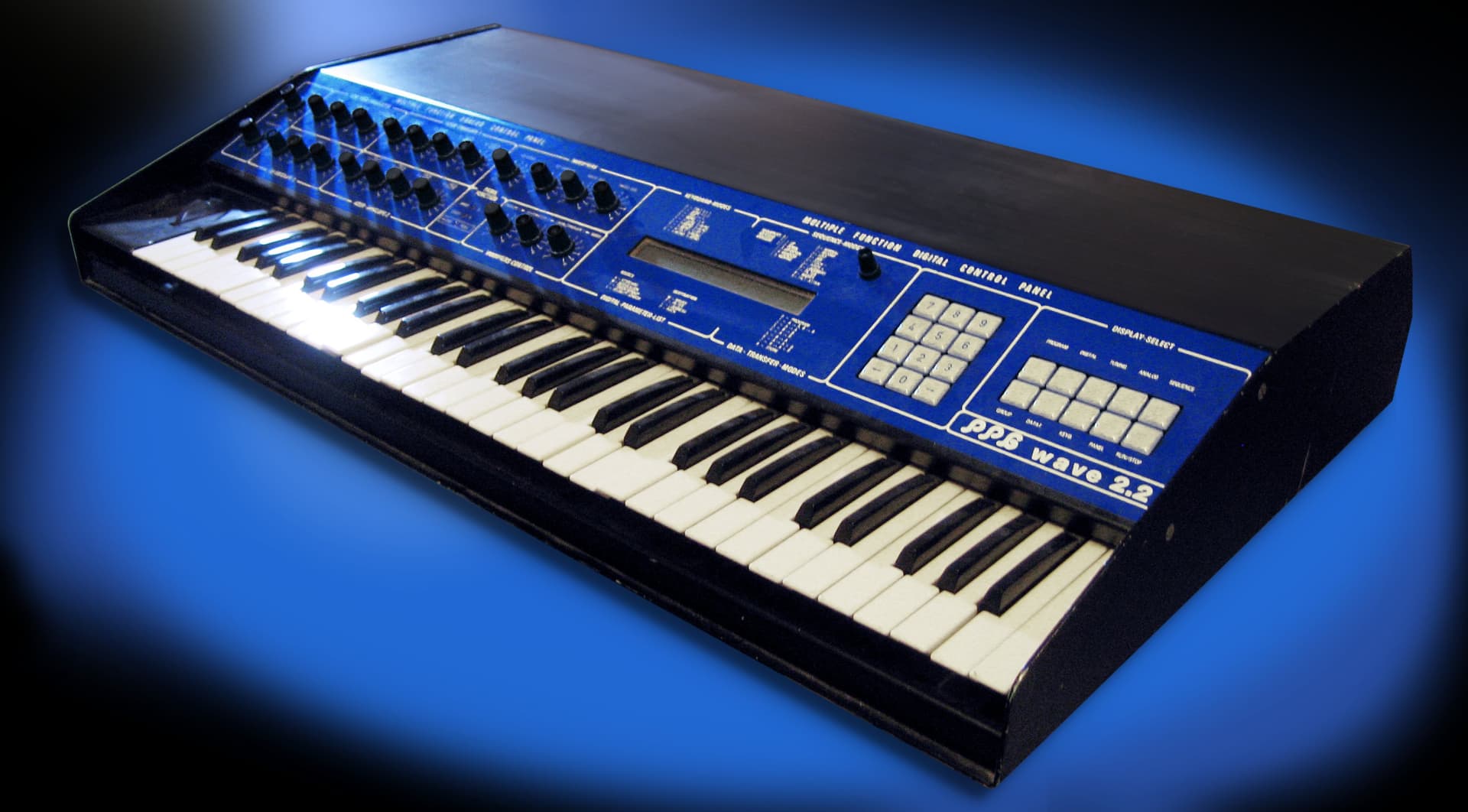
Wolfgang Palm turned wavetable synthesis from an idea into a playable instrument inside the PPG Wave, and that is why the machine still sits at the center of vintage digital-synth conversations. The Wave 2.2, commonly dated to 1982, and the Wave 2.3, which followed in 1984, became the classic hardware reference point for the whole family of wavetable instruments. Their sound, with its characteristic digital edge, helped put PPG in the same sentence as Tangerine Dream, Jean Michel Jarre, and Depeche Mode.
The PPG Wave was the breakthrough, not a plugin trick
Palm, founder of PPG, built wavetable synthesis around a simple but radical shift: instead of one fixed waveform per oscillator, the instrument could step or morph through a table of different wave shapes. That made the oscillator itself move before the filter even entered the picture, which is the key reason the PPG sounded so different from a standard subtractive synth. Subtractive synthesis begins with a harmonically rich waveform and then shapes it with filters and envelopes; wavetable synthesis gave the oscillator motion first, then let the rest of the patch shape the result.
That is why the PPG Wave feels like a bridge between two eras. It still belonged to the late analog moment in the way players built patches and used filters, but the core source material was digital and changeable in a way analog oscillators were not. The result was a palette that could move from familiar synth tones into glassier, more animated textures without leaving the keyboard.
Wavetable is one branch of a larger digital family tree
Sound On Sound’s overview of wavetable, sample-and-synthesis, and vector synthesis is useful because it places Palm’s work inside a broader design movement. Wavetable synthesis is one branch, sample-and-synthesis another, and vector synthesis a third, with each trying to expand the expressive range of hardware beyond static oscillator tones. Vintage synth players often group all of them under the loose banner of digital classics, but they do different jobs.
Sample-and-synthesis, usually shortened to S&S, combines recorded waveforms with synthesis-style shaping. Vector synthesis, by contrast, lets you blend between multiple sound sources in real time, so the performance gesture becomes part of the sound itself. The Korg Wavestation, first produced in 1990, is the best-known vector-synthesis-era reference point here, and it shows how far manufacturers kept pushing motion-heavy digital textures into the 1990s.
The PPG system was bigger than the keyboard
The Wave was not a one-box story. Hermann Seib’s PPG history material traces a broader ecosystem that included the Wave, Wave 2, Waveterm, EVU, PRK, PRK-FD, HDU, and Expander units. That matters because collectors do not just talk about the PPG as a synth model, they talk about it as a digital platform with its own workflow and expansion path.
Seen that way, the PPG was never only about a famous oscillator concept. It was a modular creative system built around Palm’s idea that digital control could make sound design more fluid, more visual, and more compositionally useful. The hardware family around the Wave is one reason the name still carries weight in vintage circles, because it points to a complete design philosophy rather than a single signature patch.
What still separates a real PPG experience from modern emulations
Modern software has absorbed the PPG idea so thoroughly that many players first meet it through plugins, not hardware. Waldorf has released software emulations of the PPG Wave, including PPG Wave 3.V, and that keeps the sound in active circulation for people who will never sit in front of an original 2.2 or 2.3. The attraction of the hardware, though, is not only the waveform library, but the way the whole instrument system was conceived around wavetable movement and performance.
In practice, the original PPG experience still stands out for three reasons:
- the oscillator is the centerpiece, not an afterthought
- the sound has that recognizable digital edge that cut through mixes in the 1980s
- the Wave sits inside a larger PPG ecosystem, not as an isolated preset machine
That is why the classic hardware remains the reference point even when the sound is recreated elsewhere. Software can model the idea, but the original Wave 2.2 and 2.3 are still what people mean when they say wavetable became a usable instrument instead of just a theory.
Palm’s name never really left the story
On March 20, 2020, Behringer posted that Wolfgang Palm, founder of PPG and inventor of wavetable synthesis, had retired at age 70. Synthtopia reported two days earlier that Palm had retired and sold his business, which marked a clean public end to the era of the man most closely associated with the format. That kind of moment matters in synth history because it closes the loop on an invention that has long outlived its first hardware generation.
The PPG Wave still matters because it solved a problem musicians were already feeling in the late analog era: how to make a keyboard sound move without losing the feel of an instrument. That is the legacy Palm left behind, and it is why the original Wave keeps defining the benchmark, whether the sound is coming from a 1982 2.2, a 1984 2.3, or a modern emulation trying to catch the same motion in code.
This article was produced by Prism’s automated news system from verified source data, official records, and press releases, then run through automated quality and moderation checks before publishing. The system is built and supervised by the people who set the standards it runs under. Read our full AI policy.
Did this article answer your question?