Yamaha DX7 review revisits FM synthesis and its pop music legacy
Clean DX7s are listing around $500, and the real question is whether you want the history, the headaches, and the FM learning curve.
Why the DX7 still lands
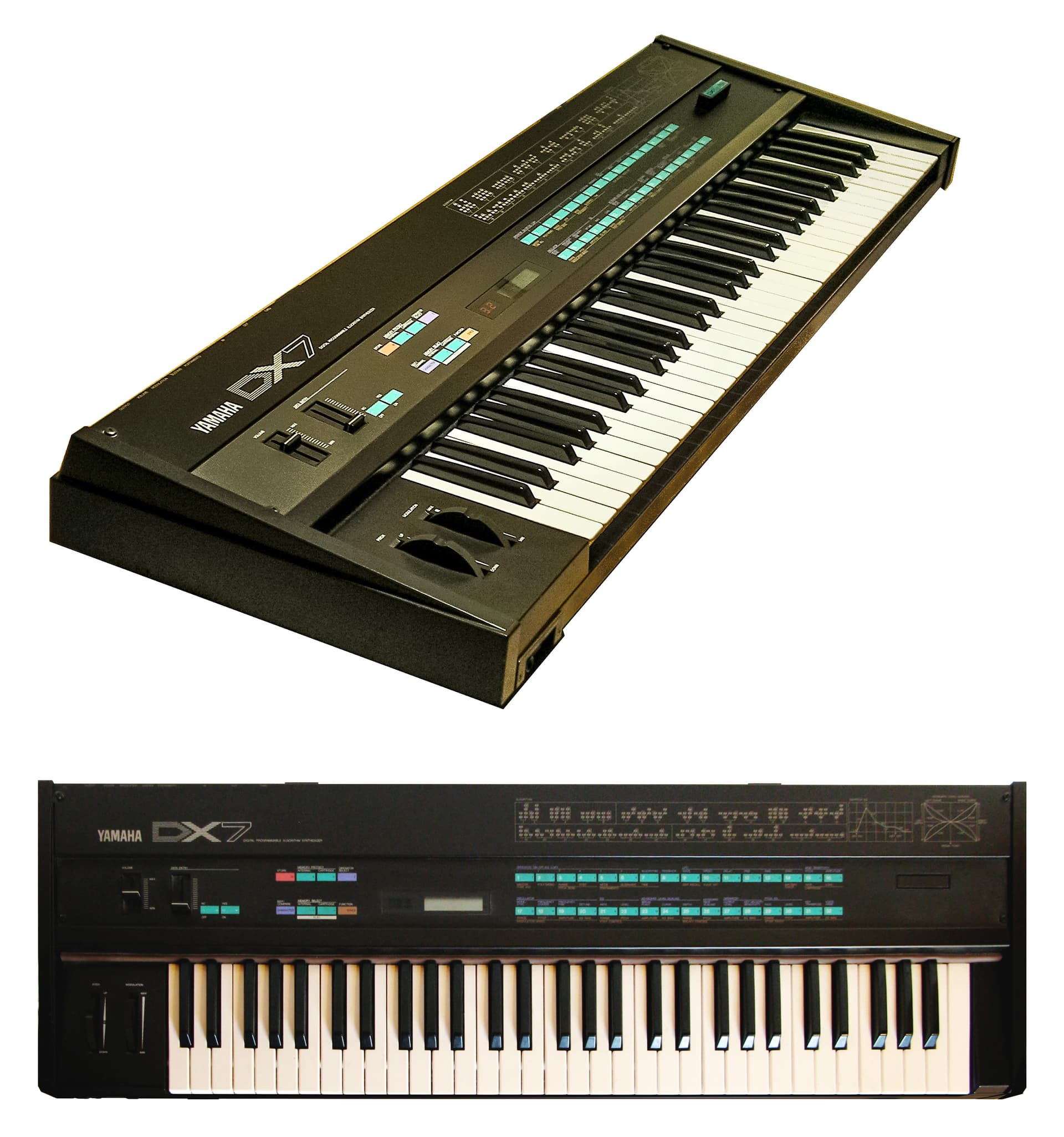
The easiest way to misread a Yamaha DX7 is to treat it like a preset box with an overfamiliar electric piano. David Hilowitz’s review makes a better case: it shows the instrument as a working machine, a relic, and a creative time capsule all at once, including that unforgettable moment when “The previous owner has loaded the upper banks with weird, experimental sounds.”
That matters because the DX7 was not just another early-’80s keyboard. Yamaha released it in 1983, and the company still describes it as a global hit that helped break down the barrier between professionals and amateurs. Stanford’s CCRMA traces FM synthesis back to John Chowning’s work in the 1970s, and identifies FM as the first commercial digital sound synthesis method, which is exactly why the DX7 felt so new when it arrived.
It also arrived as a very usable instrument, not just a theory demo. Yamaha’s own specs list 61 keys, 16-note polyphony, a 32-voice internal memory, and cartridge storage that expanded the available voices, which helps explain why it became practical for working players even while it was changing the sound of mainstream pop. Yamaha’s chronology places it alongside the DX9 and DX1 in the 1983 lineup, underscoring how central the whole FM family was to the company’s push into the digital era.
What newcomers get wrong about programming it
The most common mistake is expecting DX7 programming to behave like analog subtractive synthesis. It does not reward you for reaching for a filter cutoff and hoping the synth “opens up.” The DX7 is built around six operators and algorithm combinations, and Yamaha’s own manual says the instrument can edit existing voices or create entirely new ones from scratch, which means you are shaping ratios, modulation, and envelopes, not just polishing presets.
That is why the front panel intimidates so many first-timers. The design itself was meant to signal a new digital way of working, with preset selection and algorithm choice taking the place of the knob-dense analog look. If you come in assuming it will hand you instant gratification, you miss the real lesson: FM is happiest when you start from an existing voice, learn what each operator is doing, and make smaller, more deliberate changes than you would on a subtractive synth.
Buying used means inheriting a stranger’s imagination
The used DX7 market has one of the most charming quirks in vintage gear: you are not only buying circuitry, you are inheriting someone else’s taste. Sometimes that means factory patches and tidy internal memory. Sometimes it means the upper banks are full of weird experiments, half-finished sound design, or whatever a previous owner thought was worth saving. Yamaha’s manuals also remind you that memory protection is part of the workflow, and that voices are still organized around internal and cartridge storage rather than modern browsing.
That inheritance comes with another reality check: cartridges are not something Yamaha is still stocking through its parts department. If you want the full classic DX7 experience, you need to think like a collector and a librarian, not just a player. In practice, that means checking what is actually installed, whether the memory is intact, and whether the machine will arrive as a playable instrument or as a project with surprises tucked inside.
What the market says now
The DX7 is no longer a sleeper bargain, but it also has not crossed into untouchable museum territory. Recent listings show a used DX7 at $517, another very good example at $500, and rougher as-is or parts units around $270 to $330. That puts the original in a strange, revealing middle ground: the market is rewarding condition, playability, and the right kind of nostalgia, not just the name on the panel.
That price behavior says a lot about where the DX7 sits now. A clean working original is being valued as a playable icon with a famous keybed and a huge pop history, while battered examples are treated like restoration candidates. It is collectible, but not so rare that every example is a trophy, which makes condition and completeness matter far more than a simple “DX7” badge.
Who should buy an original, and who should look elsewhere
Buy an original DX7 if you want the real thing: the 61-key format, the tactile feel of a full-size vintage Yamaha, the classic FM workflow, and the sound that helped define everything from power-ballad sheen to glassy pop basses. The machine’s reputation is backed by the same official Yamaha story that places it among the company’s 1983 breakouts and by the fact that its factory palette, including “E. Piano 1,” became part of the decade’s shared musical vocabulary.
Look elsewhere if you want FM without the maintenance bill or the front-panel apprenticeship. Yamaha’s reface DX is a modern 37-key FM instrument with an 8-note polyphony footprint in the chronology entry, while Yamaha’s current shop page describes a 4-operator FM engine, 32 voice memory locations, built-in speakers, USB, and battery power. If you want to move DX7 material into a more modern Yamaha platform, the company’s FM Converter also supports DX7 content on Montage and MODX instruments.
What ownership headaches to expect
The DX7 is wonderfully playable for a machine of its age, but it is not carefree. Yamaha says memory protection is enabled on power-up, so loading and saving voices still requires a little ritual, and the cartridge-based system means your usable banks depend on what survives from the previous owner or what you source secondhand. That is part of the charm for collectors, but it is also the point where casual buyers start losing patience.
The sensible way to approach it is simple: if you want a historical instrument that still earns its keep, the DX7 remains a strong buy. If you want immediate hands-on editing, low maintenance, and a modern roadmap, the newer FM descendants are easier companions. The old Yamaha still matters because it turned digital synthesis into something musicians could actually use, and that is a legacy you can hear every time one wakes up and remembers how to sing.
This article was produced by Prism’s automated news system from verified source data, official records, and press releases, then run through automated quality and moderation checks before publishing. The system is built and supervised by the people who set the standards it runs under. Read our full AI policy.
Did this article answer your question?