Howard Jones’s Roland Jupiter-8, still his trusted synth after 40 years
Howard Jones has kept his Roland Jupiter-8 in action since 1983, because its feel, attack, and wide stereo voice still earn a place in the rig.
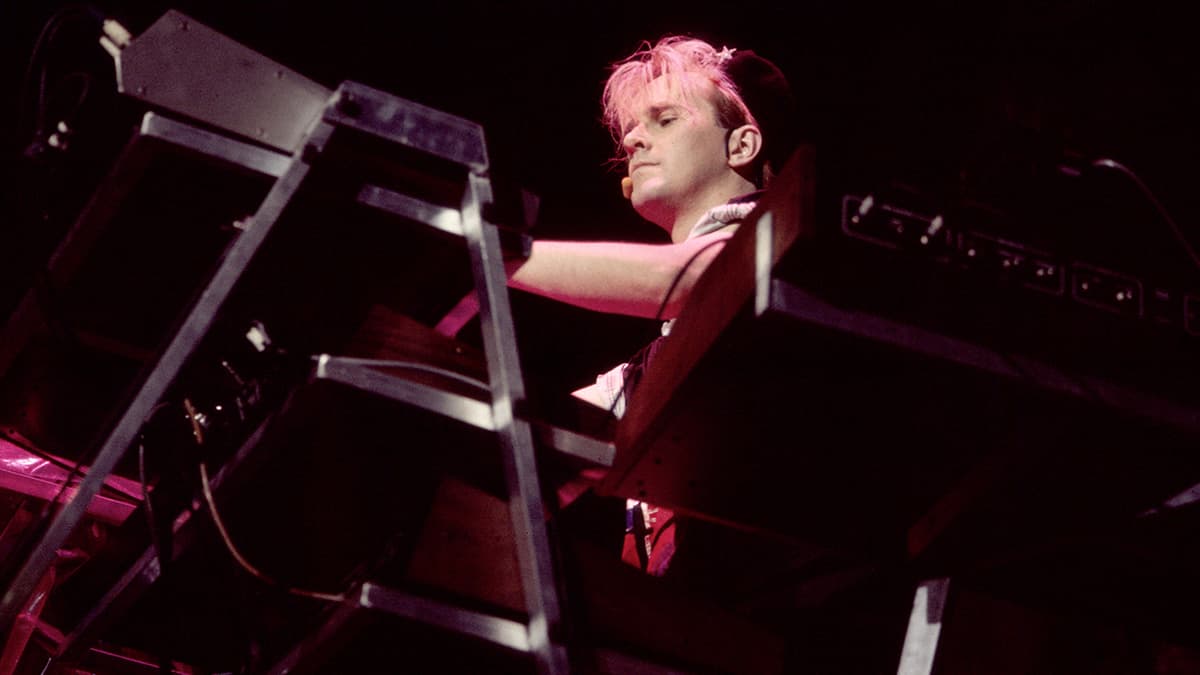
The synth that never stopped earning its keep
Howard Jones has kept the same Roland Jupiter-8 in his setup since 1983, and that tells you almost everything you need to know about why certain vintage keyboards survive long after the hype fades. This is not a museum piece sitting under lights. It is a working instrument that still answers to touch, still delivers the sound he wants, and still earns its place beside newer gear.

The useful lesson for collectors is simple: a vintage synth matters less because it is rare than because it still makes a player reach for it. Jones’s Jupiter-8 has done that for four decades, which puts it in a different category from gear bought for status alone. Longevity is the real benchmark here, not just condition or resale value.
Why the Jupiter-8 still matters in a working rig
Roland introduced the Jupiter-8 in 1981 and kept it in production until 1985, right in the middle of the analog polysynth arms race. Roland still describes the JUPITER line as the “king of the polysynths,” and in Jones’s case that reputation is backed up by actual use, not collector mythology. He has called it a “king of synths,” said it has “a sound like no other,” and described it as incredibly “stereo.”
That stereo spread is part of the instrument’s character, but the bigger story is response. Jones also praises the attack and the way the notes land, which is exactly the kind of trait that keeps a vintage analog in a professional setup. A synth can be old and imperfect on paper, yet still feel immediate under the fingers in a way that newer instruments sometimes flatten out.
For anyone shopping vintage keyboards, that is the first thing to watch for: does it react in a way that keeps you playing? The Jupiter-8 still clears that bar for Jones, which says more than any auction listing ever could.
Hands-on interface beats perfect knowledge
One of the most revealing details in the story is Jones’s own admission that he does not know every knob on the panel by heart. In archive American Bandstand footage, he says he thinks of himself as “a player” and jokes that he does not know what half the knobs do. That is not a knock on the instrument. It is the reason the instrument still works for him.
This is the part collectors often miss. A great vintage synth does not need to be mastered like a lab instrument to be valuable in a real rig. If the interface invites experimentation, and if the sweet spots reveal themselves quickly, it can stay useful even when the owner knows only part of the panel intimately. Jones’s approach is musical and instinctive: he fiddles until it makes the right sounds.
That is exactly the kind of workflow a serious buyer should look for. Before falling for the badge or the nostalgia, ask whether the front panel still encourages fast decisions. If the answer is yes, the synth has a better chance of staying in rotation instead of becoming shelf art.
The sound is the reason it stays
The Jupiter-8’s reputation is built on a very specific set of strengths: punchy attack, wide stereo character, and a voice that software still has trouble nailing. Jones has said software still does not quite match the Jupiter-8’s character, which is a blunt reminder that emulation and ownership are not the same thing. Plenty of plug-ins can suggest the vibe, but the original still has a physical presence that players hear and feel.
That matters because vintage synth loyalty usually comes from one of two places: the interface or the sound. The Jupiter-8 has both. It gives Jones a fast, expressive response and a sonic footprint that still stands apart in a crowded modern setup. When an artist uses language like “a sound like no other,” that is not nostalgia talking. That is a working musician describing a tool that continues to do a job.
For buyers, that means listening for the traits that make a synth indispensable in a mix: attack, width, immediacy, and the way it behaves at performance volume. If a vintage keyboard still cuts through after all these years, that is a sign you are dealing with a keeper, not just a collectible.
The backstory matters more than the market price
Jones’s relationship with Roland gear has another layer too. He has previously said one piece of Roland equipment came into his life through insurance money after an accident involving him and his wife. That kind of story explains why certain instruments are remembered as part of a life, not just part of a gear list.
The Jupiter-8 sits inside Jones’s breakthrough era as well. His official discography lists *Human’s Lib* in 1984 and *Dream Into Action* in 1985, the records that defined him as a major synth-pop figure. That matters because it ties the instrument to the sound of the years that made his name. The Jupiter-8 is not just an old keyboard he happened to keep around. It is part of the sonic identity attached to the music that brought him to a wider audience.
For collectors, that is the emotional side of the equation, and it is not trivial. Some gear survives because it is valuable. Some survives because it is loved. The best pieces are often both.
What to look for if you want one of your own
If you are evaluating a Jupiter-8, or any vintage synth with a similar reputation, the Howard Jones story gives you a practical checklist.
- Does it inspire you enough to keep it in a working setup for years, not weeks?
- Does the panel let you get results quickly, even if you do not know every control?
- Does the sound have a signature character that modern substitutes only approximate?
- Does it still feel reliable enough to trust on a session or stage date?
- Does it carry a personal pull strong enough to outweigh the market noise?
That last point is easy to overlook, but it is usually what separates a display piece from a trusted instrument. Jones’s Jupiter-8 has lasted because it still gives him something immediate, musical, and unmistakably his own. For vintage synth fans, that is the standard worth chasing: not just ownership, but trust.
This article was produced by Prism’s automated news system from verified source data, official records, and press releases, then run through automated quality and moderation checks before publishing. The system is built and supervised by the people who set the standards it runs under. Read our full AI policy.
Did this article answer your question?