Yamaha EX5’s sample-FM trick still sounds ahead of its time
The EX5 hides a rare FM trick: it can modulate samples with samples, and that makes Yamaha’s 1998 workstation a sleeper for deep sound design.
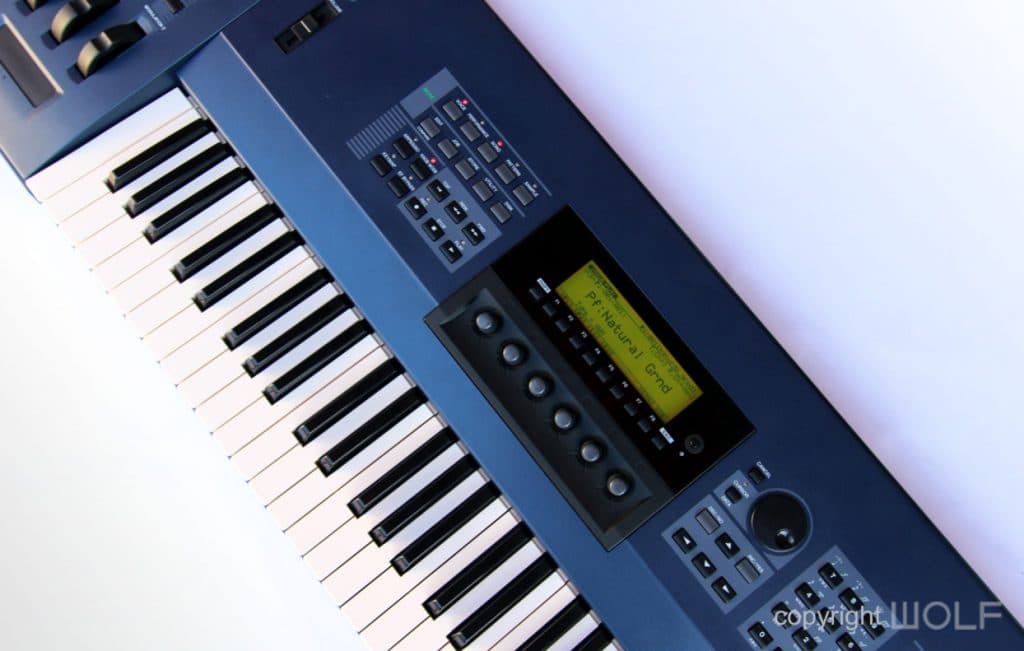
The weird thing about the Yamaha EX5 is also the reason it still matters
The EX5 is one of those Yamaha boxes that looks like a normal late-90s workstation until you hit the part that makes your eyebrows go up. It can frequency-modulate samples with other samples, and for a long stretch that was basically its own lane in hardware, until Waldorf’s Quantum and Iridium showed up. In Floyd Steinberg’s demo, a voice sample gets pushed into a brassy, synth-like patch by using a sine-wave sample as the modulator, which is exactly the kind of patch-building trick that makes the EX5 feel more like a lab than a nostalgia piece.
That matters because it goes beyond classic FM bragging rights. A traditional FM synth gives you operator-based tone generation and all the clang, bark, and bell tones that come with it. The EX5 lets sampled audio sit inside that logic, so the source material itself becomes part of the modulation path. That is a very different kind of instrument, and it is why the EX5 can turn something as ordinary as a spoken vowel into a tone that feels halfway between sampling and synthesis.
What Yamaha actually shipped in 1998
Yamaha introduced the EX5 in 1998 with a list price of ¥298,000, and the spec sheet tells you right away that this was not a lightweight one-trick workstation. It has 76 keys, 128-note maximum polyphony, and weighs 20 kg, which is enough to remind you that this was meant to live in a serious rig, not bounce from coffee table to coffee table. Yamaha also made the EX5R rack version, using the same core synthesis family for players who wanted the engine without the keyboard.
The heart of the instrument is Yamaha’s hybrid design. The EX5 uses four tone-generator types: AWM2, S/VA, AN, and FDSP. Yamaha’s own EX series description makes that hybrid approach clear, and it is the reason the EX5 could behave like several different synths wearing the same faceplate. In practical terms, you are getting sampled playback, virtual analog and analog-modeling ideas, and digital signal processing under one hood, which is why the machine attracted people who wanted one keyboard to cover a lot of sonic ground.
Why the sample-FM trick still feels special
The EX5’s sample-FM behavior is not just an oddity for spec-sheet collectors. It is a real workflow advantage if you like building sounds that do not sit neatly in the usual subtractive or pure FM buckets. Steinberg’s voice-to-brass example is the perfect proof of concept because it shows the machine doing something you do not get from a classic FM box: taking a recognizable sampled source and reshaping it with another sampled source until the result lands somewhere new.
That is also why the EX5 keeps showing up in conversations about gear worth studying. It is technically obscure, but not in a dead-end way. It offers a sound design path that still feels unusual now, and that is the sort of thing that gives a vintage instrument staying power long after its flagship status has faded.
The catch: the most interesting part is also the most constrained
If you buy an EX5 expecting it to be a brute-force multitimbral monster, the fine print matters. Yamaha’s additional performance notes say FDSP voices are limited to 16-note polyphony on the EX5 and EX5R, with 8 notes on the EX7. That is plenty for textures, motion, and strange one-off patches, but it is not the same as having unlimited layered abundance across every engine.
That limitation helps explain the EX5’s reputation. People prize it for unusual textures, not for being the easiest way to pile on parts. The 128-note overall polyphony sounds generous on paper, but once you start leaning on FDSP, you remember that this machine rewards cleverness more than gluttony. That is not a flaw if you like sound design. It is only a problem if you wanted a straightforward workstation to do everything in the most conventional way possible.
Who should still care in 2026
The EX5 is a sleeper pick if you want a deep, weird, rewarding synth that can do things classic FM synths simply cannot. It is especially attractive if you enjoy patch building, hybrid architecture, and the satisfaction of finding a sound path that most other keyboards never offered in hardware. For that kind of user, the EX5 remains one of Yamaha’s most interesting late-90s designs.
It is a frustrating curiosity if you want a simple, lightweight, no-drama instrument. At 20 kg, with a complex engine family and a reputation built on unusual behavior, it is not the sort of machine you buy by accident. But that is exactly why it has cult status. The EX5 was willing to be technically adventurous in a way that still pays off when you sit down and actually program it.
Where the best proof lives
A May 3 Matrixsynth post put the EX5 back in the spotlight, and Floyd Steinberg’s EX5 material gives the best demonstration of why. YamahaSynth also points listeners toward Steinberg’s EX5 playlist, which is the right place to see the machine used as a real sound-design tool rather than a museum object. If you want proof that a late-90s workstation can still surprise you, this is it.
The EX5 is not the easiest Yamaha flagship to live with, but it may be the most rewarding one to study. The rare part is not just that it can make FM noises. It is that it can make sampled audio behave like FM in hardware, and that still feels like a future somebody forgot to mass-produce.
This article was produced by Prism’s automated news system from verified source data, official records, and press releases, then run through automated quality and moderation checks before publishing. The system is built and supervised by the people who set the standards it runs under. Read our full AI policy.
Did this article answer your question?