Goonhammer explores the First Battle for Armageddon as new edition looms
Goonhammer’s Armageddon deep-dive makes the First War the key to the planet’s return, just as Games Workshop turns it into the new edition’s launch point.
The war behind the launch box
Goonhammer’s latest Armageddon piece works because it does not treat the First War for Armageddon like dusty background trivia. It treats 444.M41 as the reason the planet still matters, which is exactly the right lens now that Games Workshop is using Armageddon as the launch frame for the next Warhammer 40,000 edition.
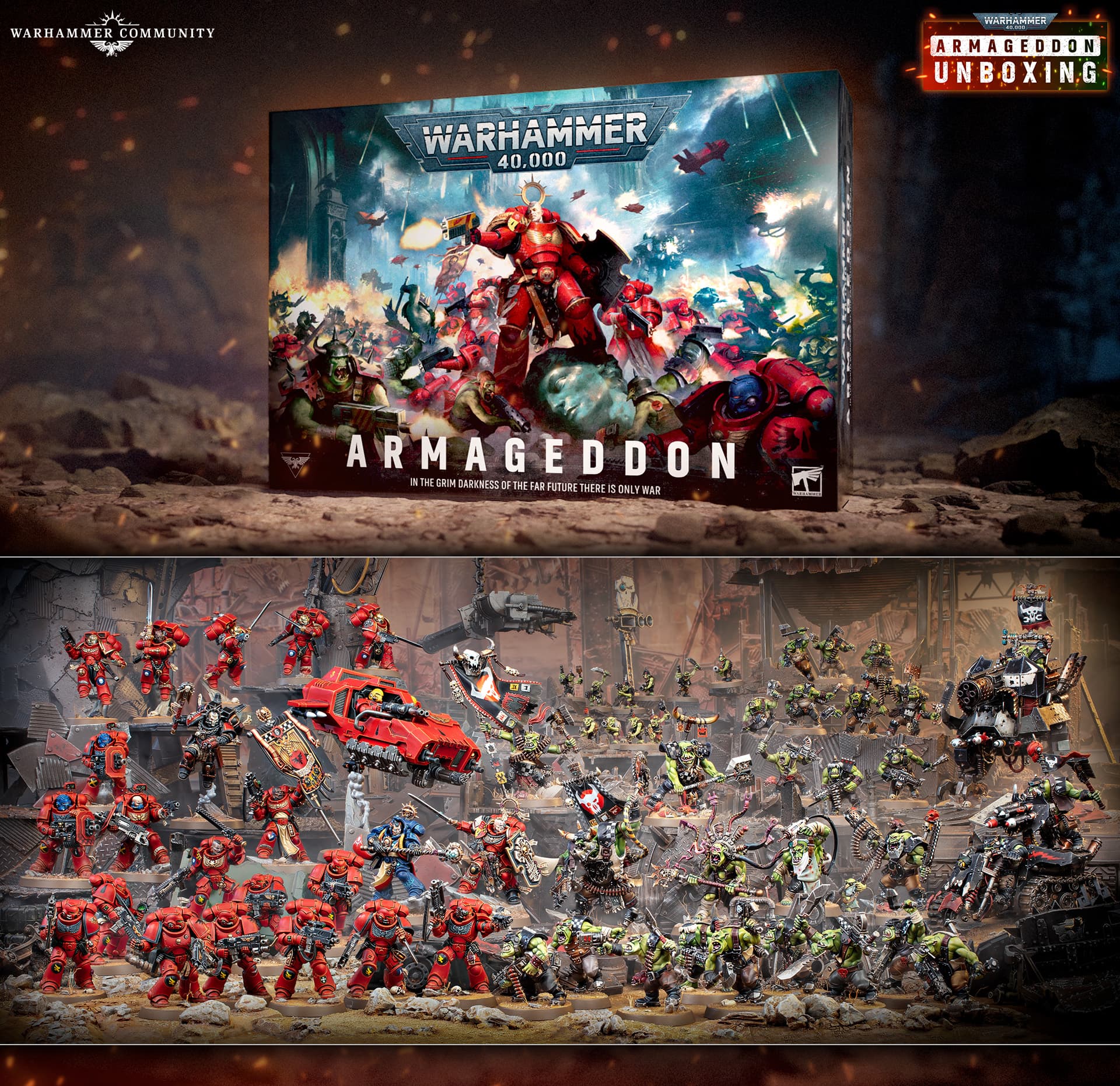
That context matters immediately on the hobby side. The new launch box is titled *Warhammer 40,000: Armageddon*, and Games Workshop is calling it the biggest Warhammer 40,000 launch set yet. It packs in 23 Space Marines, 38 Orks, core rules, a lore book, campaign and mission decks, datasheet cards, and a transfer sheet, so this is not a side product or a cosmetic nod. It is a full-on statement that Armageddon is back at the center of the range, the narrative, and the table.
Why the First War still drives the setting
If you only know Armageddon from later flashpoints, the First War is the piece that explains why the planet keeps getting dragged back into the spotlight. Goonhammer’s write-up traces the conflict back through a long paper trail, starting with the 1992 *Battle for Armageddon* boxed game and its *Chaos Attack* expansion. That expansion was the first and only add-on for the original game, and it focused specifically on the First War for Armageddon, with the Chaos Wars framing that predates the better-known Ork conflicts.
That layering matters. The story was not frozen in one source and then copied forward unchanged. It was built up over time through game material, later publications, and magazine support, which is why the conflict feels like part of the living fabric of 40k rather than a one-off historical note. A 1996 publication reprinted large chunks of the original lore and added more on the Grey Knights and Space Wolves, and then *White Dwarf* 279, published in March 2003, carried *Codicium Imperialis - The First War for Armageddon* by Graham McNeill and Andy Hoare. That 2003 treatment is the key modernization point, the place where the war was brought into line with the tone and structure of later 40k lore.
The scale of the war, and what it changed
The First War for Armageddon is usually dated to 444.M41, and the force mix is exactly the kind of thing that makes the conflict feel like a proper sector-wide disaster instead of a local outbreak. The war brought in Angron’s forces, the World Eaters, the planetary defense forces, Imperial Guard formations, the Space Wolves, and the Grey Knights. One reference source places 300 Space Wolves and 100 Grey Knights under Logan Grimnar, which gives you a sense of just how hard the Imperium leaned on elite intervention once the situation spiraled.
The aftermath is just as important as the fighting. The Months of Shame, the Ordo Malleus purge of survivors, turned a battlefield victory into an internal Imperial wound and dragged the Space Wolves into open conflict with the Inquisition. That is the part newer fans need before the next Armageddon beat lands: the planet is not just a warzone, it is a pressure point where the Imperium’s military, political, and moral failures keep colliding.
Why Armageddon is always worth fighting over
Armageddon is not a generic hive world with a famous name. The 3rd-edition *Codex: Armageddon* paints it as a toxic, overcrowded, exploitative industrial world roughly 10,000 light years to the galactic northeast of Terra, and a vital node in the sector’s navigational channels. Its weapon shops supplied Imperial Guard regiments across several thousand light years, which means losing it would not just be embarrassing, it would be strategically catastrophic.
That industrial role explains the usual cycle of misery. Food has to be imported from off-world, noble families keep workers in subjugation, and the planet’s defense forces are constantly tied up suppressing rebellion. When the First War begins, those uprisings are not random color text. They are the opening crack in a world already loaded to burst, and the Imperium initially treats the unrest like another internal security problem until the real nightmare arrives.
The Devourer of Stars and the scale of the escalation
The moment the First War stops being a regional crisis is the arrival of the space hulk Devourer of Stars. It brings Angron, the World Eaters, and daemons into the Armageddon system, and that changes everything. Local unrest becomes a planetary war against a full-blown Chaos incursion, which is exactly why the conflict still reads cleanly as a foundational Armageddon story instead of a footnote.
That escalation also explains why Armageddon can support so many different kinds of stories now. It is a world where industrial oppression, hive warfare, daemon incursions, and elite Imperial counterattacks can all make sense in the same theater. If you are following the current edition rollout, that is the real utility of the First War: it gives the new campaign a deep engine, not just a familiar name on a box.
Why the current release cycle is leaning on this history
Games Workshop is not dusting off Armageddon by accident. The official reveal for the new edition ties the box to a wider narrative campaign, and the planet is once again being used as a central story engine. The broader counterattack narrative includes Blood Angels, Salamanders, Ultramarines, Space Wolves, and more, which tells you the company is building this as a multi-faction battlefield with real shelf appeal and real lore weight.
That is why the timing of Goonhammer’s piece lands so well. The article is not just explaining a famous old war. It is teaching readers how to read the next phase of Armageddon coverage, where old grudges, elite reinforcements, and industrial-scale slaughter all feed the same machine. Once you understand the First War, the rest of Armageddon makes sense again, and the next time the planet gets dragged back to center stage, you will know exactly why it never really left.
This article was produced by Prism’s automated news system from verified source data, official records, and press releases, then run through automated quality and moderation checks before publishing. The system is built and supervised by the people who set the standards it runs under. Read our full AI policy.
Know something we missed? Have a correction or additional information?
Submit a Tip