MiniWarGaming pits Imperial Knights against Chaos Knights in asymmetrical missions
MiniWarGaming’s Knight-on-Knight clash is a clean stress test for skew lists, where asymmetrical missions expose every missed activation and every exposed lane.
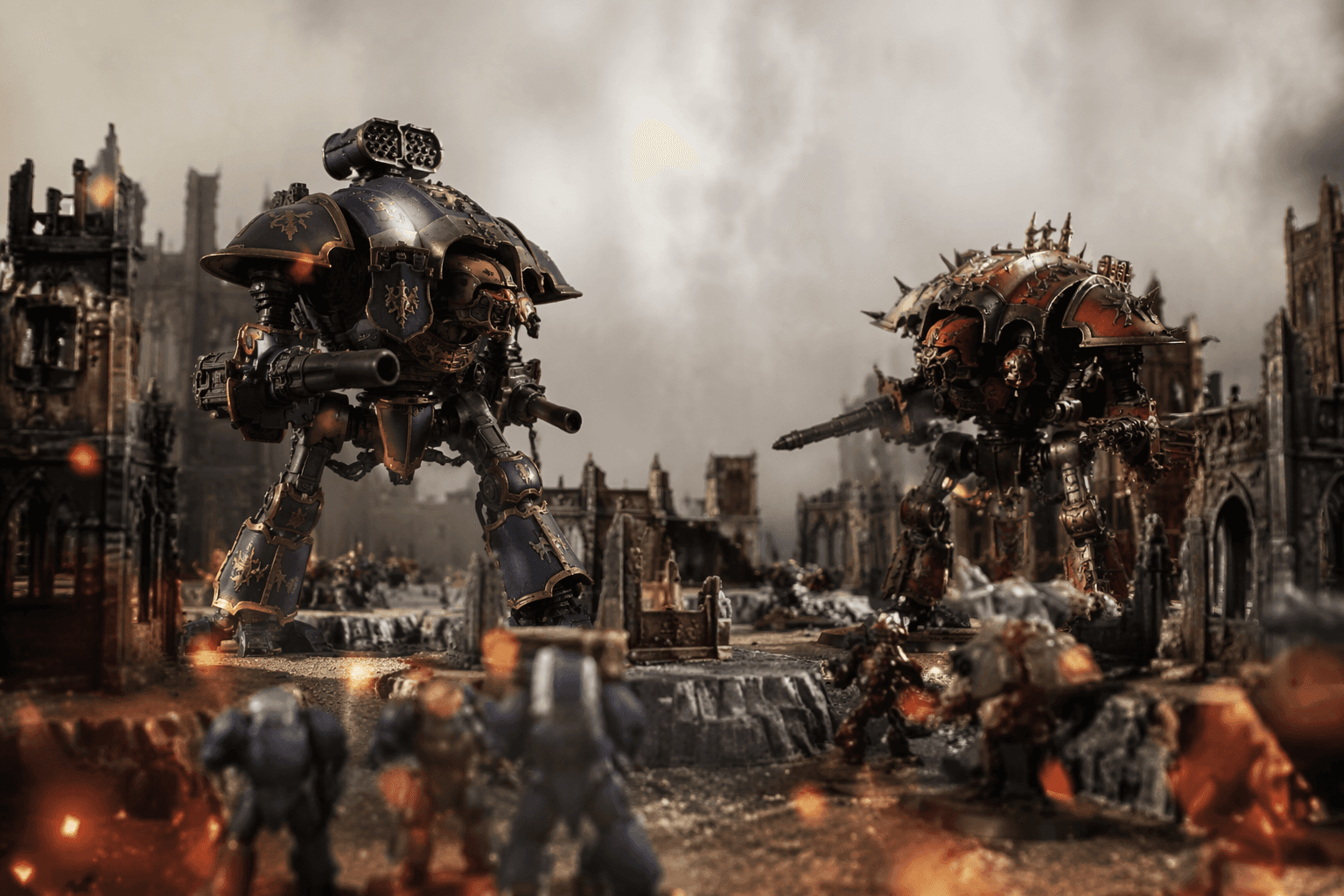
MiniWarGaming’s KNIGHT FIGHT!!! drops Imperial Knights opposite Chaos Knights and makes the matchup do real work instead of just looking cool on camera. With Skari and Josh fielding their favourite big stompy robots into asymmetrical mission cards, Episode 98 turns into a practical test of whether a handful of huge models can still play the mission when the game stops being a simple mirror.
Why this Knight mirror matters
Knights win by compressing power into very few activations, so every move has to pull double duty: threaten, score, screen, or set up the next turn. When the mission structure itself becomes asymmetrical, that pressure spikes, because you do not have the luxury of wasting a turn on a nice-looking charge lane that does nothing for primary scoring.
In a skew mirror, small decisions about guns, melee chassis, buffs, or whether you lean into War Dogs or bigger bodies can snowball immediately if one player gets forced onto the back foot.
The mission system is the point, not the backdrop
The asymmetrical mission cards matter here because they change how you evaluate every activation. In a normal mission map, Knights can sometimes brute-force space and still stay comfortable. In an asymmetrical setup, the question becomes much harsher: can your army do enough with too few pieces, and can it do that before the scoring window closes?
Games Workshop’s Chapter Approved 2025-26 deck introduced Asymmetric War with uneven deployment zones and differing primary objectives, and that is the logic MiniWarGaming is leaning into here. The newer Chapter Approved 2026-27 Mission Deck pushes that idea further with 15 mission matchups built from five Force Dispositions, plus 88 rules-supplement cards, six cardboard objective tokens, and a 10-page reference booklet.
For Knights, that matters more than almost any other faction. You are not trying to flood the board with cheap bodies and hope one sticks. You are trying to place a small number of massive threats exactly where they force the opponent to respond, while still preserving enough movement and action economy to stay ahead on primary.
What Imperial Knights and Chaos Knights reveal about scoring
The Imperial Knights and Chaos Knights mirror is especially sharp because both armies magnify list design differences fast. One extra weapon profile, one better melee chassis, one more durable platform, or one cleaner defensive buff can swing an entire turn sequence. In a mission with uneven objectives, that swing shows up in the scoreboard before it shows up anywhere else.
If your plan depends on surviving by raw toughness alone, asymmetrical missions punish you the moment you fall behind on timing. If your plan depends on clearing threats too slowly, you discover very quickly that Knights do not get many second chances to fix a bad positional call.
Warhammer Community’s downloads hub lists the **Core Rules as last updated on 2026-06-01, the Imperial Knights faction pack on 2026-06-11, and the Chaos Knights faction pack on 2026-06-10**.
Durability breakpoints are not enough on their own
Imperial Knights got a clear tune-up earlier in the year: Games Workshop’s balance changes dropped points for almost all Big Knights, while also increasing wounds on many Knights and lowering Toughness by one so they stayed aligned with Chaos Knights. The faction is being calibrated around a narrower durability band, which makes mission play even more important because raw stat inflation is not the whole story anymore.
The March 2026 quarterly balance update also included Imperial Knights among the factions receiving light adjustments. The Chaos Knights faction pack page lists Version 1.1 as legal for matched play from 1 April 2026.
Durability breakpoints still matter, but they matter less if you cannot translate them into a scoring lead. A Knight that survives on one wound is not winning you anything unless it also sits on the right objective, denies the right lane, or forces an opponent off tempo.
What to take from the game when building your own list
- Do you have enough activations to play the mission, not just fight it?
- Can your big chassis threaten across more than one lane?
- Do your buffs and guns support scoring timing, or just damage output?
- Can you recover if the mission hands the opponent the better deployment or primary shape?
If you are writing Knights into a mission pack with asymmetrical options, the checklist is brutally simple:
Skari and Josh bringing their favourite big stompy robots into an asymmetrical card set asks whether all-big-model lists can actually do the boring but essential work of winning on primary, rather than just winning the damage race.
This article was produced by Prism’s automated news system from verified source data, official records, and press releases, then run through automated quality and moderation checks before publishing. The system is built and supervised by the people who set the standards it runs under. Read our full AI policy.
Did this article answer your question?