Thousand Sons faction focus shows rituals, healing, and tougher psykers
Thousand Sons are being shaped into a sorcery-first army that heals, stands back up, and wins by sequencing Rituals better than the opponent can answer.
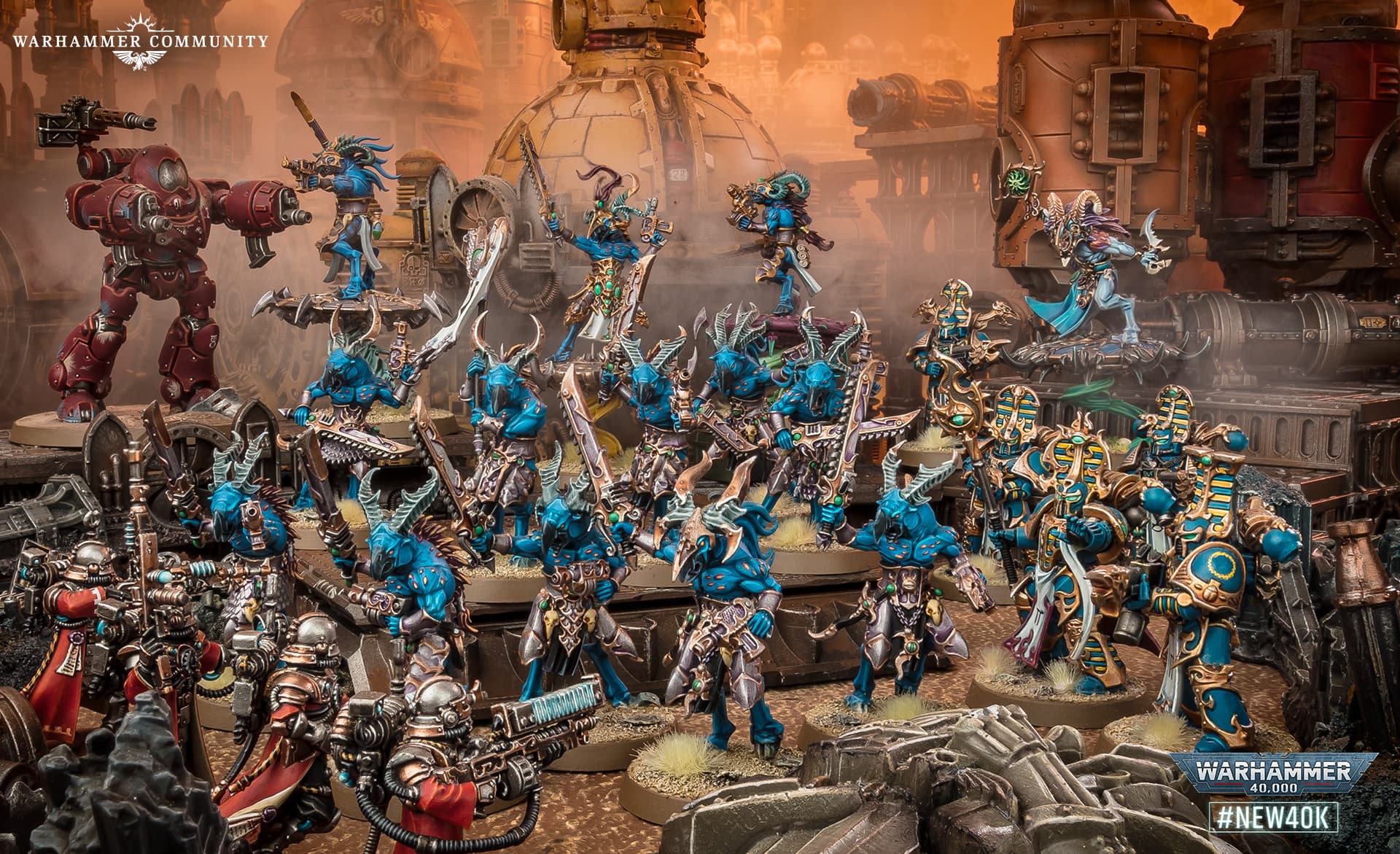
A psychic army that wants to outlast you
The newest Thousand Sons Faction Focus makes the army’s sales pitch very clear: this is not a brute-force Chaos faction, it is a sorcerous engine built to stay alive, keep casting, and punish anyone who misreads its pace. Warhammer Community’s May 22, 2026 feature leans hard into that identity, and the practical takeaway is simple: Thousand Sons look like they are being tuned for players who enjoy trading on precision, resource management, and durability rather than raw volume of fire.

That matters because the faction’s fantasy has always been about controlled power. Warhammer Community describes the Thousand Sons as a Traitor Legion of mad Sorcerers sworn to Tzeentch, the Chaos God of magic and change, and the new focus reads like a rules translation of that lore. If you want an army that feels like a cabal of schemers rather than a pile of guns, this preview is pointing you in the right direction.
Rituals are the real engine
The headline mechanic here is the Ritual system, and the new detachment shown, Ritual of Regeneration, puts a bright spotlight on what the army wants to do on the table. Its core reward is straightforward: when a friendly Thousand Sons Psyker unit successfully manifests a Ritual, it can heal wounds. That is not a small bonus, because Thousand Sons tend to lean on a relatively small number of expensive, high-value units to carry the game.
In practical terms, healing after a Ritual keeps your key pieces online for longer, which changes how the army scores, trades, and survives the midgame. You are not just trying to spike damage in one phase and hope the opponent folds. You are trying to create a repeating loop where your psykers cast, trigger value, and then recover enough to keep doing it again.
That makes the army feel much more technical than a straight damage faction. The real question every turn becomes not simply whether you can cast, but which Ritual you should commit to, when you should spend the resource, and how much board position you are willing to trade for the payoff.
Healing, resurrection, and the refusal to die
Ritual of Regeneration is only part of the defensive picture. The preview also highlights Eruption of Vitality, an enhancement that lets a destroyed Psyker stand back up on a 2+, which is the sort of rule that changes how opponents have to plan their shooting and melee. If a key character can come back on that kind of roll, the enemy is forced to overcommit or accept that your lynchpin pieces may simply return.
That is a very Thousand Sons kind of rule. It reinforces the army’s signature feeling of stubborn, arcane survival, where removing a model is often not the same thing as removing it for good. For players who like durability with a trick attached, this is exactly the kind of rule that makes elite infantry and characters feel scary instead of merely expensive.
The other important thing here is how this interacts with the army’s core profile. Thousand Sons are often a faction where one dead sorcerer can mean a real drop in output, utility, or command presence. Eruption of Vitality reduces that pressure and makes each key model much harder to fully answer than its datasheet might suggest at first glance.
Psychic offense is still part of the threat
The focus does not frame psychic power as purely self-buffing, either. Mutagenic Magicks shows that the army can turn enemy units already tied up in combat into hazards, so Thousand Sons are not just trying to survive long enough to score. They are also trying to make the enemy’s proximity a liability.
That is a meaningful distinction. If you are used to factions where psychic rules mostly mean rerolls, extra saves, or straightforward damage, Thousand Sons ask for a different mindset. You are managing a board state where contact can be dangerous, where the opponent’s best answer may still leave them exposed, and where your layered tricks make every melee engagement more complicated than it first appears.
The broader detachment picture looks wide, not narrow
The article’s jump headings for Sekhetar Cohort and Servants of Change matter too, because they suggest this is only one slice of a broader detachment package. The message is not that Thousand Sons have one gimmick. It is that Games Workshop wants multiple ways to build around sorcery, board control, and resilience.
That lines up with recent codex coverage. A May 11, 2025 preview said Codex: Thousand Sons was a 120-page book with five detachments, Combat Patrol rules, Crusade rules, and datasheets for every unit. A May 17, 2025 pre-order article then pushed the faction into pre-order that week with a new Codex, Combat Patrol, and Battleforce. Taken together, those previews showed a faction being supported with real list-building depth rather than a single headline rule.
The 2024 codex coverage pushed the same point further, noting rules for Flamers, Screamers, Pink and Blue Horrors, the Lord of Change, and Kairos Fateweaver across five detachments. That is a broad toolkit, and it matters because Thousand Sons players are clearly being offered several ways to express the army’s identity instead of one locked-in build.
This is still the old cabal mindset, just repackaged
There is also a strong line of continuity here with older Thousand Sons rules. Warhammer Community’s earlier Cabbalistic Rituals mechanic worked by generating Cabal points from psykers at the start of the Psychic phase, then losing any unspent points at the end of that phase. That old design already taught the faction to think ahead, bank nothing, and squeeze value out of timing.
The new Ritual framing feels like that same logic pushed into a more durable, more aggressive shell. The army still wants sequencing, pressure, and careful resource use, but now it appears to have more self-sustain attached to the plan. If you liked the old Thousand Sons because they rewarded brain work, this preview suggests that core appeal is still intact.
That historical throughline also fits the 2021 codex update, when Rubric Marines and Scarab Occult Terminators each gained an extra wound and an extra attack. Even then, the army was being nudged toward harder-to-shift elite bodies that could actually survive long enough to matter. The new focus feels like the next step in that same direction.
What this says about the army on the table
If you are deciding whether Thousand Sons are for you, this preview points to a faction that will reward patience, sequencing, and a strong sense of tempo. It looks less like an army that wins by overwhelming the table in one go, and more like one that keeps its key pieces alive, turns every Ritual into value, and makes the opponent work too hard for every casualty.
That is why the current downloads pages matter too. Warhammer Community says the FAQs and errata incorporate feedback from the community, playtesters, and the studio design team, which tells you this is a live rules ecosystem rather than a sealed box. The faction is still being tuned, and that matters for anyone trying to judge where the army is headed.
Adam Camilleri of Forge the Narrative also weighed in on earlier Thousand Sons detachments like Rubricae Phalanx and Warpforged Cabal, which is a good sign that competitive players are taking the faction seriously as a puzzle, not just a lore showpiece. That is exactly the kind of army this preview seems to be building toward: tough, technical, and happiest when every spell does more than one job.
The end result is a Thousand Sons faction that looks more appealing the more you like layered decision-making. If you want your Chaos army to feel like a cabal that heals, rises again, and punishes anyone who gets too close, this Focus does a lot to sell the fantasy.
This article was produced by Prism’s automated news system from verified source data, official records, and press releases, then run through automated quality and moderation checks before publishing. The system is built and supervised by the people who set the standards it runs under. Read our full AI policy.
Did this article answer your question?