Warhammer 40,000 event companions lock in missions, terrain, and force dispositions
The new event companions are the 11th-edition tournament pack to download first: they lock in force dispositions, standardize missions, and define terrain before round one.

If you are heading into early 11th-edition events, the new Warhammer 40,000 Event Companions are the packet you need open before you write a list. Games Workshop has split the organized-play support into four documents, and the main companion now locks down how you submit your army, what mission family you will face, and how the table gets built. That is not fluff, it is the difference between a clean event and a long night of rules arguments.
The four-document package changes how you prepare
The first thing to understand is that this is no longer a single catch-all tournament sheet. The new organized-play package is divided into a main Event Companion for standard events, plus separate supplements for Doubles, Team, and Dominatus play. That split matters because it tells you Games Workshop is no longer treating singles events as the only format worth standardizing. It is building a fuller event ecosystem, and the companion files are the spine that holds it together.
The official Event Companion PDF is blunt about its role: its recommendations will be followed in full at most Games Workshop Warhammer Events, and it is the official way to play Warhammer 40,000 in an event setting, even if organizers adapt it locally. That combination is the important bit. It gives you a baseline for official events, but it also leaves enough room for a store, club, or independent organizer to tailor the event without losing the core structure.
Force disposition is the list-building change that actually bites
The headline mechanical shift is the new Force Disposition system. You choose one Force Disposition when you submit your army list, it is tied to your detachment choices, and it stays fixed for the entire event. In practical terms, that means you are not walking into round one with a vague plan and hoping the mission packet bails you out later.
The real consequence is that the five primary missions become predictable before the first dice are rolled. That changes how you build, test, and refine your list. If your army wants to pivot between aggression, board control, and scoring pressure, you need to know which posture you are committing to before registration closes, not after round one. For competitive prep, that is a clean break from the more flexible, reactionary habits plenty of players leaned on in earlier seasons.
Terrain is standardized, but not in the lazy way
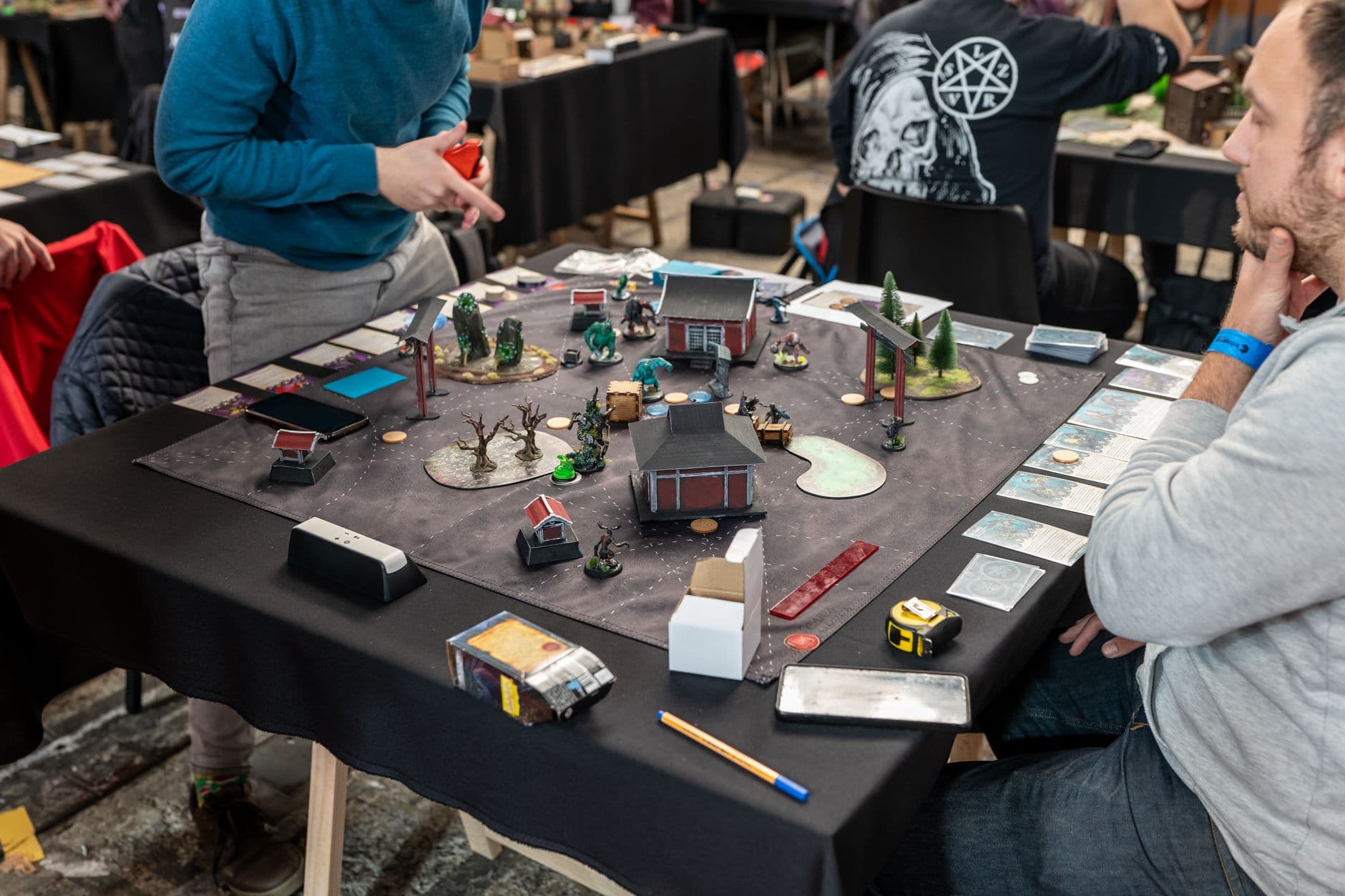
The companion also pushes terrain literacy from “nice to know” into “must know.” Each mission has three possible terrain layouts, and event organizers can pick which version applies in each round or roll off to decide it. That means the old habit of learning one default table pattern is gone. You need to know a small family of standardized boards instead of memorizing a single solved setup.
There is a second practical change hiding in that detail: players set up terrain after pairings rather than walking up to a pre-built table. That shifts practice in a useful way. If you are testing at home, you should be building to the downloadable terrain footprints and rehearsing deployment decisions around them, because the mission and terrain structure now matters before the game starts, not after deployment is already half over.
The main companion also includes the boring infrastructure that separates a smooth event from a mess: mission sequence changes, guidance for pairings and rankings, an up-to-date base-size list, and recommended terrain layouts. None of that is glamorous. All of it is exactly what keeps judges from spending round one explaining the same interaction to five different tables.
What to have on hand before your next practice night
If you are getting ready for an event, the practical download stack is simple:
- Main Event Companion for standard singles events
- Doubles supplement if you are entering pair play
- Team supplement if you are part of a squad format
- Dominatus supplement if that is the event structure you are practicing for
- Terrain footprints, so your home tables match the event layouts you are actually likely to see
That last one is easy to overlook, and it is probably the most useful extra in the whole release. If you can set up the same footprint family on a spare table at home, your deployment reps become relevant instead of theoretical.
Goonhammer’s read puts the release in context
Independent competitive coverage from Goonhammer describes the Event Companion as the updated 11th-edition version of the old Tournament Organizer’s Companion. That framing makes sense, because the document is doing the same core job as its predecessors, but with more explicit support for the current edition’s event structure. Goonhammer also noted that the new framework is meant to integrate and augment the Chapter Approved missions deck rather than replace it outright.
That distinction matters for players who were wondering whether this release makes older event materials irrelevant. It does not. Instead, it layers pregame sequence guidance, additional errata and FAQs for Chapter Approved missions, mission and terrain layouts for every mission combination, and base-size guidelines for every unit into one organized-play reference point. If you run events, that is the file you keep on your laptop. If you play events, that is the file you study until it stops feeling like admin and starts feeling like muscle memory.
The release landed beside the Warhammer Open calendar
Warhammer Community paired the companion release with ticket information for the upcoming Warhammer Open events, with tickets for the announced Opens going on sale at 7pm UK time on June 12. That timing is not subtle. Games Workshop is clearly syncing the rules package, the event calendar, and the organized-play expectations at the same time.
Warhammer Open Atlanta is especially significant because it is being positioned as the final official qualifier before the World Championships in December 2026. The Atlanta Grand Narrative is also set to draw over 400 commanders, which tells you the company is standardizing narrative support at the same time it is tightening the competitive side. Kraków and Palm Springs are part of that same Open announcement, so this is not a one-off rules drop. It is the event-season framework for the new edition.
The point of the whole package is simple: if you are attending, running, or practicing for early 11th-edition events, the companion files are not optional reading. They tell you what mission families you need to know, how terrain will be handled, what your Force Disposition commits you to, and how official Warhammer Events expect the round to run. In a season where list submission and terrain literacy matter this much, the players who download these first will be the ones walking into round one already ahead.
This article was produced by Prism’s automated news system from verified source data, official records, and press releases, then run through automated quality and moderation checks before publishing. The system is built and supervised by the people who set the standards it runs under. Read our full AI policy.
Did this article answer your question?