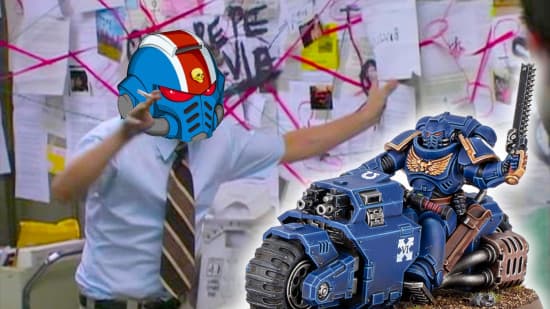
Warhammer Community revisits the bloody Wars of Retribution in the Horus Heresy
Warhammer Community has cracked open a Black Book again, and The Wars of Retribution is pure fuel for Heresy armies, campaigns, and paint schemes.
Why this Black Book drop matters now
Warhammer Community’s latest Pages from the Black Books download goes straight back to the bloodiest stretch of the Horus Heresy, and that is exactly why it is worth your time. This is not a rules preview or a flashy product reveal; it is a lore rerun with real hobby value, because the Wars of Retribution sit right at the point where the Heresy stops being a single civil war and becomes a galaxy-wide grinder of broken command and half-known disasters.
That matters if you play Warhammer: The Horus Heresy, paint Legion armies, or build narrative campaigns. The Age of Darkness lives on those fractures, and this article pulls an old campaign book back into the light so you can use it as a foundation for force themes, battle stories, and that grim, half-lost atmosphere the setting does so well.
The Heresy after Isstvan
The piece returns to the early aftermath of Horus’s atrocities in the Isstvan system, when the scale of the betrayal stopped being a local catastrophe and became something much wider. War did not spread neatly. It spread messily, with some worlds suffering total devastation and others fighting smaller but still vicious engagements that never felt fully detached from the main war.
That chaos is the point. One of the sharpest examples in the feature is Lord-Captain Morrachi of the Blood Angels and the 78th Expeditionary Fleet, who could remain unaware that the civil war had even begun until it was already over. That kind of isolation tells you everything about the early Heresy: there was no clean front line, no universal picture of the conflict, and no guarantee that any given force was fighting the same war as the one being written in the larger history.
Why the Ruinstorm changes the map
The Wars of Retribution sit inside the broader Shadow Wars phase of the Heresy, when the setting shifts away from straightforward legion-vs-legion set pieces and into something far more fractured. The Ruinstorm, engineered by Lorgar to isolate loyalist forces, turned the strategic picture into a mess of cut-off fleets, stranded survivors, and campaigns that had to be fought with scraps of information.

That is the part of the Heresy that really rewards attention. Once the Ruinstorm goes up, the war stops being about who has the biggest crusade and becomes about who can survive long enough to strike back. If you want your games to feel like desperate sorties, revenge missions, or missions fought on partial intel, this is the era that gives you the texture.
The factions that define the post-Isstvan war
Warhammer Community points readers toward three especially important groupings from this period: the Knights Errant, the Shattered Legions, and the Blackshields. Those names are not just lore ornaments. They are the backbone of the post-Isstvan conflict, the kind of forces that let you build armies with a clear narrative identity instead of just another generic Traitor or Loyalist collection.
The Knights Errant give you that secret-war, inner-circle feel. The Shattered Legions are ideal if you want survivors, mixed colors, and battered veterans holding together by spite alone. The Blackshields, meanwhile, are perfect for the mysterious edge of the Heresy, where loyalty is murky, heraldry is stripped away, and every warband looks like it was assembled from the wreckage of three others.
What the original Black Book actually gives you
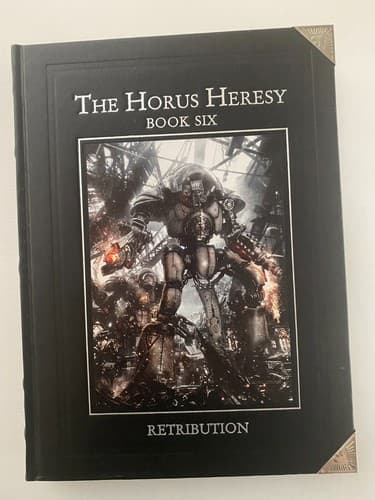
The material first appeared in The Horus Heresy Book Six: Retribution, released in 2016, and that older volume still has a lot of practical value. It is widely listed as a 297-page Forge World hardback, and it is built around the Shadow Wars of the Heresy, with rules and background for the Shattered Legions, Knights Errant, and Blackshields.
It also includes Legion material for the Dark Angels, Blood Angels, and White Scars, which makes it more than a narrow campaign book. If you are trying to anchor a force in a specific pocket of Heresy history, that combination is useful because it ties together operational background and army identity. You are not just reading about a war; you are getting a framework for why certain Legions, survivor bands, and renegade formations look and fight the way they do.
How to use it at the hobby desk
This is the sort of archive material that pays off immediately when you sit down to plan an army or a campaign. If you are building a Blood Angels force, the Morrachi example pushes you toward isolation, delayed knowledge, and the horror of fighting a civil war without understanding its scale. If you are building Shattered Legions, the material naturally supports mixed heraldry, scavenged wargear, and hard-fought battlefield identity.
- Build a campaign around cut-off expeditionary fleets and delayed orders.
- Use Shattered Legions elements to justify mismatched armor marks and battlefield repairs.
- Paint Blackshields with stripped heraldry, brutal weathering, and no clean legion pride.
- Frame battles as vengeance operations rather than set-piece wars, which fits the Shadow Wars tone perfectly.
A few practical ways to mine it for hobby use:
That is where the Black Books still beat a lot of modern background material: they hand you conflict structure, not just names and dates. The result is easier to turn into a table, a display force, or a linked narrative event.
Why Games Workshop keeps coming back to the Black Books
The return to The Wars of Retribution also fits a broader pattern in recent Horus Heresy coverage. Games Workshop has repeatedly used Black Book material as downloadable lore, and that makes sense because the old campaign volumes still do heavy lifting for the setting. They deepen the Age of Darkness without forcing you into a rules change or a model release, and they keep the Heresy feeling like a living archive instead of a frozen timeline.
That approach also reminds newer players where the setting sits in the larger franchise: 10,000 years before Warhammer 40,000, with 18 Space Marine Legions tearing each other apart in the name of the Emperor or the forces of Chaos. The Wars of Retribution are one of the clearest windows into how that galaxy-wide catastrophe works when it stops being abstract and becomes a war of stranded fleets, broken loyalties, and revenge that never quite ends.
Warhammer Community’s latest revisit works because it does not treat the Wars of Retribution like a dusty footnote. It brings back the exact kind of material that makes the Horus Heresy feel huge, cruel, and usable, which is why the Black Books still matter every time the setting starts pulling its fractured armies back into view.
This article was produced by Prism’s automated news system from verified source data, official records, and press releases, then run through automated quality and moderation checks before publishing. The system is built and supervised by the people who set the standards it runs under. Read our full AI policy.
Did this article answer your question?