White Dwarf 525 showcases Cogforts and towering 40k war machines
Cogforts steal the cover, but White Dwarf 525 is really a mixed-value issue for 40k players, with an Armageddon short story and a useful campaign mission doing the heavy lifting.
Cogforts are the spectacle, but they are not the whole story
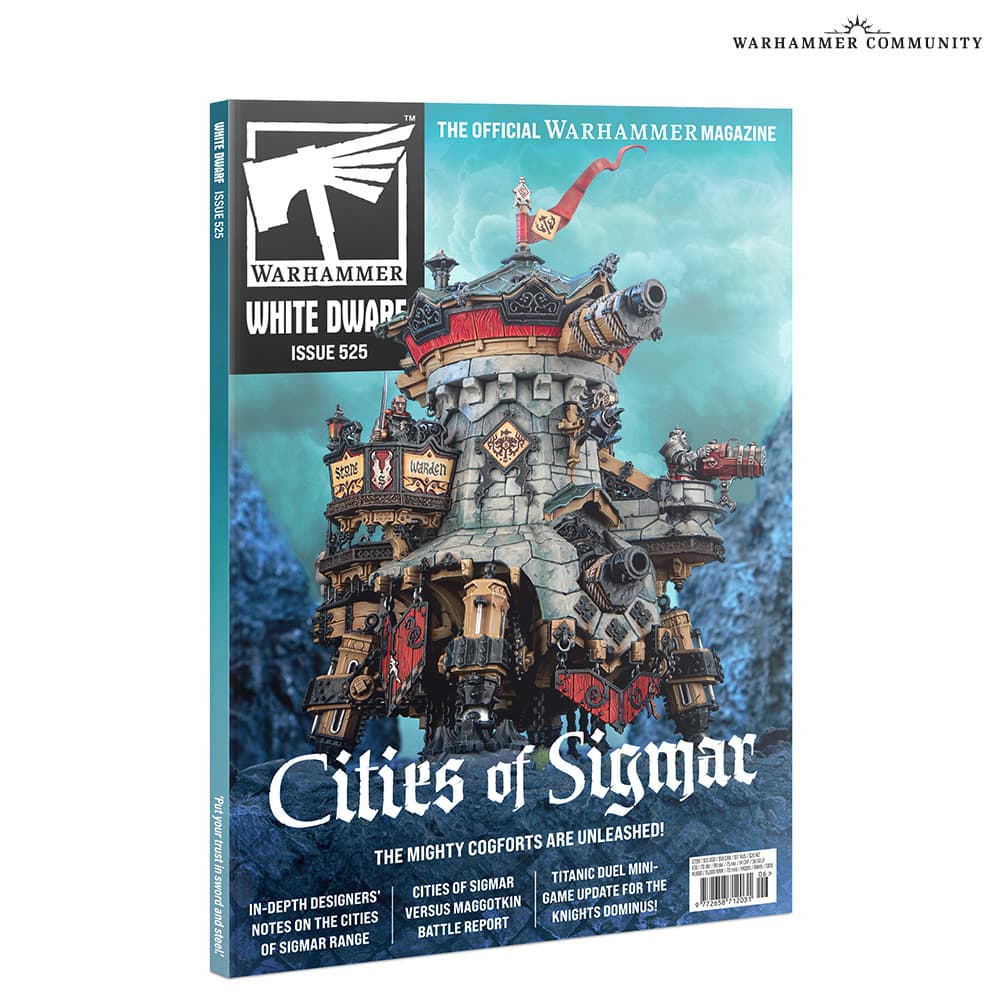
White Dwarf 525 leans hard into size. The issue is fronted by Ironweld Arsenal Cogforts, and the magazine is clearly trying to sell the fantasy of walking fortresses and towering war machines rather than just another stack of hobby filler. That part works, because the design team is giving the machines real attention, not just a quick paint-shot and a paragraph of lore.
The biggest pull is a detailed 14-page designer’s commentary that traces the Cogforts from a lore blurb to a titanic miniature. That matters if you care about how Warhammer kits are built, because White Dwarf is at its best when it opens the box lid and explains why a model looks and plays the way it does. The issue also uses several of the new Cities of Sigmar kits, including the Freeguild Grenadiers, so this is not just a generic rules teaser dressed up with pretty photos. It is a proper model-development issue.
The walkers themselves are not vague placeholders either. An earlier AdeptiCon preview named the two main variants as Cannonade Cogforts and Conqueror Cogforts. The Cannonade Cogfort brings a gigantic Godbreaker cannon and other gunpowder weapons to the table, while the Conqueror Cogfort swaps that for a Realmscorcher flame cannon and enough internal space to carry a unit of infantry into battle. That gives the kits a real battlefield identity, not just a cool silhouette, and it also explains why Games Workshop keeps framing them as more than scenery-on-legs.
What the Age of Sigmar side actually adds
White Dwarf 525 is also doing the usual multi-system White Dwarf thing, which means the issue is not only about the headline walkers. The Cities of Sigmar coverage goes broader, with special attention on Lethis and Greywater Fastness, plus new Cities of Renown rules and two new Legends units for each. That is the sort of content that can quietly change how a collection gets used, because it nudges older models back into play and gives themed cities a reason to exist on the table beyond pure narrative flavor.
There is also a useful rules wrinkle around the Cogforts themselves. Warhammer Community has said they can be fielded as a Regiment of Renown, and they can also show up as mercenaries or renegades in the Mortal Realms. That makes them a stronger buy than a one-note centerpiece kit, because they are not locked into a single faction expression. If you are the kind of player who likes your army to feel like a living part of the setting rather than a sealed list entry, that flexibility is the real hook.
The 40k value sits in the Armageddon mood
For Warhammer 40,000 readers, the most interesting part of White Dwarf 525 is not the walkers. It is the short story, Answered Prayers, which follows a squad of Armageddon Steel Legion Guardsmen trapped in a crippled Chimera while Orks close in around them. That is the exact kind of grim, compressed 40k fiction that still lands, because it is not trying to be epic in scale. It is about panic, damage control, and the awful moment when your own transport becomes a deathtrap.
The detail that the Chimera was disabled by one of the squad’s own mines sharpens the whole setup. It turns the story from a standard “surrounded by Orks” firefight into something meaner and more personal, which is exactly what Armageddon should feel like. The war zone has always been one of 40k’s most recognizable pressure cookers, and this story plugs directly into that legacy without needing a lot of explanation.
That matters even more because Games Workshop has been pushing Armageddon hard across the range. Jude Reid’s Armageddon: Season of Fire is part of the same wider moment, and Warhammer TV is also rolling out Armageddon-related episodes alongside the White Dwarf 525 preview period. Put together, it feels less like isolated cross-promotion and more like a deliberate return to one of the setting’s most durable battlegrounds.
What you can actually use from the issue
This is where White Dwarf earns its keep for 40k players. Alongside the fiction, the magazine includes the usual monthly hobby guides and mission content for Warhammer 40,000, plus an extra mission built to test how flexible a campaign army really is by trickling units into play over time. That kind of scenario rewards players who enjoy list management, timing, and reinforcements rather than just throwing everything down on turn one.
That is practical value, not just reading value. A mission like that gives you something to try with a current army while the broader edition cycle keeps moving, and it does a good job of reminding you that White Dwarf is still meant to be used, not just collected. The magazine’s standard mix of news, battle reports, painting masterclasses, designers’ notes, exclusive rules, and miniatures photography still applies here, but the 40k payoff is concentrated in the fiction and the mission design more than in any headline-breaking rules drop.
Verdict: worth it for 40k fans, but not for the Cogforts alone
White Dwarf 525 is not an essential 40k pickup in the sense of a must-have faction book or a major rules rewrite. If you are only chasing raw 40k mechanics, this is more of a supporting issue than a centerpiece release. But if you value Armageddon lore, want a solid campaign mission, and like your hobby magazine to actually feel like part of the game instead of a product brochure, this one has enough in it to justify the buy.
The Cogforts may be the headline, but the real test is whether the issue earns its place on your desk once the spectacle fades. For 40k players, it does that in the same grim, dusty way Armageddon always has: with a damaged Chimera, an Ork advance, and just enough war gear to keep the fight going one turn longer.
This article was produced by Prism’s automated news system from verified source data, official records, and press releases, then run through automated quality and moderation checks before publishing. The system is built and supervised by the people who set the standards it runs under. Read our full AI policy.
Know something we missed? Have a correction or additional information?
Submit a Tip